

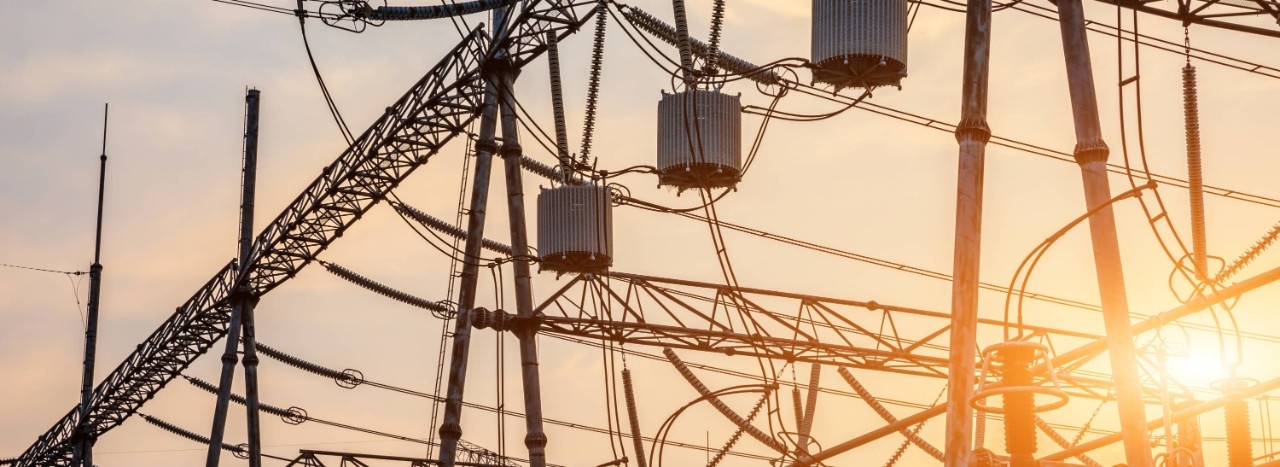
What is an electrical substation?
What is an electrical substation?
Transformation, transmission, and distribution of electricity
Electricity reaches everywhere from towns and big cities to the mountains, deserts, and offshore platforms. And all of that is possible thanks to the distribution grid, power lines, and electrical transformer substations.
The so-called power transmission lines or high-voltage lines transfer electricity from a power plant or generator park to a grid that distributes the power regionally. And here is where electrical substations enter into play.
What is an electrical substation?
What is an electrical substation?
An electrical substation is an installation designed to establish suitable voltage levels for producing, converting, regulating, and distributing electricity.
Normally, they are located on the periphery of consumption areas, inside or outside buildings to save space, although they are also found near power plants, on the outskirts of urban centers with outdoor installations.
The main difference we find between a transformer station and an electrical substation is the magnitude of the installations. While transformer stations are linked to high/medium-voltage transmission systems, electrical substations are designed to support and transform lower voltages.
Functioning of an electrical substation
Functioning of an electrical substation
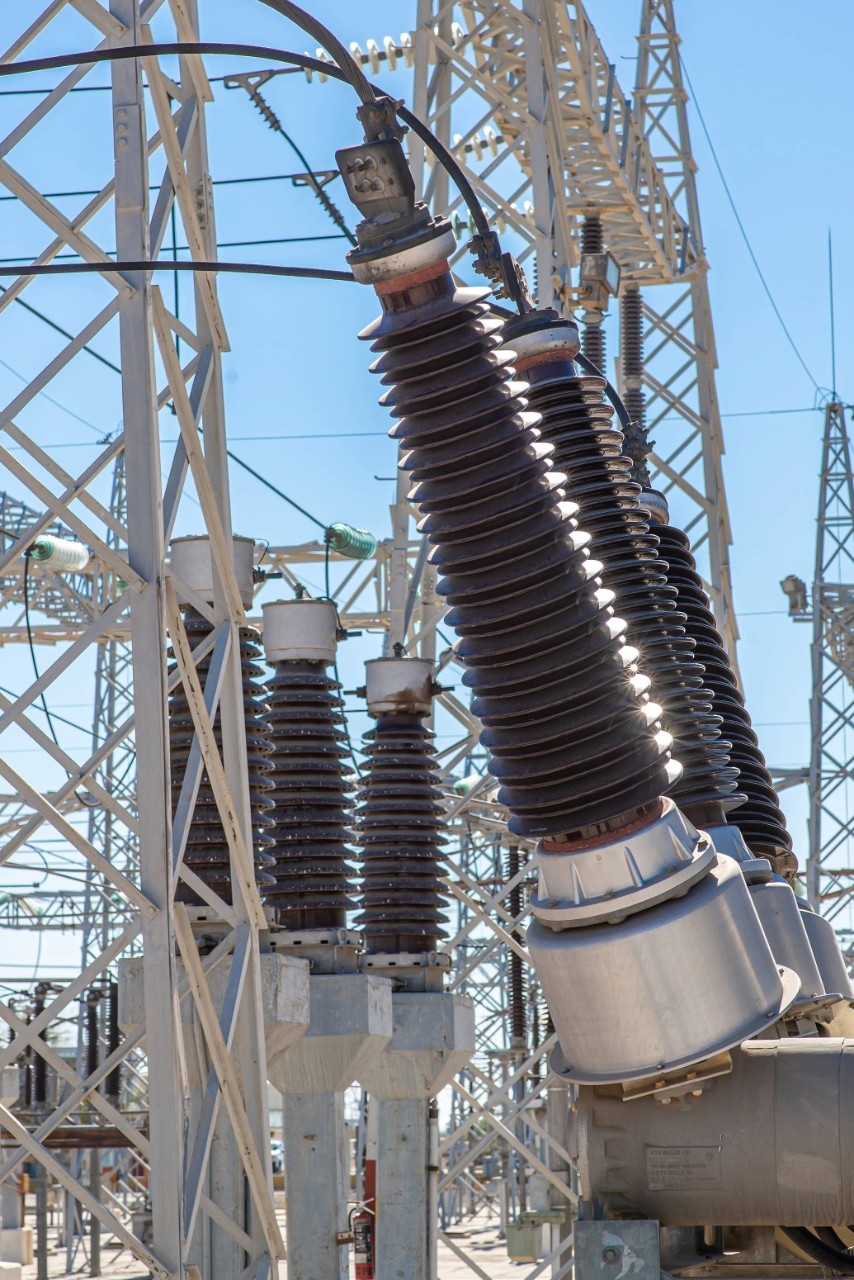
Electrical substations serve for the production, conversion, transformation, regulation, and distribution of energy. Thanks to this infrastructure, electricity can be distributed and reach different geographical areas.
The electricity that reaches our home must have the appropriate power so that we can safely use electronic devices. This is possible thanks to the different types of electrical substations, which level the power and transform and distribute electricity.
In countries such as Spain, there are benchmark companies such as Eiffafe Energía, Grupo Elecnor, and ABB that have revolutionized the technology of substations, given their construction, size, performance, and advanced technology.
Parts of an electrical substation
Parts of an electrical substation
- Transformer: It is a static electrical machine that serves to increase or decrease electricity in an AC electrical circuit, while maintaining a constant frequency and power.
- Circuit breaker: It interrupts and reestablishes the continuity of an electric circuit. Such interruption is made with load or short-circuit current.
- Recloser: It is an electromechanical part that interrupts the current when there is an excess of electricity and acts when a fault is generated in the circuit. Reclosers are designed to operate with 3 closing operations and 4 openings with an interval between them.
- Blade fuses: They are connection and disconnection elements of electric circuits with a double function. On the one hand, as a blade disconnect, it switches on and off. On the other hand, it acts as a fuse protection element and is used when an overcurrent is registered.
- Disconnect switches and test switches: They serve to physically disconnect an electric circuit, so they usually operate without charge. These switches work mechanically and also manually.
- Lightning arresters: They are responsible for keeping ionized rays away. When there is a surge of a certain magnitude, lightning arresters form an electronic arc that makes the current discharge on the ground and not on people or equipment and installations.
- Instrument transformers: They are apparatuses responsible for measuring the electric current. There are two types: current transformers (CT), to change the value of the current, and potential transformers (PT), to transform the voltage values without taking the current into account. Both values are used in real time for measuring, control, and protection instruments that require current or voltage signals.
- Junction boxes: They are the connection terminals per phase that allow us to make derivations and to reach specific areas.
- Condensers: They allow us to conserve the electricity that is produced in an electric field. Through two conductors separated by insulating material, energy is temporarily stored.
Types of electrical substations
Types of electrical substations
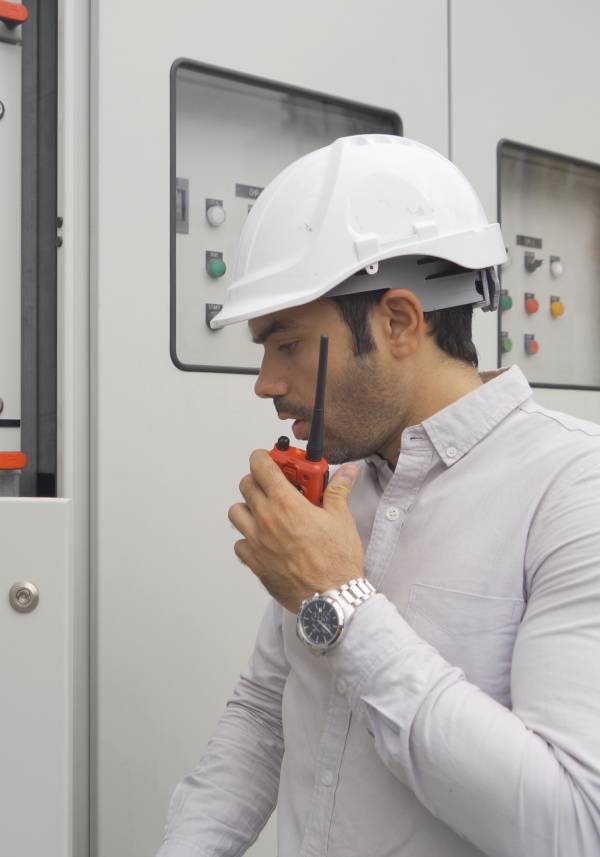
According to the functionality, there are different types of electrical substations:
- Transformer substation
They have one or several transformers that raise or reduce the voltage. And they may be:
- Step-up transformer substations: The voltage generated is raised to some much higher levels to be able to transport it. Normally, this installation is located outside, very close to electricity-generating plants.
- Step-down transformer substations: Unlike step-ups, these electrical substations reduce high voltages to medium levels for distribution.
- Switching substation
In this type of electrical substation, two or more circuits are connected. The voltage isn't raised or lowered, but it serves as a node in the electrical system.
Discover aerothermal energy with solar panels
Discover aerothermal energy with solar panels
New efficient solutions
Energy transition
All about electricity
Types, advantages, and main applications