Refining and aviation: Jet A-1 fuel at Spain's airports
Refining and aviation: Jet A-1 fuel at Spain's airports
From the refinery to the airplane: the invisible industry that sustains Spanish tourism
From the refinery to the airplane: the invisible industry that sustains Spanish tourism

International Aviation Director
When we think of tourism, we usually think of destinations, hotels or experiences. We rarely think about the industry and logistics that make it possible for millions of people to arrive in Spain every year. However, behind every flight there is a highly specialized chain connecting refineries, terminals, airports and airlines, and it must operate accurately every day of the year.
The most widely used commercial aviation fuel internationally is Jet A-1, a kerosene obtained in refineries from an intermediate fraction of oil that must meet strict technical specifications (including a maximum freezing point of -47°C). In Spain, refineries in the mainland produce around 80% of the aviation kerosene consumed by the national market, and the storage and supply service reaches 21 airports in the mainland and the Balearic Islands, as well as the main airports in the Canary Islands within the Aena network. This capacity was decisive during the crisis in the Middle East in 2026, when Spain activated the Comprehensive Response Plan (Royal Decree-Law 7/2026) and the refineries reached an all-time high of 60,000 metric tons per month of Jet A-1 (CORES, March 2026).
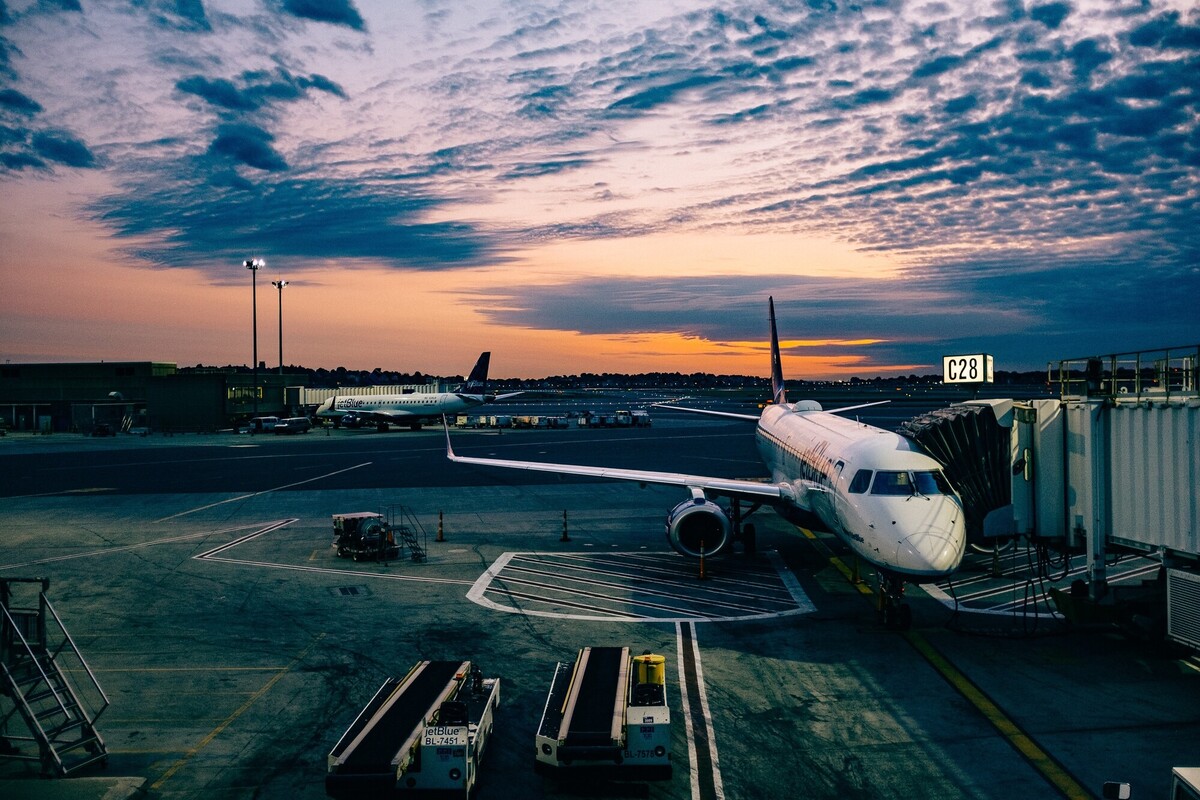
Every summer, thousands of planes take off and land at Spanish airports, transporting millions of tourists who choose our country to spend their holidays. What many people don't know is that behind every flight, there is a complex industrial and logistics infrastructure that supplies fuel to airports.
Air tourism in Spain: why aviation fuel is strategic
Air tourism in Spain: why aviation fuel is strategic
Tourism is one of the most important activities in the Spanish economy. According to the National Institute of Statistics (INE), tourism activity reached 200,699 million euros in 2024 (last published data), which represented 12.6% of the national GDP and generated more than 2.7 million jobs (or, in other words, 12.3% of total employment). A very important part of international visitors arrives in Spain by air, especially on long-distance journeys. This means that air transport plays an important role in tourism and, by extension, in the Spanish economy.
And to make this tourist activity possible, there is an industrial and logistics chain that begins long before the plane arrives at the airport: in the production of fuel.
Air connectivity, a factor of competitiveness. Having a solid, efficient and resilient supply chain helps to maintain Spain's connectivity with the main tourist markets and major international economic centers. In a country where tourism has such a relevant weight, the availability of aviation fuel is not only an operational issue: it is part of the competitiveness of the destination and its ability to sustain a wide and reliable air service offering.
What is Jet A-1 and how is it different from road fuel
What is Jet A-1 and how is it different from road fuel
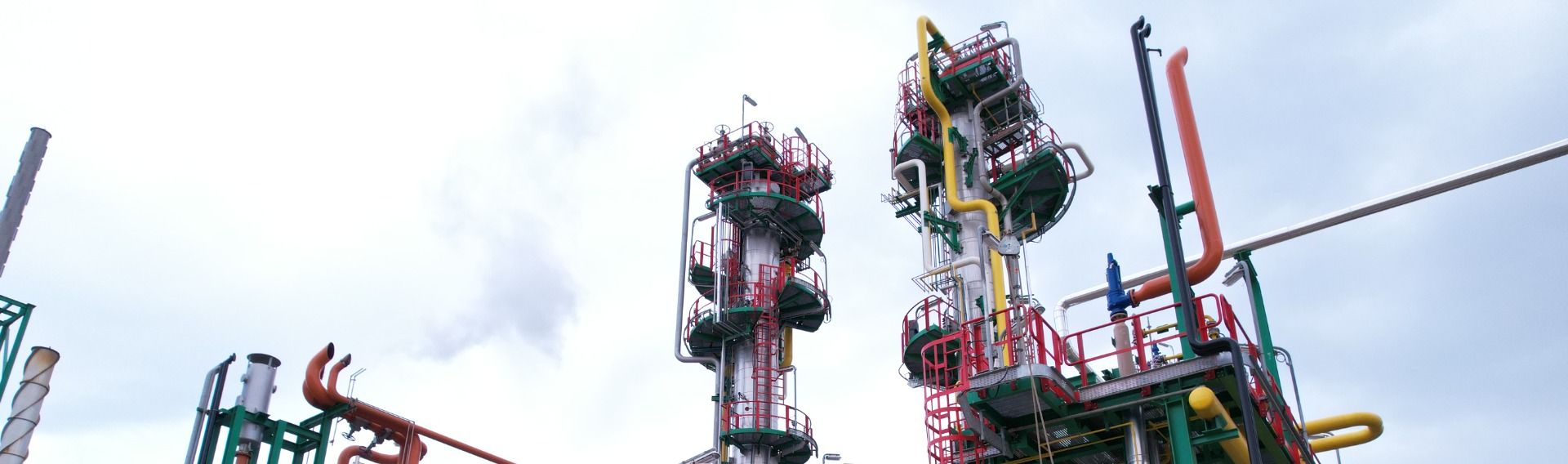
The most widely used international fuel for commercial aviation is Jet A-1. It is obtained in refineries from an intermediate fraction of oil, located between those used to produce naphtha and diesel.
Jet A-1 must withstand temperatures of up to -47°C in high altitude flight, which explains its more demanding technical specifications than those of road fuels
Unlike automotive fuels, Jet A-1 must meet strict international quality and safety specifications, such as very low freezing points (maximum -47°C) to withstand the low temperatures reached during high altitude flight and very precise requirements on its physicochemical properties.
In Spain, the production of aviation kerosene is carried out in the refineries of the Iberian Peninsula, but it is only the first step in a large logistics chain. From the refinery to the aircraft, the fuel goes through several stages.
From the industrial complex to the airplane: the value chain
From the industrial complex to the airplane: the value chain
Supply logistics operates continuously through different stages:
- Leaving the refinery. Fuel is transported from the refinery via pipelines, tankers, or tank trucks to distribution centers. For large volumes and certain routes, pipelines allow fuel to be transported efficiently and continuously.
- Airport storage. The fuel arrives at the storage terminals located in the airport facilities, where it is stored and the necessary quality controls and checks are carried out before distribution.
- Distribution to the aircraft. From storage tanks, the product is distributed to aircraft parking positions via underground hydrant networks or via tanker trucks.
Fuel loading on the plane (into-plane). It is the final fuel load on the aircraft.
A chain that can't be stopped. The challenge is not just to produce Jet A-1, but to ensure that the right fuel is available at the right airport and when every airline needs it. To do this, it is necessary to continuously coordinate production, inventories, transport, storage, quality controls, and final delivery to the aircraft. It is this integration of industrial, logistical and operational capabilities that makes aviation supply a critical service that works every day of the year.

Airport supply network in Spain: Aena airports
Airport supply network in Spain: Aena airports
At airports in the Aena network, services related to the storage and supply of fuel are provided under different contracting formulas and in accordance with the requirements applicable to airport operations. The service is provided at 21 airports in mainland Spain and the Balearic Islands, as well as at the main airports in the Canary Islands, helping to ensure fuel availability across the country’s key airports.
This logistics chain, however, faced an exceptional situation during 2026.
The summer of 2026: when aviation fuel supply was put to the test
Domestic production of Jet A-1 reached an all-time high of 60,000 metric tons according to data collected by CORES
During 2026, the sharp reduction in tanker traffic through the Strait of Hormuz, in the context of the conflict in the Middle East, caused tensions in international crude oil and refined products markets, increasing pressure on fuel supply in several European countries.
2026 crisis — The key measures
To reduce the risk of supply problems, Spain adopted various measures, including the Comprehensive Crisis Response Plan in the Middle East (Royal Decree-Law 7/2026), which set the obligation to establish a weekly report of stocks and operations by operators to the National Commission of Markets and Competition (CNMC). At the same time, the Spanish refineries adapted their production to respond to the increase in the demand for aviation kerosene. In March 2026, CORES data recorded that domestic production reached an all-time high of 60,000 metric tons.
However, the response capacity demonstrated during this period is closely linked to the industrial structure of refining in Spain.
Why does Spanish refining produce 80% of aviation kerosene?
Why does Spanish refining produce 80% of aviation kerosene?
Spain has a refining system consisting of eight industrial facilities. Over the past decade, as refining capacity declined in several regions of Europe, Spanish plants received investments aimed at improving their efficiency, conversion, and operational flexibility.
This structure allows Spain to produce around 80% of the kerosene consumed by the national market, reducing the need to import certain refined products. The ability to process a wide variety of crudes allows production to be adapted when certain supplies are interrupted.
According to impact analyses of the European refining sector prepared by FuelsEurope, a reduction in domestic refining capacity may lead to:
- Increased dependence on imports of finished products from third countries.
- Greater exposure to potential geopolitical disruptions on international supply routes.
- Greater exposure to trends in international prices of refined products.
- Less flexibility to increase national production in emergency situations.
At the same time, industrial complexes are evolving to incorporate new technologies and produce fuels with a lower carbon footprint, promoting processes to manufacture new alternatives to reduce emissions associated with air transport.
This position of relative self-sufficiency reinforces Spain's energy independence and energy supply security in the field of air transport.
Innovation and collaboration to accelerate aviation decarbonization
At the same time, the development of new renewable fuels requires research, innovation and collaboration between different players in the value chain. In this area, Repsol coordinates Madrid Vuela Sostenible, a research hub developed together with IMDEA Energía, ARIEMA and EVOENZYME, and with the support of the Community of Madrid and the European Union. The project works on technologies related to decarbonization and the circular economy, including the transformation of waste into sustainable aviation fuels.
Among its lines of work are the characterization of more than 40 residual raw materials, tests with up to a 50% sustainable component, the technical and environmental validation of the SAF and the development of a digital twin of the new industrial unit in Cartagena. Added to this activity is All4Zero, an industrially oriented technology innovation hub that includes, among other companies, Repsol and Iberia, working on technologies related to decarbonization and the circular economy. Collaboration between industry, airlines and technology centers is essential to transfer innovation from research to solutions capable of reaching industrial scale.
The manufacture of SAF. Why is it linked to the manufacture of renewable road fuel?
The manufacture of SAF. Why is it linked to the manufacture of renewable road fuel?
The European regulation ReFuelEU Aviation establishes obligations for the gradual incorporation of sustainable aviation fuel (SAF) at airports in the European Union:
- 2% in 2025.
- 6% in 2030 (with a 1.2% share of synthetic fuels).
- 20% by 2035.
- 70% by 2050.
A solution that leverages existing capabilities. SAF has a decisive advantage in accelerating the decarbonization of aviation: it is a drop-in type fuel that, used in certified mixtures, can be used in current aircraft without modifying their engines. It can also be integrated into a significant part of existing logistics and airport infrastructures and rely on industrial assets, quality systems and operational experience developed over decades.
This compatibility makes SAF a particularly relevant solution for aviation, a sector that is difficult to electrify, particularly in medium and long-distance commercial flights, where weight and energy density condition technological alternatives. The transition, therefore, does not start from scratch: it consists of progressively transforming the current industrial and logistics chain to incorporate fuels with a lower carbon footprint, while maintaining security of supply, connectivity and competitiveness.
In this context, the industry is developing new capabilities to increase SAF production. To meet this demand, the first plant in the Iberian Peninsula dedicated to producing 100% renewable fuels from organic feedstocks on an industrial scale has been launched in Cartagena. With an investment of 250 million euros, this facility has the capacity to manufacture 250,000 metric tons of renewable diesel and SAF per year.
Some of the technologies used to produce SAF can also be used to obtain other fractions for road transport fuels. Processes such as the hydrogenation of used oils and fats (HEFA) or co-processing can generate different fractions that, depending on the process and the feedstocks characteristics, can be destined for different uses in transport. These industrial synergies can contribute to increasing the scale and improving the efficiency of renewable fuel production.
The next step: synthetic fuels and e-SAF
The next step: synthetic fuels and e-SAF
Along with renewable fuels produced from organic feedstocks, aviation will have to progressively develop new technological routes. These include e-SAF, or synthetic aviation fuel, produced from renewable hydrogen and captured CO₂. Its development will be especially relevant from the next decade, when European regulation will begin to require a specific share of synthetic fuels within SAF's objectives.
Repsol is developing a synthetic fuels demonstration plant in Bilbao, which is scheduled for start-up in 2027. This initiative will allow us to progress in this new technological route and generate knowledge before its future industrial scaling.
The challenge of e-SAF is to advance technologically, reduce costs, and gain scale. Its development will complement other SAF production routes and will allow us to progressively expand the alternatives available to decarbonize aviation, a sector in which electrification presents greater difficulties.
Scaling SAF: collaboration and demand
A transformation of the entire value chain. The deployment of SAF requires the collaboration of fuel producers, airlines, airports, logistics operators, aircraft and engine manufacturers, corporate air transport users and public administrations. Each player has a different role: developing technology, investing in capacity, ensuring operations, generating demand and establishing predictable frameworks that allow progress from the first volumes to an industrial scale.
Voluntary demand as a lever for scaling. The European regulation establishes a minimum demand base, with an obligation of 2% of SAF from 2025 and 6% by 2030. However, to justify new investments, close long-term contracts and accelerate the development of productive capacity, there is also a need for additional voluntary demand from airlines and companies that want to act on the emissions associated with their travel or logistics chains. In 2025, SAF incorporation in Europe reached 2.8%, above the regulatory minimum of 2%. It is a positive sign: it shows that the combination of regulatory obligation and voluntary demand allows us to gain scale and move towards the 2030 goal.
However, despite these advances, the deployment of SAF faces technical and economic constraints.
SAF challenges
One of the main challenges to expanding the use of SAF is its higher cost compared to conventional kerosene.
- Production costs. Advanced technological pathways, such as synthetic kerosene (e-SAF) or Alcohol-to-Jet (ATJ), currently have higher production costs than conventional keroseneal.
- Difficulties in developing new projects. Globally, several announced projects have been delayed or cancelled due to the difficulty of securing long-term buyers and supply contracts and differences in regulatory frameworks across markets. Therefore, stable demand signals, both regulatory and voluntary, are essential to reduce uncertainty, support investment decisions and bring new technologies to an industrial scalel.
- Availability of feedstock. The possibility of significantly increasing production through the HEFA route is constrained by the limited availability of used oils and waste fats, which makes it necessary to develop other technological routes that allow expanding the supply of feedstocks of forest or agricultural origin, as well as technologies that use captured CO2 to produce synthetic fuels.
The future of aviation requires advancing two simultaneous objectives: maintaining a secure and competitive supply chain, and accelerating the incorporation of fuels with a lower carbon footprint. Spain has industry, infrastructure, knowledge, and a tourism sector that justify this ambition. The opportunity is to use those capabilities not only to respond to today's needs, but to lead the transformation of aviation.
Frequently asked questions about aviation fuel
Jet A-1 is the most widely used commercial aviation fuel internationally. It is a kerosene obtained in refineries from an intermediate fraction of oil, located among those used to produce naphthas and gas oils. It must meet strict international technical specifications, including a maximum freezing point of -47°C to withstand the low temperatures of high altitude flight.
Jet A-1 must meet much more demanding specifications than gasoline or road diesel. The main difference is the freezing point: Jet A-1 must be kept liquid at -47°C to withstand the low temperatures reached during high altitude flight. In addition, its physico-chemical properties (density, viscosity, sulphur content, thermal stability) must strictly comply with international standards of air quality and safety.
Aviation fuel logistics chain consists of four stages. First, leaving the refinery via pipelines, tankers, or tanker trucks to distribution centers. Second, storage in the terminals located in the airport facilities, where quality controls are carried out. Third, distribution to aircraft parking positions via underground hydrant networks or tanker trucks. And fourth, the final fueling of the aircraft (into-plane).
Spain produces about 80% of the aviation kerosene consumed by the national market in its eight refineries. This self-production capacity reduces the need to import refined product and gives room for response to tensions in international markets. In March 2026, national production reached an all-time high of 60,000 metric tons, according to CORES data.
The aviation fuel storage and supply service operates at 21 airports in the Iberian Peninsula and the Balearic Islands, as well as at the main airports in the Canary Islands, within the Aena network. This capillarity makes it possible to guarantee the availability of fuel at the main nodes of Spanish air transport.
The reduction in tanker traffic through the Strait of Hormuz strained international markets. Spain activated the Comprehensive Response Plan (Royal Decree-Law 7/2026), which established a weekly report on stocks and operations to the CNMC. Spanish refineries adapted their production to the increase in demand for kerosene and reached an all-time high of 60,000 metric tons in March 2026 (CORES). The European Commission also opened the door to the temporary use of the Jet A specification, common in the United States, to make logistics more flexible to handle ongoing disruptions.
You may be interested in
You may be interested in