Road mobility and fueling in Spain
Road mobility and fueling in Spain
An essential pairing for the economy
An essential pairing for the economy

Director of Mobility, Spain
Road mobility is the main mean of intercity transport in Spain: it accounts for 83.3% of passenger travel and, during the summer of 2026, the DGT forecasts more than 104 million long-distance trips. This traffic depends on a strong logistics chain linking eight active refineries, a national network of pipelines, tanker fleets and more than 12,300 service stations. During the summer of 2026, while France suffered partial shortages due to the Rhine drought and tensions in the Middle East, Spain maintained uninterrupted supply, supported by its refining capacity and the efficiency of its logistics network.
The refining capacity, inventories and logistics infrastructure contributed to maintaining the continuity of supply in Spain thanks to its own refining capacity and the logistics planning of the sector.
One August morning, a family loads the trunk before dawn and heads out to the coast. The first stop? The service station. A daily gesture that is repeated millions of times every summer. What's behind the pump always responding and what role does refining play in ensuring that summer road tourism doesn't slow down?
Before looking at the pump, it is advisable to measure the real magnitude of what is at stake on Spanish roads during the summer months.
Summer, Spain's great road trip
Summer, Spain's great road trip
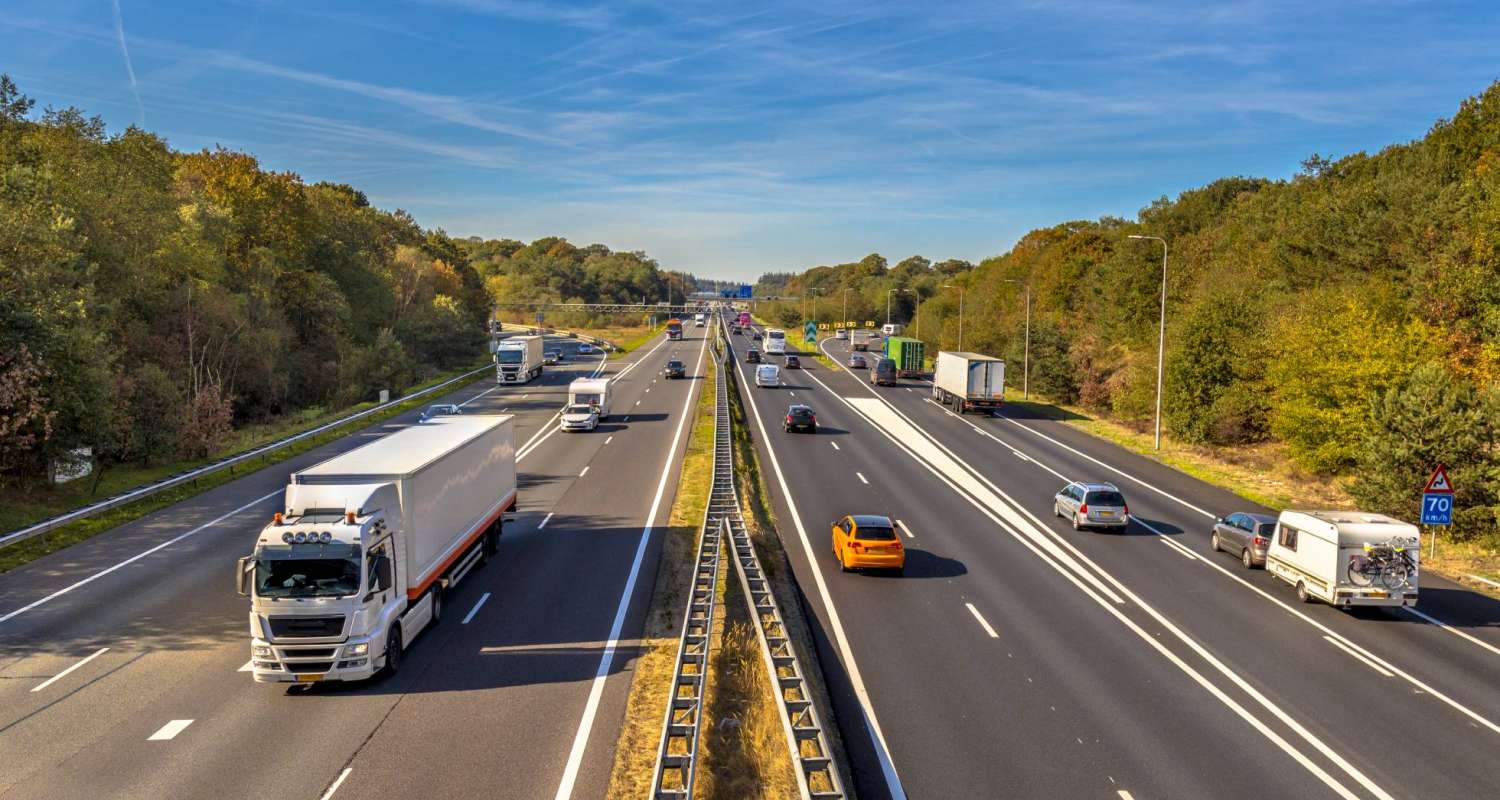
Summer tourism in our country is, above all, a phenomenon of road mobility. According to data from the National Institute of Statistics (INE), almost eight out of ten trips by residents in Spain are made in private vehicles. In national intercity transport as a whole, road transport accounts for 83.3% of domestic passenger mobility.
This traffic intensity reaches its peak between the months of July and August. During the Summer Operation of 2026, the Directorate-General for Traffic (DGT) coordinated a forecast of more than 104 million long-distance trips by road, which represented an increase of 3.7% compared to the previous year. To this intense internal traffic are added specific operations such as the Paso del Estrecho Operation, with 3.5 million people and 800,000 vehicles crossing the peninsula, and Paso de Portugal Operation, with more than 270,000 vehicles coming from Europe.
83.3% of intercity trips in Spain are made by road. In summer, gasoline consumption increases by up to 38% compared to winter
From an economic perspective, domestic tourism traveling along the road network is a fundamental driver for the country. According to data collected by the INE, domestic tourism consumption in 2024 stood at more than €209.8 billion per year, with a tourism GDP of €200.699 billion (12.6% of national GDP) and more than 2.77 million jobs (12.3% of total employment).
This mobility and economic activity rest on an indispensable operating condition: that the fuel required to move each vehicle is always available at every pump.
The role of energy in road mobility
The role of energy in road mobility
Fuels remain the primary source of energy powering cars, trucks, buses, and aircraft. This is highlighted by the data collected by the fuel industry (IAEC) in the report prepared in 2025: more than 95% of passenger and freight in Spain relies directly on petroleum products derived from refining processes.
More than 95% of passenger and freight transport in Spain relies directly on petroleum products derived from refining processes
The importance of this industry extends across the economic system: the fuel industry supplies more than 50% of the total primary energy consumed in Spain and provides over 50% of the chemical raw materials essential to the activity of the national manufacturing industry.
Likewise, in emergency situations or adverse weather events, the operational continuity of critical infrastructure such as hospitals, ports, logistics centers and food distribution networks is guaranteed thanks to generator sets and fuel supplied fleets.
Refining is the industrial process in which crude oil is transformed into useful by-products, such as lubricants, raw materials for the chemical industry, and fuels such as gasoline, diesel, aviation kerosene, and other high-value-added products. Ensuring that this energy reaches each vehicle requires coordinating a complex logistics chain that operates tirelessly throughout the year.
From the industrial complex to the pump: the fuel supply chain
From the industrial complex to the pump: the fuel supply chain
The journey a liter of fuel takes from the refinery to the service station nozzle is an integrated logistics operation that remains virtually invisible to the consumers.
Once the refining process has been completed in the industrial facilities, the processed fuels are distributed continuously through three main routes: the national network of primary transport pipelines, coastal shipping vessels, and heavy-duty tank trucks. These flows directly connect production facilities with strategic storage terminals distributed across the country.
Spain has a network of over 12,400 service stations, with more than 3,250 operating under the Repsol brand
From these intermediate storage terminals, fuel is distributed through specialized fleets of tanker trucks that supply the service stations on a daily basis. Spain has a distribution infrastructure consisting of more than 12,400 service stations, with more than 3,250 operating under the Repsol brand.
The five main links in the fuel supply chain in Spain are summarized below:
| Link | What is its role? | Key figures: Spain |
| Refineries | They transform crude oil into gasoline, diesel, kerosene, and other derivatives | 8 active refineries |
| Oil pipelines | Primary transport network from the refinery to terminals | Interconnected national network |
| Coastal shipping vessels | Maritime transport from refineries or ports to coastal terminals | Regular routes |
| Tanker trucks | Capillary distribution from terminals to service stations | Specialized fleet |
| Service stations | Consumer supply endpoint | +12,400 (3,250 Repsol) |
This distribution and commercialization network ensures that fuel is available whereever it is needed, even during periods of peak demand
France's warning: when the pump runs dry
France's warning: when the pump runs dry
What happened in France during the summer months of 2026 highlights the importance of having an industrial and logistics infrastructure prepared to adapt to market shifts and guarantee the continuity of supply. During that period, there were some episodes of lower availability of fuel in certain areas, driven by the confluence of two factors.
First, an extreme drought caused a historic drop in the flow levels of major European rivers like the Rhine. This is particularly significant because eastern French departments, lacking nearby refineries, rely for 70% of their fuel on river transport imported from Germany via the Rhine.
As the river water levels dropped due to the drought, the tankers were forced to reduce their load to 25% of their usual capacity for safety reasons. This logistical restriction caused between 28% and 30% of service stations in that region to run out of SP95 or SP98 gasoline for several consecutive weekends.
Secondly, on a broader scale, international trade uncertainties caused by the conflict in the Middle East, and the threat of traffic disruptions in the Strait of Hormuz, created bottlenecks in fuel imports.
As a result, 14% of service stations throughout France experienced simultaneous shortages of at least one fuel type, while diesel prices reached record highs.
The situation in France clearly demonstrated that relying on distant supply chains and vulnerable transport routes exposes society and the tourism sector to the direct risk of shortages and greater price volatility.
Why Spain keeps supplying: domestic production and responsiveness
Why Spain keeps supplying: domestic production and responsiveness
Faced with the fragility demonstrated by other markets, Spain navigated the pressures of the summer of 2026 from a position of operational strength, thanks to its domestic refining capacity and its logistics distribution and fueling network
While Europe reduced its refining capacity by 20% over the last two decades, Spain’s industrial capacity increased by around 15%
While in the last two decades Europe reduced its refining capacity by 20% with the permament closure of 35 plants, in Spain the industrial capacity increased by around 15%, consolidating a network of eight active refineries that account for more than 13% of total production capacity in the European Union.
This map highlights Repsol's five interconnected industrial complexes in Spain, in which the company has invested an average of €1 billion annually over the last decade. These plants operate in a coordinated manner 24 hours a day as a single production unit. In addition, thanks to their advanced technology, these facilities can make better use of each raw material and adapt to different market needs.
This operational flexibility allows the processing of more than 100 types of crude oil from different origins per year, facilitating adaptation to international market shifts and helping to strengthen security of supply in the event of potential disruptions or geopolitical tensions.
Repsol's operational response in the summer of 2026
Repsol's operational response in the summer of 2026
The industry demonstrated a high capacity to support summer mobility amid the global uncertainties of 2026. Among the measures implemented by Repsol, three specific actions stand out:
- €1.2 billion allocated in the first quarter to increase crude oil inventories and maximize processing in its refineries.
- A 15% to 20% increase in jet fuel production to guarantee supply at Spanish airports during the summer campaign.
- Additional discounts across its network of service stations through Waylet and Solred to cushion consumers from the impact of international prices.
This productive strength does not imply absolute self-sufficiency. However, the combination of domestic refining, crude oil diversification and distribution gives Spain a margin of safety and stability not found in neighboring countries, while reinforcing its energy autonomy amid high geopolitical volatility.
The Summer Peak: How much fuel consumption rises and how it is planned
The Summer Peak: How much fuel consumption rises and how it is planned
During the summer season, market demand for fuel experiences a sharp acceleration that requires rigorous logistical planning by industrial operators.
Official data from the Corporation for Strategic Reserves of Petroleum Products (CORES) on national oil product consumption clearly reflects this summer rebound:
- Automotive gasoline. Consumption shifts from around 513,000 to 533,000 metric tons per month during the winter months (January and February) to over 686,000 metric tons in June, peaking at 727,000 metric tons in July, which represents an increase in demand of over 38%.
- Automotive diesel A. Monthly consumption rises from 1.66 million metric tons in January to almost 2.0 million metric tons in June and July.
- Jet fuel. Consumption at Spanish airports rises from 510,000 metric tons in February to over 781,000 metric tons in July, registering an increase of more than 53% to support peak vacation air travel.
Absorbing this sharp increase in demand without any dusruption to service at gas stations or airports requires months of advance work.
Companies plan inventory accumulation in storage terminals, increase tanker fleet rotations, and optimize pipeline transport loads.
Protecting what moves us
Protecting what moves us
When a family pulls into a service station at dawn on a day in August, fills up their tank, and resumes their trip to the coast... it culminates in an everyday action backed by years of industrial investment and months of logistical planning.
Events during the summer of 2026 in neighboring countries have shown that security of supply cannot be left to improvisation. Maintaining, modernizing and safeguarding our country's refining capacity is the best guarantee for ensuring freedom of movement for millions of citizens, protecting competitiveness and sustaining Spain’s economic vitality.
Frequently asked questions about road mobility and fuel supply
Spain approaches this situation from a position of distinct strength: it has 8 active refineries, has increased its refining capacity by 15% in the last two decades (compared to a 20% drop in Europe as a whole) and has a network of more than 12,400 service stations. This combination of domestic production, diversification of crude oil (more than 100 types processed) and logistics capacity provides a margin of safety that explains why, during the summer of 2026, there were no shortages in Spain that affected 14% of French service stations.
According to CORES data, automotive gasoline consumption rises from 513,000 to 533,000 metric tons per month in winter (January and February) to a peak of 727,000 metric tons in July, an increase of more than 38%. Diesel A rises around 20% and jet fuel grows more than 53%, going from 510,000 tons in February to more than 781,000 in July to support peak vacation air travel.
Spain has more than 12,400 active service stations across the country. Repsol operates more than 3,250 of them, making it the largest network in the country. This extensive reach makes it possible to supply the daily consumption of millions of vehicles and absorb the seasonal peaks of summer without service interruptions.
France experienced partial fuel shortages due to two converging factors: a historic drought on the Rhine River, which forced tankers transporting fuel from Germany to eastern France (up to 70% of its supply), to cut their cargo capacity to 25%, and international trade tensions arising from the conflict in the Middle East and threats in the Strait of Hormuz. As a result, between 28% and 30% of service stations in eastern France ran out of SP95 or SP98 fuel over several weekends, and 14% of stations nationwide experienced shortages of at least one fuel type.
According to the 2025 report by the Fuel and Energy Industry Association (IAEC), more than 95% of passenger and freigh transport in Spain relies directly on petroleum products derived through refining processes This figure includes cars, trucks, buses, planes, and maritime transport.
The fuel supply chain in Spain consists of five links: refineries, a national primary pipeline network, coastal shipping vessels, heavy-duty tank trucks, and finally, service stations. Fuels are distributed from refineries to strategic storage terminals from where specialized fleets supply the country's more than 12,400 service stations on a daily basis.
Repsol implemented three operational measures during the summer season: allocating €1.2 billion in the first quarter to increase crude inventories to maximize processing in its refineries; increasing jet fuel production between 15% and 20% to guarantee supply at Spanish airports; and offering additional discounts through Waylet and Solred to cushion the impact of international prices on consumers.
You may be interested in
You may be interested in