The first plant to produce synthetic eco-aggregates from industrial waste
The first plant to produce synthetic eco-aggregates from industrial waste
How Petronor converts waste and CO2 into construction materials
How Petronor converts waste and CO2 into construction materials

Director of Biscay Eco Aggregates
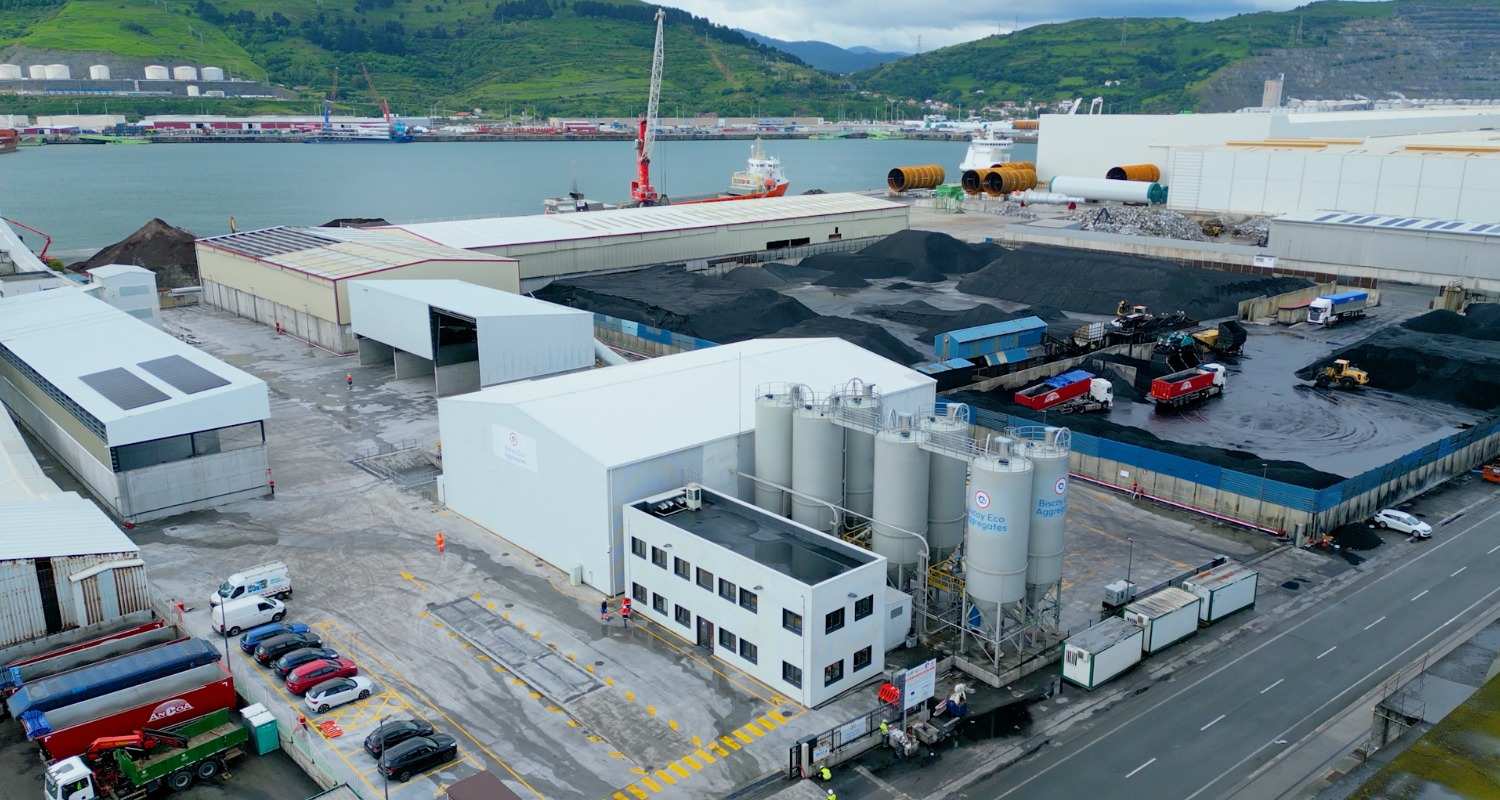
The Port of Bilbao is home to continental Europe's first plant manufacturing synthetic eco-aggregates using accelerated carbonation technology. The facility, promoted by Petronor — a Repsol subsidiary — in collaboration with OCO Technology, transforms incineration ash and CO2 captured from industrial processes into a synthetic aggregate with a negative carbon footprint: each metric ton of eco-aggregate produced permanently captures and sequesters 54 kg of CO2.
Every year, the industry generates millions of metric tons of thermal waste that requires a safe, permanent and sustainable recovery solution, with most of it ending up in landfills. At the same time, the construction sector consumes huge amounts of natural aggregates, extracted from quarries, with significant environmental impact. Two problems that seem to have nothing to do with each other. Until now.
At the Port of Bilbao, continental Europe's first plant to transforms these thermal wastes, along with CO2 captured from industrial processes, into a low-environmental-impact building material is now underway: the eco-aggregate. It is not a pilot or laboratory project, but a commercial-scale industrial facility.
What is an eco-aggregate, what is it used for, and how does it differ from recycled aggregate?
What is an eco-aggregate, what is it used for, and how does it differ from recycled aggregate?
An aggregate is the granular material, such as gravel, sand, or crushed stone, that makes up most of the volume of concrete and other building materials. It is one of the most widely consumed materials in the world, and its extraction from quarries has a direct environmental impact.
Eco-aggregates are synthetic aggregates manufactured using accelerated carbonation. It is lightweight, durable and easily compactable. It is certified according to the UNE-EN 13055 standard, which regulates lightweight aggregates for concrete and mortar and ensures full compatibility with industry standards.
Its applications include mortar, non-structural concrete, blocks, self-leveling, civil engineering, urban furniture, etc. It is a material that integrates seamlessly into existing construction processes, without requiring modifications to formulations or work methodologies.
There are three broad categories of aggregate:
- Natural aggregate is extracted directly from quarries and rivers. It has a positive carbon footprint and exerts pressure on land use.
- Conventional recycled aggregate comes from construction and demolition waste (CDW): concrete, ceramics, and debris. It reduces pressure on quarries but its carbon footprint remains significant.
- Synthetic eco-aggregate is a new category: it is produced through accelerated carbonation using industrial thermal wastes and captured CO2. Its carbon footprint is negative, as the process absorbs more CO2 than it emits.
The key difference between the eco-aggregate and conventional recycled aggregate is not just its origin, but its process. While CDW recycling crushes and reuses existing materials, the eco-aggregate is manufactured from scratch using waste streams that would otherwise go to landfills, permanently sequestering CO2 through mineralization in the process.
|
|
Natural aggregate |
Recycled aggregate (CDW) |
Synthetic eco-aggregate |
|
Source |
Quarry / extraction |
Demolition waste |
Ash + captured CO2 |
|
CO2 footprint |
Positive (emitting) |
Reduced vs. natural |
Negative (−54 kg CO2/t) ✓ |
|
Applications |
Structural concrete, pavements |
Fills, bases, sub-bases |
Non-structural concrete, blocks, mortar, civil engineering |
|
Standard |
EHE-08 / EN 12620 |
UNE-EN 933 / GEAR |
UNE-EN 13055 (lightweight aggregate) |
|
Quarry impact |
Direct (extraction) |
None |
None (avoids 170,000 t/yr) |
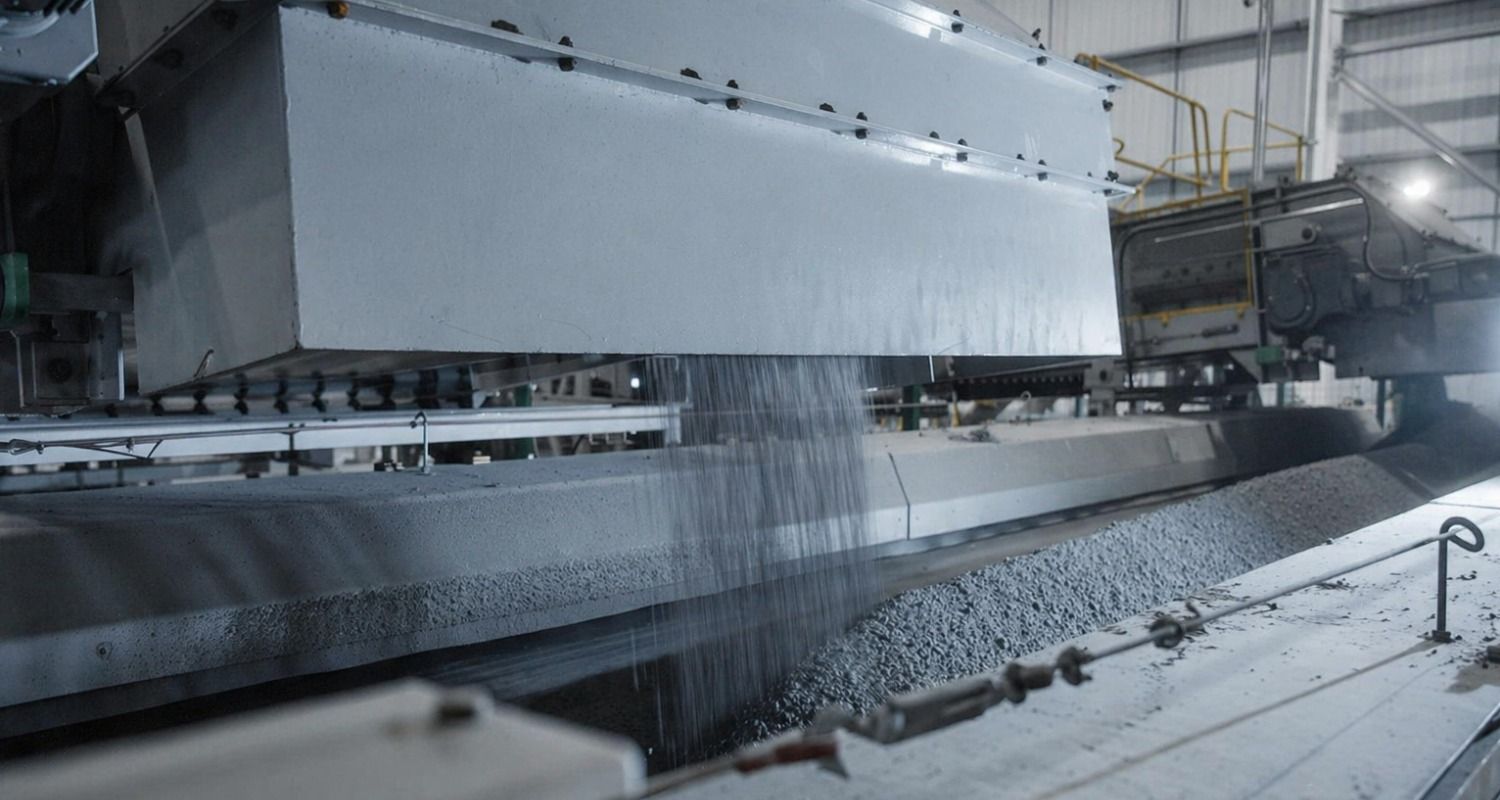
How eco-aggregate is manufactured: accelerated carbonation
How eco-aggregate is manufactured: accelerated carbonation
The raw material inputs consist of two waste streams that would otherwise pose an environmental problem: incineration ash destined for landfills, and CO2 captured from industrial processes near the Port of Bilbao.
The process operates under controlled temperature and pressure conditions. The reactive mineral ash reacts with the injected CO2. The result is stable calcium carbonate. This is the same substance that forms limestone, in which the carbon remains permanently sequestered.
In nature, this same process occurs spontaneously when rocks are exposed to atmospheric CO2 over thousands of years, as part of the geological carbon cycle. OCO Technology's ACT technology compresses that process into minutes, reproducing in an industrial facility what takes nature decades to complete.
Impact of the processes taking place at the plant
The data, calculated for the facility’s maximum capacity, quantifies the scope:
Up to 170,000 metric tons of natural aggregates preserved per year. Quarries that no longer need to be exploited, thanks to a material manufactured from industrial waste
- Up to 125,000 metric tons of waste converted into raw materials per year.
- Up to 6,000 metric tons of industrial CO2 reused annually.
- Up to 170,000 metric tons of natural aggregates preserved by avoiding the need to open new quarries.
- Equivalent to the carbon sequestered annually by up to 300,000 trees.
What used to be a problem is now a building material
What used to be a problem is now a building material
Thermal wastes are among the most complex industrial waste streams to manage. They come from facilities with thermal processes, including municipal waste to energy plants. The residues left after incineration, bottom ash, and fly ash, have no clear industrial application nor can they be recycled through conventional means. The primary disposal method for this type of material can be found in the nearest landfill.
At the same time, the construction sector is structurally dependent on natural aggregates, which are quarried in quantities that place growing pressure on land use and natural resources. Finding industrial alternatives to this extraction has been a challenge for decades.
These two seemingly disconnected problems now converge within a single industrial process. What was once a dead-end waste stream is transformed into the raw material for a building material. What was once an unused emission becomes the agent that permanently sequesters the carbon within that material.
Continental Europe's first plant: an unprecedented facility
Continental Europe's first plant: an unprecedented facility
It is the continental Europe's first plant to apply accelerated carbonation technology on an industrial scale to produce commercial eco-aggregates. This is not an incremental improvement on existing methods, but a breakthrough.
The project is the result of a collaboration between Petronor and OCO Technology, a British company and world leader in this technology. It is supported by the European Innovation Fund (AGGREGACO2 project, ref. 101038931) and the Basque Government's Indartu Program (€1,160,000), two funding instruments that underscore the project’s strategic importance.
It is continental Europe’s first plant to apply accelerated carbonation on an industrial scale: an unprecedented facility with the capacity to produce up to 50,000 metric tons of eco-aggregate per year
The roadmap has progressed as planned: the project started in April 2024, civil works were completed, and equipment installation began in September 2025, with operations scheduled to start in 2026. The installed capacity will reach up to 50,000 metric tons of manufactured eco-aggregate per year.
The location is not a minor detail. The AZ1 area of the Port of Bilbao integrates the facility into Petronor's industrial ecosystem, providing direct access to port and logistics infrastructure, which minimizes raw material transport and enabling the final product distribution.
Capturing carbon permanently: What are removal credits?
Capturing carbon permanently: What are removal credits?
There are two ways to address emissions. The first is to reduce them by upgrading processes or technology. The second, which is more demanding and less common on an industrial scale, is to permanently remove carbon from the atmosphere. The facility operates within the second category.
The captured carbon is not stored transiently or reversibly. It remains permamently and stably mineralized within the eco-aggregate. This distinction is significant: the process is not merely emissions-free; it actively, verifiably, and permanently removes carbon.
This process can be certified through Carbon Removal Credits on specialized international registries that adhere to rigorous standards of verification, traceability and permanence. Each credit represents one metric ton of CO2 effectively removed from the atmosphere and permanently stored, in accordance with internationally recognized criteria. This allows companies and organizations to offset residual or hard-to-abate emissions. Carbon removal credits are an essential pillar in the global transition toward climate neutrality, contributing directly to a net reduction in atmospheric concentrations. Their development faces greater technological, economic and scalability barriers, resulting in a more limited supply and, therefore, greater strategic value. In this context, BEA generates them as an intrinsic co-product of its activity, positioning itself as a key player in an emerging market with high standards of quality and credibility.
Removal credits vs. reduction credits
In the voluntary carbon market there are two types of credits:
- Reduction credits: prevent emissions from occurring (energy efficiency, renewables). These are the most common.
- Removal credits (Carbon Removal Credits): permanently remove CO2 that has already been emitted into the atmosphere. They are scarce and carry greater strategic value. The eco-aggregate generates this second category.
Local impact: Bizkaia as a European benchmark
Local impact: Bizkaia as a European benchmark
The Port of Bilbao is one of the leading industrial ports in northern Spain, home to an ecosystem of world-class energy and industrial companies. The plant is integrated into this ecosystem as part of a larger system, rather than an isolated project.
Petronor brings to the project its extensive industrial experience, technological integration capacity and a commitment to the energy transition in the Basque region that ensures the project’s strategic continuity.
The plant creates new specialized jobs in the fields of carbon capture technology and the circular economy, contributing to the industrial development of a region that has long promoted innovation as a driver of competitiveness.
Furthermore, the project is not designed as a one-off, but rather as the first in a series. The vision is to scale this model to other facilities, positioning Bizkaia and the Basque Country as a European hub for carbon-capturing circular materials.
Waste, emissions, and building materials: a game-changing triangle
Waste, emissions, and building materials: a game-changing triangle
The challenges outlined at the beginning, unresolved waste, emissions, and aggregates extracted from quarries, today have a concrete answer in a specific location.
Eco-aggregates are more than just a building material. It is proof that, through innovative technology it is possible to connect waste recovery, CO2 capture and the production of sustainable construction materials.
You may also be interested in
You may also be interested in