
Renewable hydrogen
Renewable hydrogen
Renewable hydrogen, a new raw material for industry
Renewable hydrogen, a new raw material for industry

Hydrogen director at Repsol
What is renewable hydrogen?
Renewable hydrogen is a source of energy that is obtained from non-fossil sources and through processes with low or no emissions. The main generation routes are:
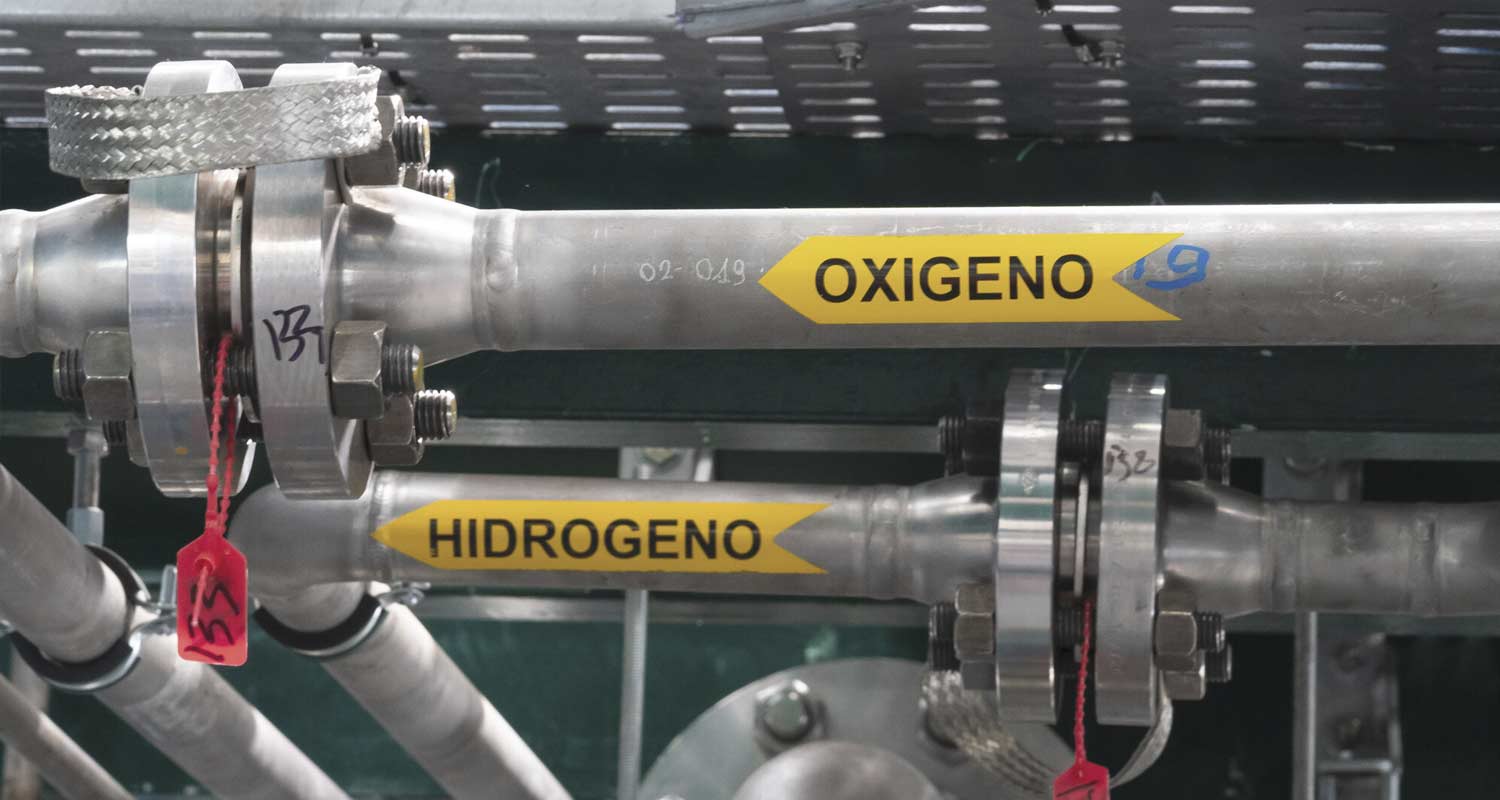
- Electrolytic hydrogen, produced by electrolysis of water using renewable electricity.
- Hydrogen of biological origin, generated from biogas such as biomethane or biofuels from organic waste.
Why renewable hydrogen is necessary
Renewable hydrogen is a new raw material that reduces CO2 emissions in industrial processes.
Renewable hydrogen is being configured as a new raw material in industry relevant to transform industrial processes. It can be used as a substitute for raw materials from fossil energies, significantly reducing CO2 emissions and contributing to industrial decarbonization and the production of goods and services such as renewable fuels and a host of materials (for the automotive, construction, health, packaging sectors, etc.), but with a lower carbon footprint.
Renewable hydrogen can be used in mobility, where there are two main lines of development: on the one hand, as a raw material to produce synthetic fuels, which are obtained from renewable hydrogen and captured CO2. Synthetic fuel production technology is still under development and for the moment, there are only pilot and research projects and, on the other hand, the use of hydrogen fuel cells for vehicles, buses, or trains, especially in those with great autonomy needs.
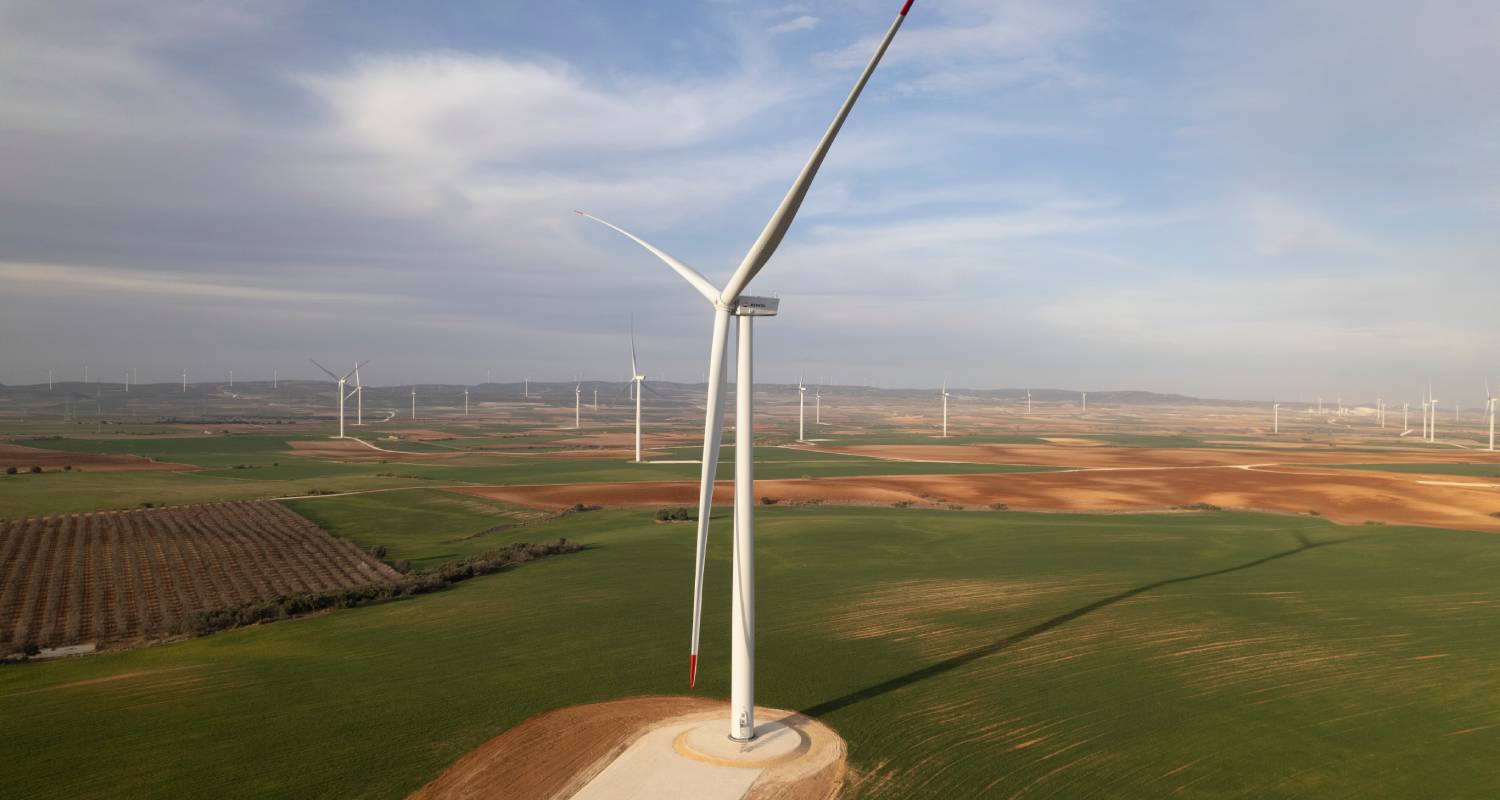
Finally, renewable hydrogen can be used for seasonal storage of renewable energy for long periods of time, something that is not possible today in conventional batteries. The idea behind this use is to be able to store the energy generated by renewable sources such as solar or wind, so that it can be used at different times in time.
Our vision of renewable hydrogen
We are Spain's largest producer and consumer of hydrogen. We produce 60% of the hydrogen that is consumed in the country and approximately 4% of what is currently used in Europe.
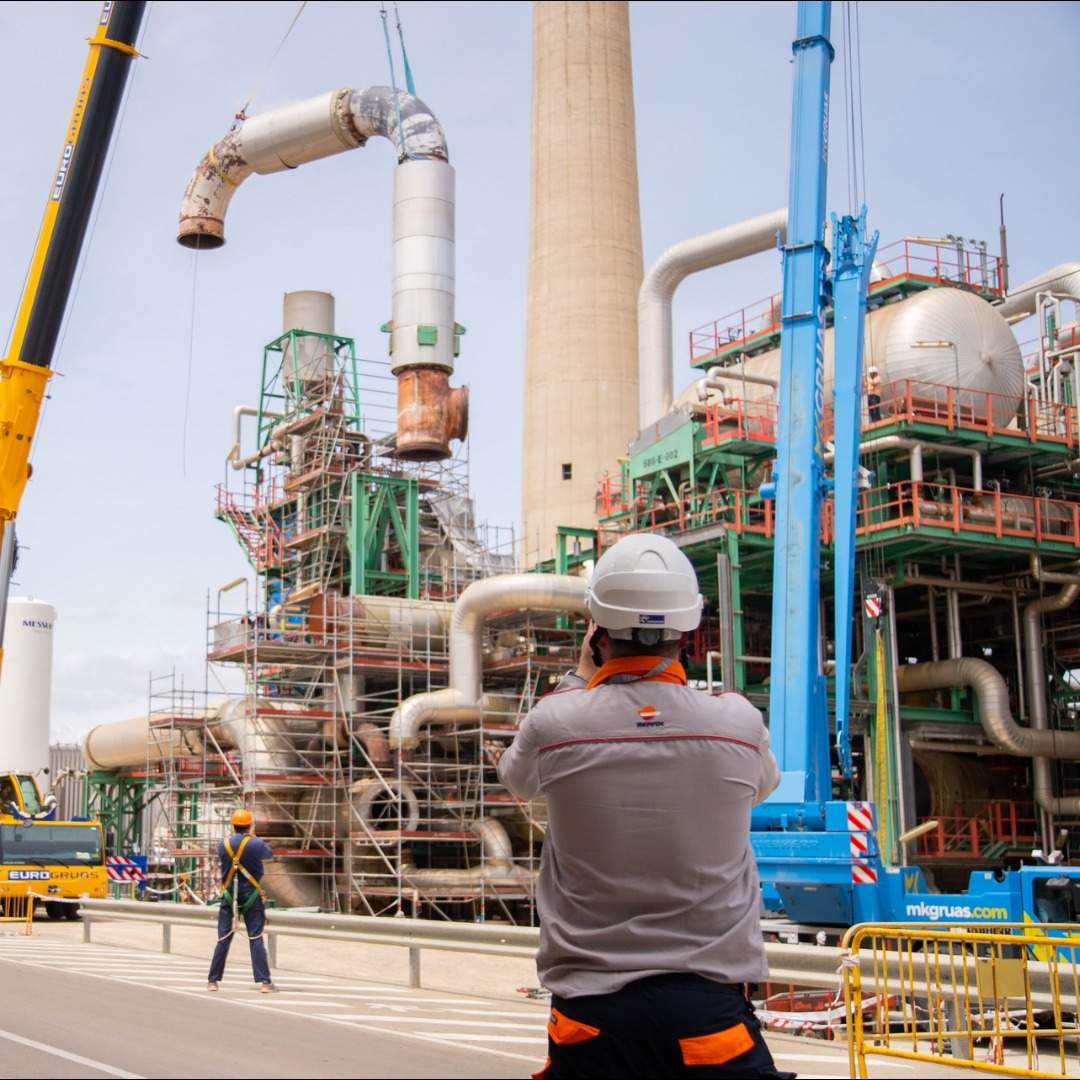
Hydrogen is essential for many of our industrial processes, especially in the refining sector, which accounts for about 80% of national consumption. Therefore, our strategy is based on a clear principle: to produce renewable hydrogen where we need it, prioritizing its use in our industrial complexes as part of the transformation process.
We are committed to a model that integrates the entire value chain. From the generation of renewable energy that powers electrolyzers and production, to the direct use of hydrogen in our industrial operations to manufacture essential products such as fuels and materials that, thanks to that renewable hydrogen, will have a lower carbon footprint. This ability to approach the process comprehensively allows us to move forward with agility and ensure that each project responds to real consumption needs.
Despite the potential, the development of renewable hydrogen still faces significant challenges for its deployment. The main challenge for the deployment of renewable hydrogen is the development of a regulatory, financial, and infrastructure environment that allows the technology to scale up competitively and sustainably, overcoming the current cost gap compared to conventional hydrogen and ensuring long-term industrial viability.
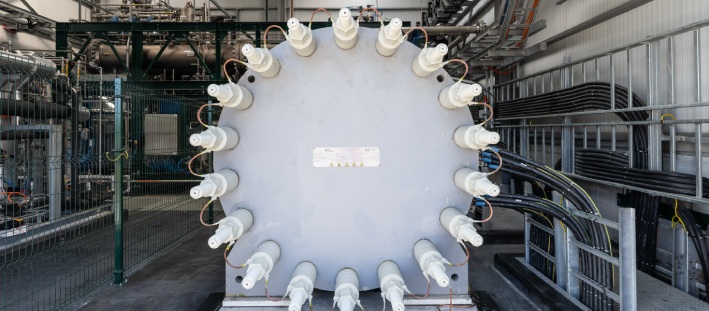
The energy used by electrolyzers represents an important part of the cost of renewable hydrogen. Therefore, cheap energy is essential to reduce production costs and increase competitiveness. Another important factor is the scale of production. That is why we are promoting projects of between 100 and 150 MW, which will mark a change in the size of hydrogen production in Spain.
Our ambition for 2030 is to achieve between 700 and 1,200 MW of renewable hydrogen equivalent, of which 350 MW will be produced from renewable hydrogen generated through biogas, such as biomethane.
We believe that this deployment is an opportunity to strengthen the country's energy independence and to consolidate a competitive industrial ecosystem.
Renewable hydrogen and an opportunity for Spain
Spain has the opportunity to become a key exporter of renewable energy thanks to hydrogen: the sun, wind, and industrial infrastructures allow it to be produced on a large scale and supplied to Europe.
The European Union has coined the concept of the hydrogen valley to describe how this economy will unfold. First in local areas where production and consumption coexist around an industrial core. In that model, our industrial complexes become the core that sustains and connects this entire new value chain. Then, connecting those valleys together and eventually creating cross-border corridors capable of transporting renewable hydrogen across Europe.
EU initiatives such as RePowerEU identify renewable hydrogen as an essential vector for European energy security, and projects such as H2Med, designed to transport renewable hydrogen from Spain and Portugal to the center of the continent, shape that strategic role.
In addition, the deployment of renewable hydrogen has a direct impact on employment and economic development in the areas where these projects are implemented. The construction and operation of electrolyzers, the creation of new infrastructures, the demand for local suppliers, and the technological impulse generate industrial activity, qualified employment, and territorial specialization that can attract new investments. Each hydrogen valley thus becomes an engine for the local economy and for the generation of competitive industry.
Our projects for the promotion of renewable hydrogen
Renewable hydrogen is a key pillar in our industrial transformation. At our Cartagena Industrial Complex, we have given the green light to the construction of a 100-MW electrolyzer that will produce renewable hydrogen to replace part of the fossil hydrogen currently used at the Industrial Complex. Specifically, up to 15,000 t H2/ year, which means up to 167,000 t CO2 avoided. Its implementation will boost the Hydrogen Valley of the Region of Murcia.
At the Tarragona Industrial Complex, the T-HYNET initiative includes a 150-MW electrolyzer designed to supply renewable hydrogen to the chemical and refining industries of the environment. It is one of the strategic projects of the state program of Hydrogen Valleys and a key pillar to decarbonize one of the largest industrial hubs in the Mediterranean, with a capacity of up to 23,000 t H2/year that will avoid up to 159,000 t CO2. emitted.
In the Basque Country, the 100-MW project at Petronor is integrated into the Basque Hydrogen Corridor (BH2C). This electrolyzer will directly feed the processes of the Petronor industrial complex and contribute to creating a local hydrogen market that strengthens the industrial competitiveness of the environment, with up to 15,000 t H2/year that will mean up to 167,000 t CO2. This project joins the 2.5-MW project operational since 2023 with a capacity of up to 350 t H2/year and up to 3,600 t CO2. A third, 10 MW, is already under construction, which will supply renewable hydrogen to the synthetic fuel demo plant.
Also at the A Coruña Industrial Complex, a new electrolyzer is being developed with the aim of producing renewable hydrogen for the supply of its own refinery and contributing, in the future, to the European hydrogen network. This project is still in the development and planning phase.
Outside Spain, in Sines (Portugal), the H2ALBA project (4MW) uses an electrolyzer based on PEM (Proton Exchange Membrane) technology. This technology uses a polymeric membrane that allows hydrogen to be separated with great purity and with a very rapid response to changes in the available renewable electricity. Up to 600 t H2/year will thus be produced, with up to 6,000 t CO2 avoided.
Repsol promotes the main hydrogen valleys in Spain, such as the Basque Hydrogen Corridor, the Hydrogen Valley of Catalonia, the Hydrogen Valley of the Region of Murcia, the Puertollano Hydrogen Cluster, and the Ebro Hydrogen Corridor. Through these valleys, it also interacts with the Hydrogen Valleys Alliance in Spain, made up of 16 hydrogen valleys throughout the country, whose main objective is to promote the renewable hydrogen value chain in Spain, positioning the country as an important player in the European economy of this energy vector.
Added to these developments is our leadership in SHYNE (Spanish Hydrogen Network), a multisectoral alliance with 33 members that works to accelerate the implementation of renewable hydrogen throughout its value chain. SHYNE promotes technology, infrastructure, training, and public-private collaboration to position Spain as a European leader in this field.
Each of these projects contributes a different piece to the development of renewable hydrogen: scale, territory, industrial applications, or collaboration.