Renewable fuels for transport and aviation
Renewable fuels for transport and aviation
The industrial connection between renewable aviation fuels and renewable road fuels
The industrial connection between renewable aviation fuels and renewable road fuels

Senior Business Development Manager for Renewable Fuels
Renewable fuels for transport are energy solutions that replace fossil fuels without modifying engines or infrastructure. Two vectors lead this transition: SAF (Sustainable Aviation Fuel) for aviation and HVO (renewable diesel) for road. Both are produced in the same plant, with the same feedstocks of organic origin and through equivalent industrial processes. This industrial integration is key to guaranteeing supply, optimizing production costs and advancing the reduction of CO₂ emissions within the transport sector. Repsol operates two renewable fuel plants in Spain (Cartagena, with 250,000 metric tons per year, and Puertollano, with 200,000 metric tons per year) and supplies Nexa diesel of 100% renewable origin at more than 1,700 service stations in the Iberian Peninsula.
What would you think if you discovered that different renewable feedstocks can give rise to both the fuel used by a truck on the road and the fuel powered by a commercial aircraft?
It is not a metaphor: they leave the same point, go through the same industrial process and the same plant. This industrial integration is key to guaranteeing supply, optimizing production costs and advancing the reduction of CO₂ emissions within the transport sector. But how is it possible and why is that connection so important for the availability of fuels from 100% renewable origin?
What are renewable fuels for transport?
What are renewable fuels for transport?
To understand this multi-energy ecosystem, it is helpful to precisely define the two substitution vectors driving the energy transition in transport.
- SAF (Sustainable Aviation Fuel). Generic term for renewable fuels for aircraft and air transport in general, designed to replace conventional fossil-based jet fuel.
- Road renewable diesel (HVO): Renewable fuel produced from different renewable feedstocks, such as used cooking oils, animal fats, organic waste and other advanced feedstocks, through hydrotreatment processes.
Both fuels share a fundamental technical quality: they are drop-in fuels. This means that their chemical and physical properties are equivalent to those of conventional fuels, which allows them to be used directly in combustion engines and to rely on existing distribution and supply infrastructures, without the need for any technical modification. In addition, in both cases its production is based on the use of organic feedstocks of renewable origin.
Same origin, different uses: industrial co-production
The production of renewable fuels is not limited to a single technology. There are different pathways, such as the hydrotreatment of oils and fats - which yields renewable diesel and aviation fuel via the HEFA route -, biomass gasification or pyrolysis, as well as the synthesis of fuels from renewable hydrogen and captured CO₂. These alternatives make it possible to leverage diverse feedstocks, ranging from used cooking oils to agricultural waste and forestry biomass, transforming them, through the corresponding conversion and conditioning stages, into road and aviation fuels.
Through the various production routes, several renewable fuel fractions can be obtained simultaneously, including renewable diesel for road transport and SAF for aviation.
Both products share:
- The same renewable organic feedstocks.
- The same process units and reaction facilities
- The same logistical and operational infrastructure in the industrial complexes.
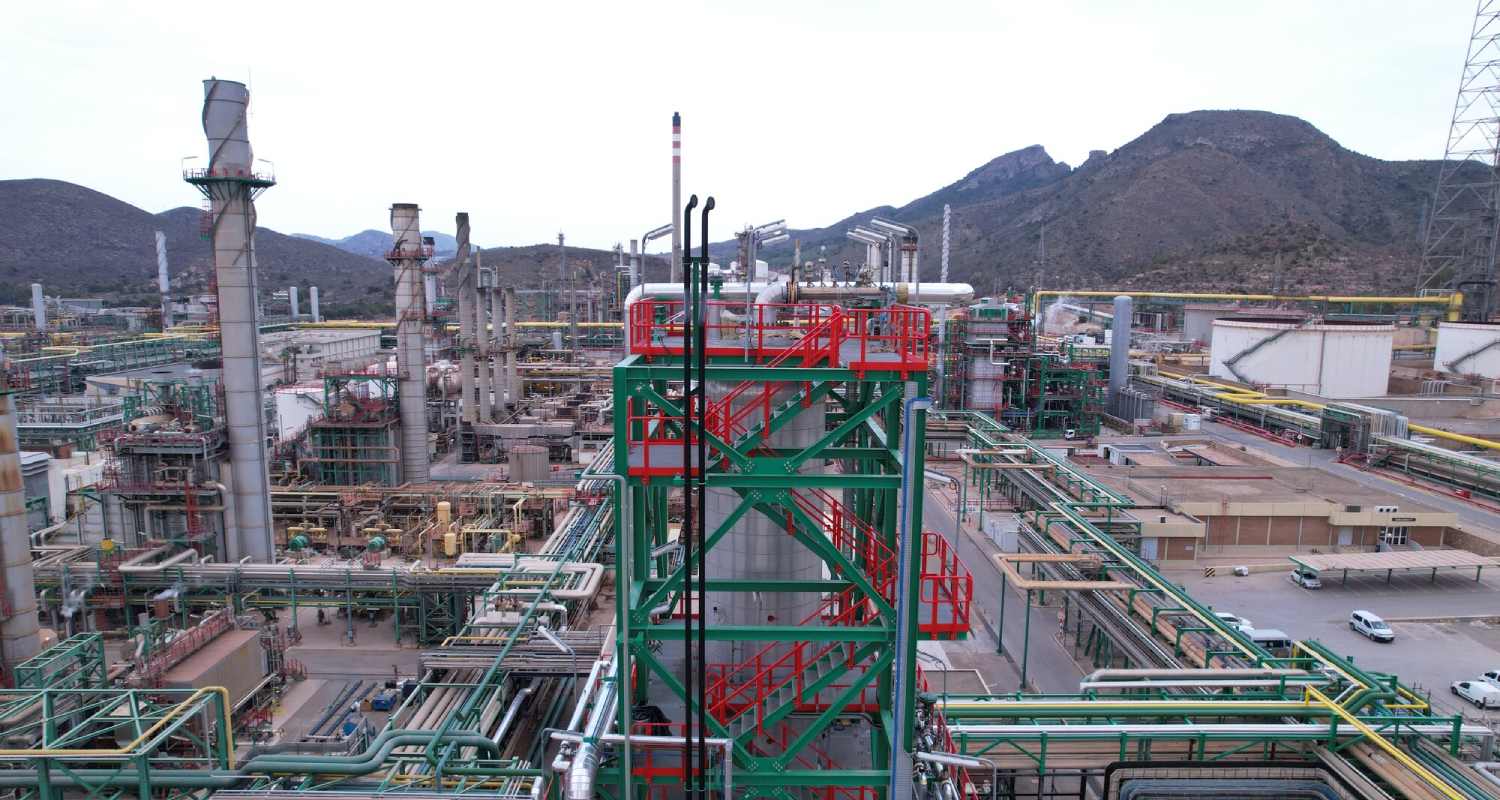
This simultaneous production is achieved by transforming traditional industrial complexes, modifying existing units or incorporating new advanced production units alongside operational refineries. An example of this capacity is found in the facility at the Cartagena industrial complex, the first in the Iberian Peninsula dedicated to the large-scale manufacture of these fuels of 100% renewable origin from organic feedstocks.
This logic of joint production also reflects the standard operation of a refinery. As highlighted in an IATA report, the feedstocks entering a refining facility are complex hydrocarbons mixtures whose transformation necessarily yields different products and fractions for various applications. That is why an industrial plant is not designed to manufacture only a single fuel.
This issue is especially relevant in the case of aviation, since fuel represents less than 10% of global refined product production, well below the share of gasoline or diesel.
Therefore, accelerating the production of renewable road fuels not only contributes to the decarbonization of road transport, but also reinforces the decarbonization of aviation.
HVO and HEFA: two names for the same chemical process
HVO and HEFA: two names for the same chemical process
A frequent question when discussing renewable transport fuels is why the exact same chemical process goes by different names depending on the sector. The answer is the technical specification. HVO (Hydrotreated Vegetable Oil) is the name given to the renewable fuel produced by hydrotreatment when it is used for road transport, both for passenger cars and for heavy transport. HEFA (Hydroprocessed Esters and Fatty Acids) is the name used by aviation to refer to the same chemical process when the refined product meets the technical specifications of commercial aviation.
That is: the resulting molecule and the industrial process are equivalent, but the sector for which it is intended and the final technical specification determine the commercial name. This is precisely one of the keys that makes it possible to produce both fuels simultaneously in the same plant.
| SAF (HEFA) | Renewable diesel (HVO) | Conv. biodiesel (FAME) | |
|---|---|---|---|
| Sector | Commercial aviation | Road transport (passenger cars and heavy transport) | Road transportation |
| Feedstocks | Used cooking oils, animal fats, organic waste | Same renewable feedstocks | Vegetable oils, used fats |
| Process | Hydrotreatment (HEFA route) | Hydrotreatment (HVO route) | Transesterification |
| Type | Drop-in: 100% compatible | Drop-in: 100% compatible | Limited mixing for technical reasons |
| Maximum Mix | Up to 50% with fossil kerosene | Up to 100% (pure use) | Limited to specification |
| Key regulations | ReFuelEU Aviation | RED III / LDV-HDV revision | RED III |
Challenges in SAF production: Road transport as an aviation market driver
Challenges in SAF production: Road transport as an aviation market driver
Road transport plays a key role today as a market driver for renewable fuels, providing the demand scale needed to boost investments that will subsequently benefit sectors such as aviation and maritime transport.
SAF production reaches its economic viability when carried out in an integrated manner with renewable diesel production for road transport. Conversely, standalone aviation fuel production significantly increases the cost of the final product.
The industrial co-production model allows:
- Allocate and optimize fixed and capital costs. By sharing the process units and auxiliary systems, the cost per tonne produced decreases.
- Leverage existing infrastructures. The refurbishment of industrial complexes makes it possible to depreciate existing assets and shorten start-up times.
- Optimizing the supply chain. Economies of scale in the purchase and pre-treatment of organic feedstocks benefit both product lines.
Thanks to this integrated scheme, it is possible to provide economic viability to the investments necessary to continue improving and increasing the supply of energy solutions with lower emission intensity.
Renewable fuel in road transport: Nexa diesel
In road transport, renewable fuel makes it possible to reduce direct vehicle CO₂ emissions without modifying engines or refuelling logistics. This is a particularly relevant option for heavy-duty transport (trucks, buses and industrial vehicles), where electrification advances more slowly than in passenger cars and where renewable fuels represent an immediate solution to reduce emissions in existing fleets. Repsol markets this product under 100% renewable Nexa diesel brand. It is available at more than 1,700 service stations in the Iberian Peninsula, with more than 550 million liters sold during the year.
These data show that the progressive replacement of traditional fossil fuels with renewable fuels is a technically viable alternative for the current fleet, where internal combustion engine vehicles account for 97% of the on-road fleet.
Renewable fuel in aviation: SAF and consistency with the road
In air transport, sustainable aviation fuel (SAF) is the main pathway to reduce direct CO2 emissions from commercial aviation without modifying aircraft or airport logistics. Current technical specifications allow blending up to 50% SAF with conventional jet fuel on commercial flights.
The key takeaway here is that renewable aviation fuel and renewable road fuel are not two parallel industries, but rather two commercial outlets stemming from the same industrial network. The scale achieved by 100% renewable Nexa diesel at service stations is, in fact, one of the key factors enabling economically viable SAF production in Cartagena.

Different regulatory frameworks for the aviation and road sector: ReFuelEU, RED III and LDV/HDV revision
Different regulatory frameworks for the aviation and road sector: ReFuelEU, RED III and LDV/HDV revision
Despite sharing a production facility and source technology, SAF and renewable road fuels target markets governed by entirely separate EU regulations.
- Aviation sector. It is specifically regulated by the European ReFuelEU Aviation regulation, which mandates fuel suppliers to supply increasing minimum shares of SAF at European Union airports, starting at 2% in 2025 and reaching 70% in 2050.
- Road sector. It is governed by the Renewable Energy Directive (RED III), which sets binding targets for the integration of renewable energies in road, aviation, and maritime transport across European Union Member States.
- In the road sector, there are also CO₂ emission standards for light-duty vehicles (LDV) and heavy-duty vehicles (HDV), which, unlike the Renewable Energy Directive (RED III) fail to adequately recognize the contribution of renewable fuels (CCRR) to the decarbonization of road transport. This lack of regulatory consistency presents an obstacle to its development, especially given the strategic role of road transport as a market driver to promote the industrial scaling of renewable fuels and facilitate their deployment in sectors such as aviation and maritime transport, whose regulations actively encourage their use. Therefore, it is essential to move towards a regulatory framework aligned with the RED that recognizes the contribution of renewable fuels across all means of transport.
For the energy transition to be viable and effective, it is necessary to leverage all solutions capable of contributing to the decarbonization of transport. This requires regulatory frameworks that account for the features of each sector, without losing sight of the industrial, technological, and productive synergies existing between them.
An industrial opportunity for Spain: Cartagena, a plant designed before RefuelEU
An industrial opportunity for Spain: Cartagena, a plant designed before RefuelEU
The processing capacity of the industrial complexes makes it possible to simultaneously supply land, air, and maritime transport
Spain is in a privileged position to consolidate its role as a major European industrial hub for the production and export of renewable fuels. The transformation capacity of the existing industrial complexes allows us to supply land, air and maritime transport simultaneously.
Repsol operates a plant in the Cartagena industrial complex, with the capacity to produce 250,000 metric tons of renewable fuels per year. In addition, it features a second facility at the Puertollano industrial complex, producing approximately 200,000 metric tons of 100% renewable fuel focused on road and maritime transport.
However, the case of the Cartagena plant exceptionally illustrates how the development of renewable fuels for road transport can subsequently pave the way for their expansion into other means of transport.
The final investment decision for the C43 project was made in 2020, prior to the publication of the ReFuelEU Aviation Regulation and before a consolidated regulatory demand for SAF existed. However, the plant was designed from the ground up with the flexibility to produce both renewable road fuels and sustainable aviation fuel. This approach enabled the investments initially driven by land transport demand to build industrial capacity that later facilitated SAF supply, positioning the facility to respond to the market even before the entry into force of European regulations.
This foresight enabled the facility to be prepared to supply renewable aviation fuels one year before the entry into force of the European regulation. On the other hand, if the investment had been targeted exclusively at the aviation market, the decision could have been delayed by at least five years. The earlier development and scaling of renewable road fuels therefore helped create the industrial capacity needed to subsequently extend these solutions to aviation.
In addition, from a commercial point of view, we have surpassed 1,700 service stations supplying 100% renewable Nexa diesel in the Iberian Peninsula, with accumulated sales of over 550 million liters during the year. These data show that the progressive replacement of fossil fuels with renewable fuels is a technically viable alternative for the current fleet, where internal combustion engine vehicles account for 97% of vehicles on the road.
Challenges in producing 100% renewable fuels
Challenges in producing 100% renewable fuels
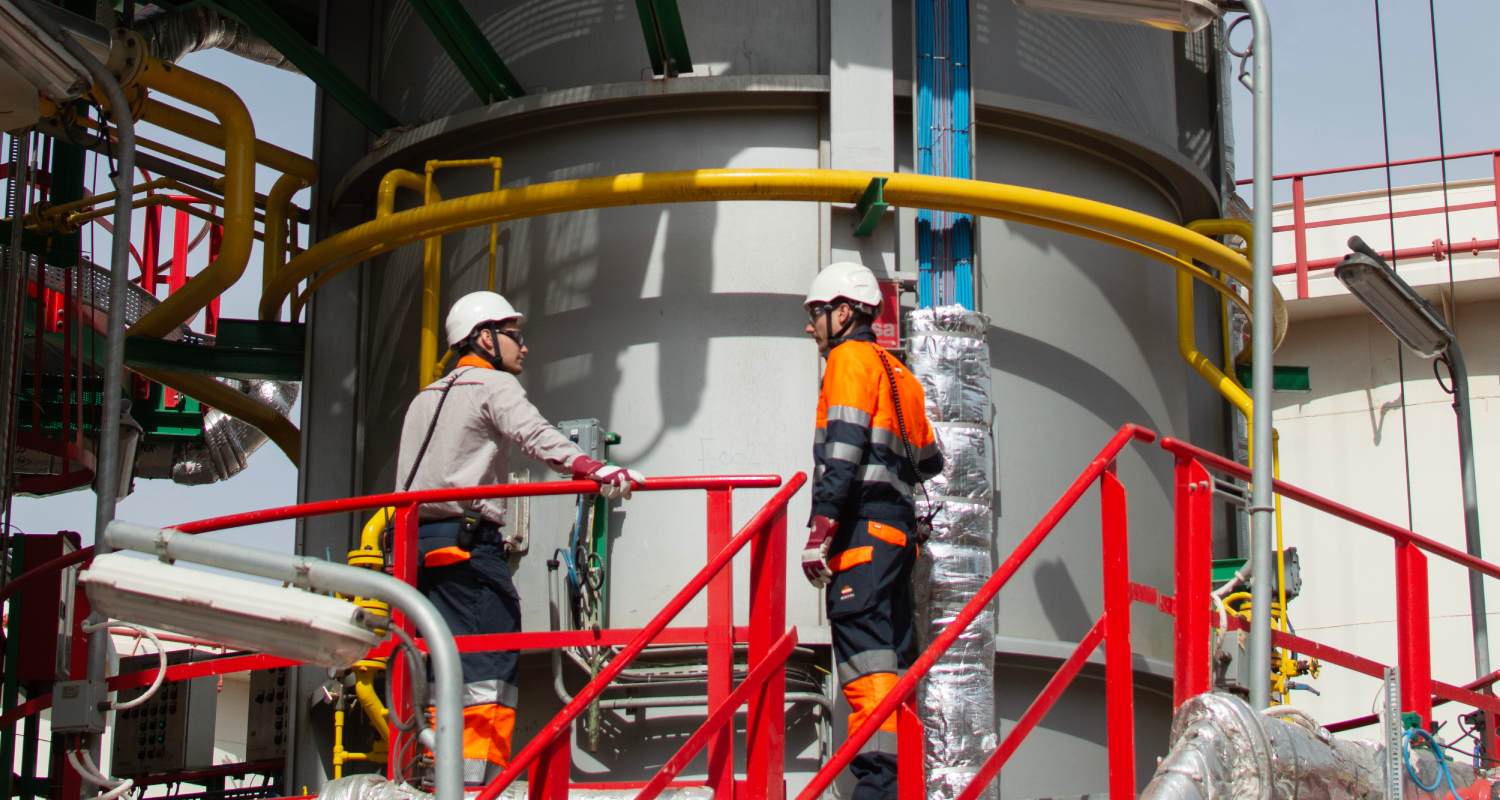
To maintain the necessary pace of deployment, the industry must address various structural challenges:
- Production cost gap. Although industrial integration reduces operational burdens, the cost of renewable fuel remains higher than that of fossil oil derivatives. Technological evolution, scaling and optimization will eventually help us close the gap with those derivatives.
- Scalability of installed capacity. Driving final investment decisions is required to accelerate the development of new projects and move toward industrial-scale production capacity.
- Regulatory certainty and technological complementarity. It is essential to have stable and predictable regulatory frameworks that recognize the contribution of different solutions to the decarbonization of mobility. In the ongoing review of the European CO₂ regulations for light-duty vehicles (LDV) and heavy-duty vehicles (HDV), it is particularly important to move towards an approach that promotes technological complementarity and leverages the potential of renewable fuels alongside other mobility solutions.
Toward a common goal
Toward a common goal
As we have seen throughout the article, the real key to accelerating the availability of 100% renewable fuels lies in the integration of their manufacturing processes. Sharing technology, raw materials, and production facilities across different transport sectors is what provides these solutions with the necessary scale and viability.
Although road transport and aviation are advancing with independent goals and regulatory frameworks, both pathways share the same industrial architecture. Maintaining this integrated model across our facilities allows us to optimize investments and provide an immediate technical response to reduce CO₂ emissions in mobility.
Frequently asked questions about renewable fuels for transport and aviation
HVO stands for Hydrotreated Vegetable Oil and refers to the hydrotreated renewable fuel intended for heavy-duty transport and passenger cars. HEFA stands for Hydroprocessed Esters and Fatty Acids and is the technical name used in aviation to refer to the exact same chemical process when the refined product meets commercial aviation specifications.
It is a renewable fuel with physical and chemical properties identical to those of traditional hydrocarbons, allowing it to be used directly in current internal combustion engines, as well as distributed through existing transport, storage, and refueling systems and infrastructure without requiring any adaptation.
Bio-based fuels (or advanced biofuels) are derived from processing renewable feedstocks such as used cooking oils or animal fats. Synthetic or e-fuels, on the other hand, are made by capturing CO₂ and integrating it with renewable hydrogen produced via electrolysis powered by renewable sources.
According to technical specifications for aviation fuels, SAF obtained via HEFA can be blended at up to 50% with traditional fossil kerosene for use in commercial flights without modifying aircraft systems.
The ReFuelEU Aviation regulation establishes a minimum 2% SAF quota that fuel suppliers must supply at European Union airports starting in 2025. This share will gradually increase to 70% by 2050.
No. Conventional biodiesel (FAME) is produced via transesterification processes, which limit its blending percentage in traditional diesel engines due to technical reasons regarding stability and compatibility with current engines. Renewable diesel (HVO), on the other hand, is synthesized via hydrotreating, resulting in a pure hydrocarbon that is 100% compatible with the diesel engines of any commercial vehicle or passenger car.
¿Quieres estar al día sobre las tendencias que definirán el futuro?
¡No te quedes atrás! Únete a miles de personas que descubren cada mes nuevos contenidos sobre energía, tecnología y hogar.
You may be interested in
You may be interested in