
Service stations
Service stations
How the retail market for service stations works in Spain
How the retail market for service stations works in Spain

Director of Mobility in Spain
When we talk about service stations, we usually think of a single, uniform market, but it's actually not like that. Behind a network that, at first glance, looks perfectly standarized there are different business models, different contractual relationships, specific regulatory obligations, and various public oversight mechanisms that all coexist.
Keep reading to learn how the retail market for service stations works in Spain.
According to data from AICE (Association of the Fuel Industry in Spain) and the CNMC (Spain's National Commission of Markets and Competition), in Spain we have more than 12,600 service stations. Contrary to what may seem, most of them (52%) are independent, that is, they operate without any association to another brand and without an exclusive contract with an energy company. In addition, 74% of the network of independent stations is made up of single service stations that do not have a presence elsewhere.
This explains why talking about "the gas station market" in the singular is really a simplification. It's a decentralized sector with traditional brands alongside independent networks, stations linked to convenience stores, cooperatives, and other market players, each with their own cost and logistics structures, differential services, and specific commercial positioning.
A heterogeneous market
A heterogeneous market
The first thing to keep in mind is that not all service stations work the same way. It is convenient to distinguish two major models: those that operate under the brand of an energy company and those that are independent.
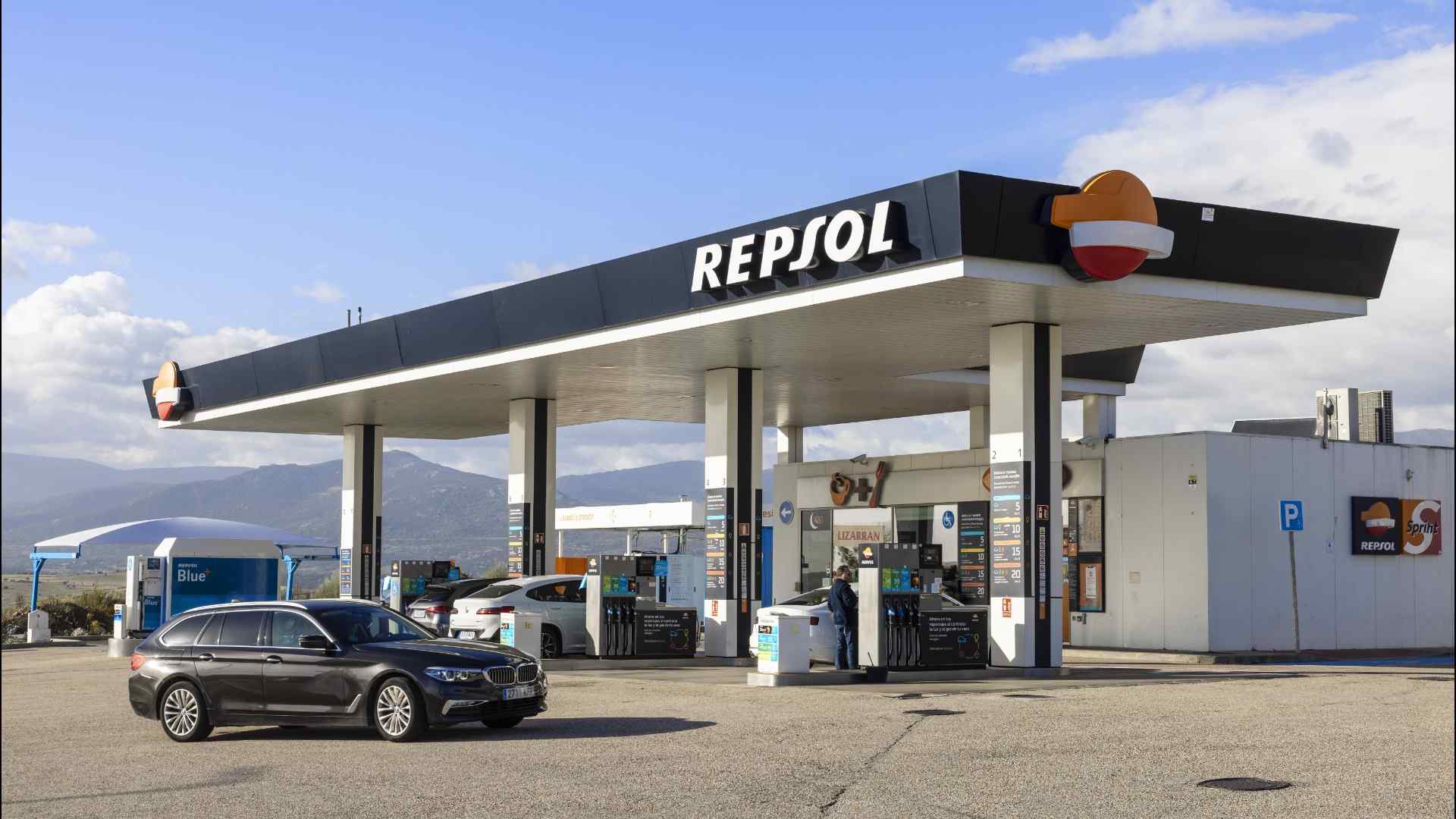
Currently, 48% of service stations in Spain operate the brnad of some energy company, wither network or associated. Repsol has around 3,500 service stations, less than 30% of the national total, most of which are standard bearers.
The owned network consists of COCO (Company Owned, Company Operated) and DOCO (Dealer Owned, Company Operated) service stations. In the first case, the energy company owns and manages the service station; while, in the second case, the service station is owned by a third party and managed by the energy company.
In the flagship management model we find two modalities: CODOs (Company Owned, Dealer Operated), in which the energy company owns the station and rents the management to a third party under the company's flag; and DODOs (Dealer Owned, Dealer Operated), in which both the ownership and management of the station are in the hands of third parties, even if it is flagged by an energy company.
The associated service stations are supplied exclusively by the energy company that flags them, that is, they cannot market petroleum products from other brands because they focus their value proposition on differential services and exclusive formulations of their own, a key element in the differentiation of the premium ranges. Regarding corporate identity, they are required to use the image, colors, logos, and signage of the parent company in all station components (the tall pylon signs, canopies, pumps).
From a trade policy and pricing point of view, the management of associated service stations differs whether it is an CODO or a DODO. In the first case, the manager is a commission agent of the energy company regarding the sale of fuels and an independent manager regarding the rest of the services it offers (store, washing, electric recharge, etc.); while, in the second, the manager is an independent entrepreneur both in the sale of fuels and in the rest of the services it offers. In either case, the associated station has the ability to decide the final retail price, although in the case of CODOs, any discount they make will be charged to their own commission.
On the other hand, like DODOs, independent stations, which operate without a third-party flag or an exclusivity contract with an energy company and which currently represent about 52% of all stations in Spain, also operate autonomously and decide their final retail prices based on their own operating margins and purchase costs from the wholesale operators from whom they source.
To understand how fuel prices are formed at service stations, you can consult this analysis on their pricing structure. How is it broken down and how much tax does the price of gasoline have?
What is a reliable operator?
What is a reliable operator?
The retail market is also structured according to levels of traceability, solvency, and regulatory control. In recent months, the figure of the reliable operator (operador confiable) has gained visibility.
This is a regulatory figure linked to the control of VAT on fuels. The Spanish Tax Agency has created a specific register for reliable operators, integrated into the register of extractors. Operators must meet four requirements to obtain this status:
- Be included in that register of extractors.
- Can accredit a minimum volume of extractions of at least 1 billion liters in the previous year.
- Have operated as a wholesaler in the previous three years.
- Demonstrate financial solvency.
In other words, the purpose of this figure is to identify operators with sufficient traceability, size, and compliance capacity within a particularly sensitive chain from a tax standpoint, all a context of combating fraud and preventing practices that, through intermediaries, could attempt to skirt payment of VAT by passing it on to the customer, as has been reported several times in the media.
At the beginning of 2026, the following companies were defined as reliable operators: Repsol, Cepsa, BP Spain, Galp Spain, Kuwait Petroleum Spain, DISA Peninsula.
Transparency at service stations in times of price volatility
Transparency at service stations in times of price volatility
Spain's Ministry for the Ecological Transition and the Demographic Challenge (MITECO) requires, through Order ITC/2308/2007, the submission of information on sales prices and quantities supplied.
This requirement applies to wholesale operators, owners of facilities dependent on an operator, and owners of independent facilities. In addition, information on opening hours and geographical coordinates must be provided. All this information is fed into a public information geoportal that allows consumers to compare stations and look up fuel prices and charging stations.
The regulations even entail consequences if this information is not sent correctly: MITECO's FAQ section tells us that failure to comply with the deadlines or provide the required content constitutes a serious administrative offense, punishable by fines of €60,000 to €600,000. This reporting requirement is a key piece of market transparency.
To all this we can add the work undertaken by the CNMC. The regulator publishes periodic bulletins on fuel distribution at service stations, analyzes changes in the census of facilities, and keeps an updated list of wholesale operators that have notified the ministry of the start of their activity. In a nutshell, there is a whole public monitoring architecture that allows us to observe both the structure of sector competition and how part of it changes and adjusts to market conditions.
Likewise, since the recent entry into force of Royal Decree-Law 7/2026, of 20 March, approving the Comprehensive Crisis Response Plan in the Middle East, and until the end of June, wholesale operators of petroleum products with refining capacity in Spain must report weekly to the CNMC information on their costs of acquiring petroleum products and the sale prices of fuel to service stations, both those integrated into their distribution network and to independent ones.
There is, therefore, an exhaustive monitoring of the prices of petroleum products.
In short, to understand the retail market for service stations in Spain, you have to look at the full picture. This means understanding its business structure, its points of connection, its regulatory requirements, and its transparency mechanisms. That broader view is what allows us to interpret the sector with more context and without falling into generalities or simplifications.
You may be interested in
You may be interested in