

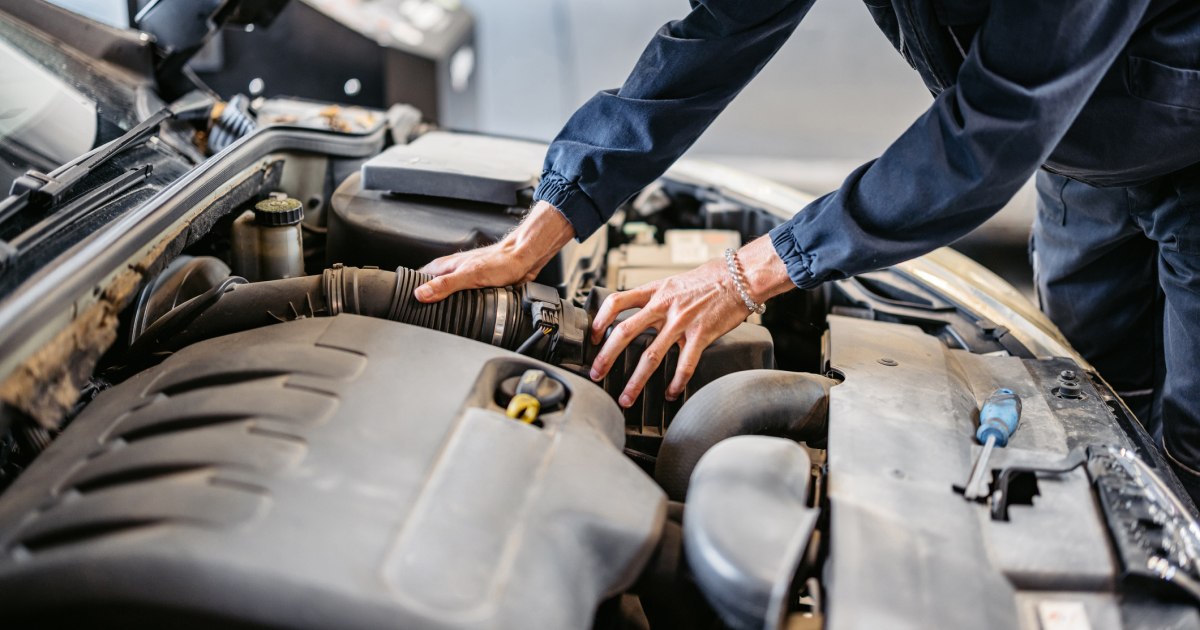
Ultra-efficient hybrid engine
Ultra-efficient hybrid engine
Innovation to decarbonize transportation
Innovation to decarbonize transportation

Product Design Technical Consultant
Europe is currently revisiting its regulations that would limit the sale of combustion engine vehicles starting in 2035, in addition to the role that renewable fuels will have to play in the energy transition. This is a pivotal moment for the future of mobility and climate goals, one in which we must meticulously evaluate all the alternatives capable of reducing greenhouse gas emissions clearly and immediately.
This is where, together with Horse Technologies, we have developed an ultra-efficient hybrid engine that demonstrates how European industrial innovation can continue to contribute real progress towards reducing CO2 and other greenhouse gas emissions in the transport sector. This engine is capable of achieving high levels of thermal efficiency (44.2%) and, among other highlights, consumes less than 3.3 liters per 100 kilometers, making its fuel consumption 40% below that of an equivalent conventional vehicle. No less, when combined with fuels of 100% renewable origin, it achieves net zero exhaust pipe emissions, thus reducing CO2 emissions by more than 1.77 metric tons per year compared to an equivalent conventional vehicle operating with conventional gasoline.
The ultra-efficient hybrid engine: a technological leap born of cutting-edge European tech
The ultra-efficient hybrid engine: a technological leap born of cutting-edge European tech
This joint project with Horse Technologies aims to improve the energy efficiency of combustion engines and demonstrate their potential as part of the energy transition. The new HORSE H12 Concept engine serves precisely that purpose.
In this new engine, we have optimized the combustion system, the gearbox, and the hybrid system's energy management while reducing internal losses and incorporating a low-friction lubricant. All of this is what we commonly refer to as an "ultra-efficient hybrid engine." With these enhancements, the engine consumes less than 3.3 liters per 100 kilometers according to standard European tests carried out by AVL Engineering in Austria.
Such efficiency makes it possible to maximize the energy contribution of each drop of fuel while reducing CO2 emissions — first, thanks to its lower consumption and, secondly, by using Nexa gasoline of 100% renewable origin. The result is an industrially viable, efficient, and complementary means of reducing CO2 emissions in the transportation sector. Our proposal expands the range of decarbonization available to users, allowing them to choose the solution that best suits their needs.
Moreover, this development is a reflection of European technological capacity: teams from Horse Technologies in Valladolid and the Repsol Technology Lab in Madrid worked together to design, build, and validate two prototypes that will set a new standard in hybrid engines.
The impact of renewable fuels
The impact of renewable fuels
This project's potential is multiplied when the engine is combined with Nexa gasoline of 100% renewable origin.
This gasoline that we produce at Repsol is obtained from eligible renewable feedstocks, which means they are recognized by the EU's Renewable Energy Directive.
In real use cases, a hybrid vehicle equipped with this engine and powered exclusively by Nexa gasoline of 100% renewable origin could save more than 1.77 metric tons of CO2 per year compared to an average gasoline vehicle that consumes about 5.7 liters per 100 kilometers and travels 12,500 kilometers per year.
The reduction in greenhouse gas emissions achieved with these hybrid vehicles is also considered immediate because fuels of 100% renewable origin are already sold at our existing network of stations and can be used in both new vehicles and those already on the road today.
The benefits of renewable fuels for transportation and for society
In line with these advances, recent analyses by the International Energy Agency (IEA) in its report Delivering Sustainable Fuels underscore that next-generation liquid renewable fuels, biogases, low-emission hydrogen, and hydrogen-derived fuels are vital for electrification.
The IEA also stresses that these fuels can strengthen supply security by diversifying the origin of energy and reducing dependence on fossil fuel imports.
Another key aspect is their potential for economic development. The IEA emphasizes that expanding the production and use of these fuels can generate new value chains, boost industrial activity, and create employment throughout the cycle, with a special impact on rural environments and communities where the energy transition can become a lever of opportunity.
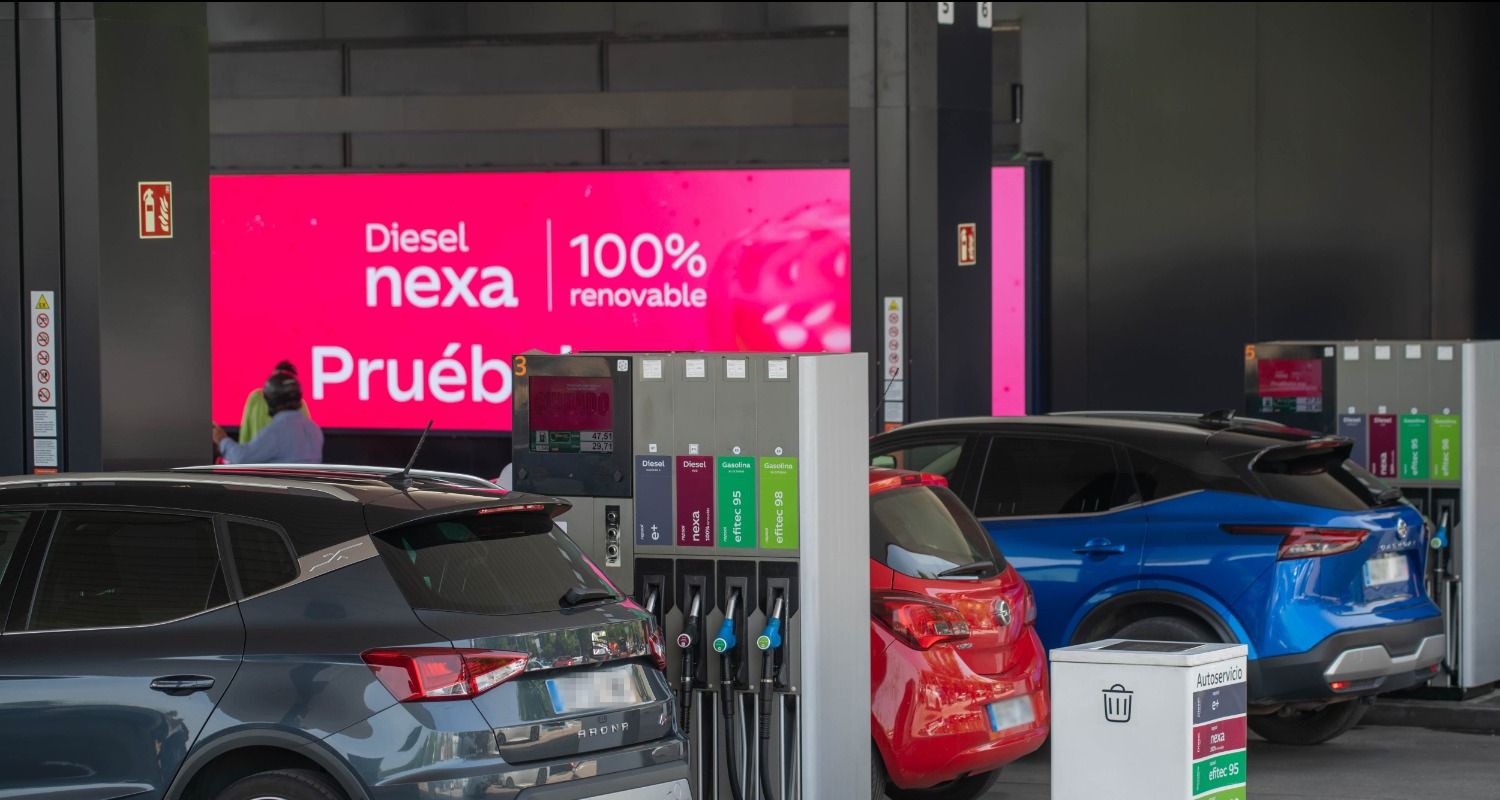
We already supply Nexa diesel of 100% renewable origin at over 1,500 service stations in Spain and Portugal, while continuing to expand the availability of Nexa gasoline of 100% renewable origin in Spain.
Our work on ultra-efficient engines and renewable fuels fully aligns with this vision: leveraging existing infrastructure, deploying already-available solutions, enabling better use of decarbonization solutions, helping these fuels play an increasingly important role in reducing CO2 emissions from transportation, and providing customers with options that facilitate the transition.
In fact, we already supply Nexa diesel of 100% renewable origin at more than 1,500 service stations in Spain and Portugal. Meanwhile, we continue to expand the availability of Nexa gasoline of 100% renewable origin in Spain.
Progress amid debate in Europe
Progress amid debate in Europe
About 97% of vehicles in Europe still have combustion engines. In Spain, data from the Spanish Association of Automobile and Truck Manufacturers (ANFAC) concluded that 87% of sales in 2024 were for combustion engine vehicles.
Faced with this reality, reducing CO2 emissions from transportations requires solutions not just for new vehicles but also for the millions already on the road.
In Delivering Sustainable Fuels, the International Energy Agency itself proposes a road map in which these fuels play an essential role in transition scenarios, precisely because of their ability to reduce greenhouse gas emissions where other alternatives encounter technological or economic barriers. This vision has also served as the basis for the Belém Commitment for Sustainable Fuels or Belem 4x, an initiative led by Brazil that aims to quadruple the production and use of these fuels by 2035.
The underlying message is shared: if we want these fuels to provide their full potential, we must give visibility to their role, reduce barriers, and accompany the transition with appropriate regulatory and financial frameworks.
Belém 4x seeks to accelerate the global deployment of fuels produced from hydrogen, biogas, biofuels, and other advanced technologies that gradually replace fossil fuels in sectors that are difficult to decarbonize. More than 30 countries have lent their support to the initiative. The underlying message is shared: if we want these fuels to provide their full potential, we must give visibility to their role, reduce barriers, and accompany the transition with appropriate regulatory and financial frameworks.
This is where the industrial sector has also promoted a manifesto in favor of renewable fuels, signed by companies such as Repsol, BMW, Bosch, Raízen, Navantia, Técnicas Reunidas, Technip, and Enerkem. With it, we express our support for a simpler and more harmonized classification based on fuel emissions intensity and aligned with international frameworks, robust and transparent certification systems managed by independent entities, and for these fuels to be recognized by regulations as an immediate solution to reduce CO2 and other greenhouse gas emissions on an equal footing with other technologies as part of a technology-neutral approach. The manifesto also insists on the importance of raising awareness of these solutions among regulators, companies, and the general population as a means of encouraging their adoption.
If we add steps such as those demonstrated by this ultra-efficient hybrid engine developed in conjunction Horse Technologies, what we have is a viable and immediate solution that can coexist with electrification, renewable hydrogen, and other technologies that also contribute to this transition.
This project is our way of certifying that industrial innovation, when combined with renewable energy and technological neutrality, can accelerate the energy transition and strengthen European competitiveness.
For these hybrid engines to be deployed at scale and make a structural contribution to of CO2 emissions reduction, Europe requires a stable and predictable regulatory framework. The revision of EU regulations on CO2 standards for light-duty vehicles presents an opportunity to assess how renewable fuels can help reduce CO2 and other greenhouse gas emissions in combustion vehicles, both current and next-generation.
This project is our way of certifying that industrial innovation, when combined with renewable energy and technological neutrality, can accelerate the energy transition and strengthen European competitiveness.
This is all true considering the reality of the vehicles we drive today, the availability of infrastructures, and the need for a transition accessible to all.
You may be interested in
You may be interested in