
What is polyethylene?
What is polyethylene?
Types, applications, and our innovative projects
Types, applications, and our innovative projects

Director of Polymers and PO Derivatives
Polyethylene is one of the most widely used materials in the industry due to its combination of strength, lightness, durability, and ease of processing. It is present in packaging, piping, coatings, industrial components, medical solutions, and mobility applications, among many other uses.
Its relevance is not limited to its daily use but also lies in its capacity for technical adaptation and industrial evolution. In addition, recyclability, circularity, and industrial innovation are increasingly taken into account in the production of these materials.
What is polyethylene? Definition and origin
What is polyethylene? Definition and origin
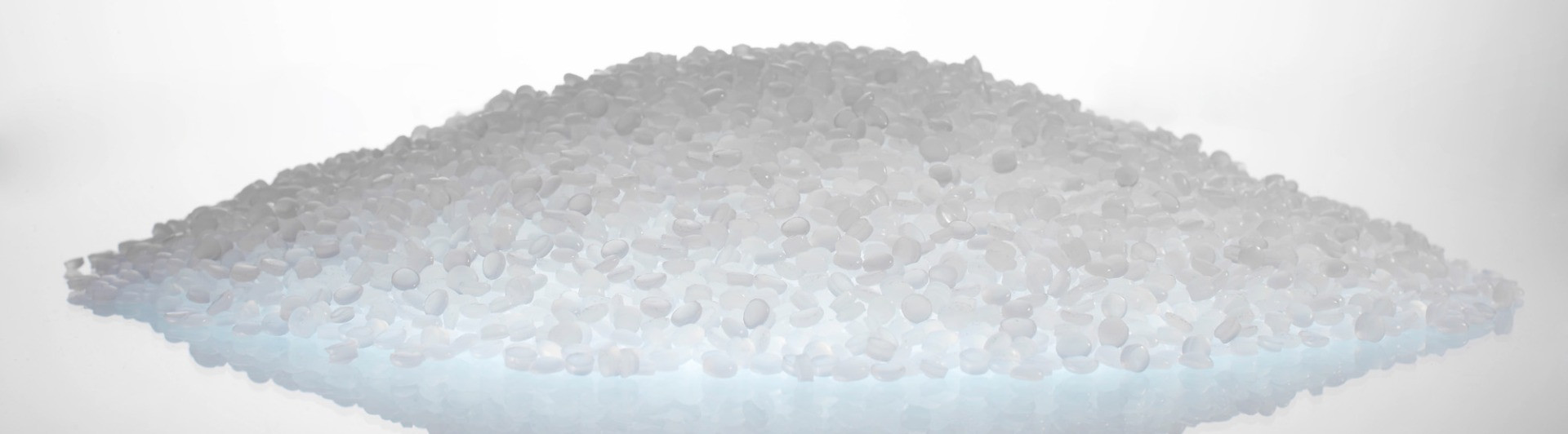
Polyethylene is a very common type of polymer, one of the most commonly used. It is made from a gas called ethylene and stands out for being light, resistant, and easy to mold. Thanks to these qualities, it is used in many everyday products such as packaging, pipes, or industrial components.
Within the polyolefin family, this polymer occupies a particularly relevant position because it offers a broad balance between technical cost, mechanical behavior, and processability. It can be transformed into film, rigid packaging, technical parts, piping, or high-performance components, depending on the chosen grade and the final application.
Polyethylene stands out for its ability to adapt to very different uses, from packaging or piping to medical or industrial applications.
This means that we are not talking about a single homogeneous product but instead a family of materials with different properties and very different industrial paths.
In addition, its evolution no longer depends only on its use. Equally important is its ability to be integrated into recyclable solutions, facilitate eco-design, and respond to new industrial demands.
Types of polyethylene and their main characteristics
Types of polyethylene and their main characteristics
High-density polyethylene (HDPE)
The "hard" kind. Its molecules are close together and ordered, making it hard and difficult to pierce.
What is it like? Resistant, does not bend easily and resistant to chemical compounds.
Where can you find it? Bottles of detergent, milk bottles, water pipes, and resistant stoppers.
Low density polyethylene (LDPE)
The "flexible" kind. Its molecules are disordered and have "branches," so they cannot be compacted much. This makes it soft.
What is it like? Transparent, easy to stretch, and very flexible.
Where can you find it? The plastic bags that sandwich bread is sold in, hygienic film protection packaging, food delivery packaging.
Linear low-density polyethylene (mLLDPE)
The "resilient" kind. It is related to LDPE, but its molecules are more ordered.
What is it like? Very difficult to break or puncture, even if it is thin.
Where can you find it? Film for frozen food bags, the elastic film that wraps pallets in warehouses, and heavy industrial bags.
Ultra-high-molecular-weight polyethylene (UHMWPE)
The "superpolymer." Its very long chains of molecules give it incredible strength.
What is it like? Almost impossible to wear down. It has a slippery surface as if permanently greased and is even stronger than steel in some respects.
Where can you find it? Hip prostheses, body armor, engine parts, and chopping boards that never scratch.
What is polyethylene for? Main uses and relevance today
What is polyethylene for? Main uses and relevance today
What is polyethylene for? Main uses and relevance today
The relevance of polyethylene is not based on a single application, but on its ability to respond to very different needs with the same material base. This versatility explains its continuity in very diverse sectors.
- Containers and packaging: This is one of its most widespread applications, both in rigid and flexible formats. Films, consumer packaging, logistics solutions, or technical packaging — with very demanding functional and technical requirements — are part of this area. It is also one of the areas where eco-design and the incorporation of recycled material is making the most progress. According to the most recent data published by Eurostat, the recycling rate of polyethylene packaging in the European Union reached 42.1% in 2023, which reflects both the sector's progress and existing room for improvement, and centers circularity as a structural axis in the future development of these materials.
- Construction and infrastructure: pipes, sheets, profiles, coatings, and cable covers and insulation are common uses due to their chemical resistance, durability and good mechanical behavior.
- Mobility and industry: this also covers industrial parts, technical components, and solutions for mobility. At this point, UHMWPE is especially important for its resistance to wear, toughness, and good strength-to-weight ratio.
- Health and high-demand applications: some grades, especially the highest performance ones, have a track record in medical and technical applications where the behavior of the material is a critical factor.
Where does polyethylene come from? About its production process
Where does polyethylene come from? About its production process
Polyethylene is obtained from ethylene through polymerization, a chemical process in which small molecules (monomers) group and react to form giant molecules such as polymers. From that base, the polymer structure may vary depending on the technology used, pressure, temperature, catalyst, and other process parameters. The result is grades with different properties prepared to respond to specific transformation and end-use needs.
The industrial value of the process is no longer limited to manufacturing the base polymer. A key part of differentiation is adapting the material to each use, adjusting its composition and developing solutions designed for specific applications.
This involves adjusting different characteristics of the material such as rigidity, impact, weldability, optical behavior, chemical resistance, or ease of transformation. In addition, the evolution of the sector is reinforcing another key dimension, such as the integration of circular economy criteria — that is, designing materials designed to facilitate their reuse and recycling.
Production plants and the most relevant projects at Repsol
Production plants and the most relevant projects at Repsol
The evolution of polyethylene goes far beyond the product itself. It also depends on industrial capacity, proximity to the customer, technological specialization, and investment in new lines of added value.
Our industrial roadmap in materials is based on several axes: a more differentiated portfolio, growth of industrial assets in Iberia, automation, logistics improvement, development of circular solutions, and a more competitive offering for the European industry. This vision places polyethylene within a broader industrial strategy.
Puertollano: the new benchmark in superpolymers
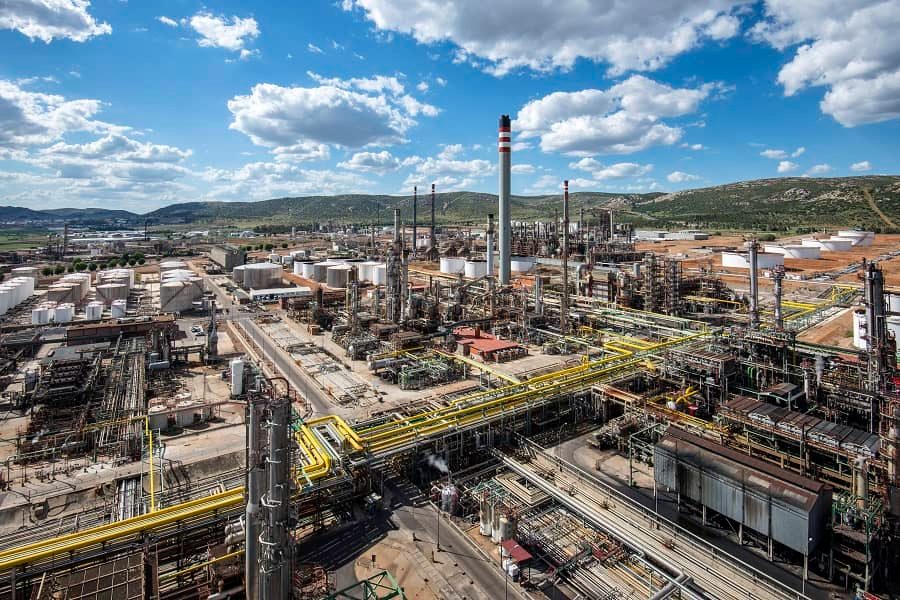
One of the projects within this strategy is the new ultra-high-molecular-weight polyethylene (UHMWPE) plant at the Puertollano industrial complex, a highly-differentiated material with high toughness, superior to steel, high impact resistance, and with self-lubricating capacity.
We've invested €105 million in manufacturing this high-performance "superpolymer" in Spain. The plant will be the first on the Iberian Peninsula to have a capacity of 15,000 metric tons per year and will be aimed at sectors with high technical demands. The company's strategic presentation also reinforces this positioning, making it one of the key developments of specialization within the set of polymer materials offered, developed, or used by a company.
The new plant in Puertollano reinforces a line of specialization based on high-performance materials with applications in sectors of high technical demand.
The facility's importance goes beyond the investment or the announced capacity amount. It also reflects the specific direction in which our industry is headed: moving towards materials with greater added value, greater technical requirements, and a better fit in sectors where performance is decisive.
In this sense, the UHMWPE is a prime example of where part of the European chemical industry is moving: less focus on pure volume and more weight of specialization and differentiation.
New circular capacity in Puertollano
Puertollano also concentrates another project relevant to the future of polyethylene: the expansion of the Repsol Reciclex® range through a new line of recycled compounds.
This new unit will have a production capacity of 25,000 metric tons per year and will be dedicated to the development of high and low density polyethylene with a recycled material content of between 10% and 80%. It will be mainly aimed at rigid and flexible non-food packaging applications. Its main added value is that it will be possible to offer materials with technical features similar to those of traditional plastics, which will facilitate the use of recycled plastic.
Sines and industrial reinforcement in Iberia
Sines and industrial reinforcement in Iberia
Another outstanding project is the Alba Project in Sines (Portugal). Here, two new polymer plants (polyethylene and polypropylene) are being built with the aim of producing 100% recyclable materials and advancing decarbonization through the use of renewable hydrogen.
The project has a combined capacity of 600,000 metric tons per year, distributed in a 300,000-ton/year polypropylene (PP) plant and a 300,000-ton/year linear polyethylene (LPE) plant. Both units reinforce our industrial assets in the peninsula and are integrated into a complex modernization strategy that incorporates the H2ALBA initiative with the installation of an electrolyzer to produce renewable hydrogen and significantly reduce the carbon footprint associated with these processes.
Polyethylene will remain a relevant material because it continues to solve real industry needs and those of multiple value chains. Its future, however, is no longer defined solely by volume or by its historical presence in many sectors. Today, its evolution depends on three much more strategic factors: specialization, circularity, and industrial capacity.
Innovation in polyethylene is no longer measured simply in production capacity but also in circularity, formulation, and specialization.
In this context, projects such as the Puertollano Ultra-High Molecular Weight Polyethylene or "superpolymers" (UHMWPE) plant, the expansion of the Repsol Reciclex® range, and the industrial reinforcement of Sines show a clear direction: to develop materials with greater added value, more technical expertise, and more capacity to respond to an increasingly demanding European market.
The challenge is to move towards more specialized materials, improve their integration into circularity models, and strengthen an industrial base capable of responding to new technical and regulatory requirements. In this balance between performance, innovation, and sustainability, the future of one of the most present materials in our daily lives is at stake.
In other words, the future of this material is not just about continuing to use it. It's about doing it better: with more advanced developments, more specialized processes, and an industrial commitment that combines performance, innovation, and circularity.