

The value chain of our 100% renewable-sourced fuel
The value chain of our 100% renewable-sourced fuel
Innovation and industry
Innovation and industry

Director of Renewable Fuels
To fill up your vehicle with 100% renewable-sourced fuel, all you need to do is imitate the simple action you see in the image above. However, behind this everyday act there is a value chain that integrates investment, innovation, design, traceability of the raw materials used, advanced transformation and production processes, and a distribution network that makes it possible.
Renewable fuels are a fundamental solution to decarbonizing both transportation (aviation, road, and maritime) and industry, two sectors that concentrate a significant share of greenhouse gas emissions and that require viable and accessible technological alternatives in the short and medium term.
The performance, properties, and uses offered by these fuels are equivalent to those of conventional fuels. However, they differ in that they are produced from waste and organic feedstocks that, through advanced conversion processes, are transformed into diesel, gasoline, propane, or renewable kerosene, among other products.
The ability to reduce CO2 emissions by up to 90% compared to the mineral fuels they replace is one of its main advantages. In addition, their compatibility with existing engines and infrastructures, without further modifications, generates an immediate impact.
However, all this "magic" entails a great deal of investment, research, transformation processes at our industrial complexes, new methodologies, training... A complete value chain for renewable fuels, and one in which we have a strong presence.
A company decision that brings industry to life
A company decision that brings industry to life
The first element is a company decision: to be the first our sector to announce our commitment to reaching net zero emissions by 2050, transforming our business, operations, and industrial complexes to achieve this.
A strategic step that drives us to innovate in the search for all the solutions and technologies that help us achieve this goal, incorporating them in the most efficient and competitive way possible into our processes, combining different options such as energy efficiency, electrification, CO2 capture and renewable fuels.
And applying this same logic to transport as the main target for our products, it is key to consider the set of technologies available to advance in the reduction of CO2 emissions. Especially if we take into account that the current vehicle fleet is mostly made up of vehicles with combustion engines — 97% in Spain and Europe — which also continue to represent 87% of sales in our country so far this year. To use renewable fuels is an immediate and efficient approach to reduce their emissions
Renewable fuels, whose main component is renewable-sourced feedstocks, are born with this objective.
Renewable raw materials, the starting point in our fuels' value chain
Renewable raw materials, the starting point in our fuels' value chain
Thus we arrive at the starting point in our renewable fuels value chain: raw materials of renewable origin that can be converted into new energy molecules. This includes, for example, used cooking oils and other elements of organic origin that can be used to manufacture fuels compatible with today's engines.
When a fuel is produced from these raw materials of renewable origin, the balance of emissions is not understood by simply looking at the combustion that exits the exhaust pipe, but at the entire cycle.
We can add another key idea to better understand the value chain. Raw materials require logistics, partnerships, traceability, and, in many cases, adaptability, to integrate new elements into complex industrial processes.
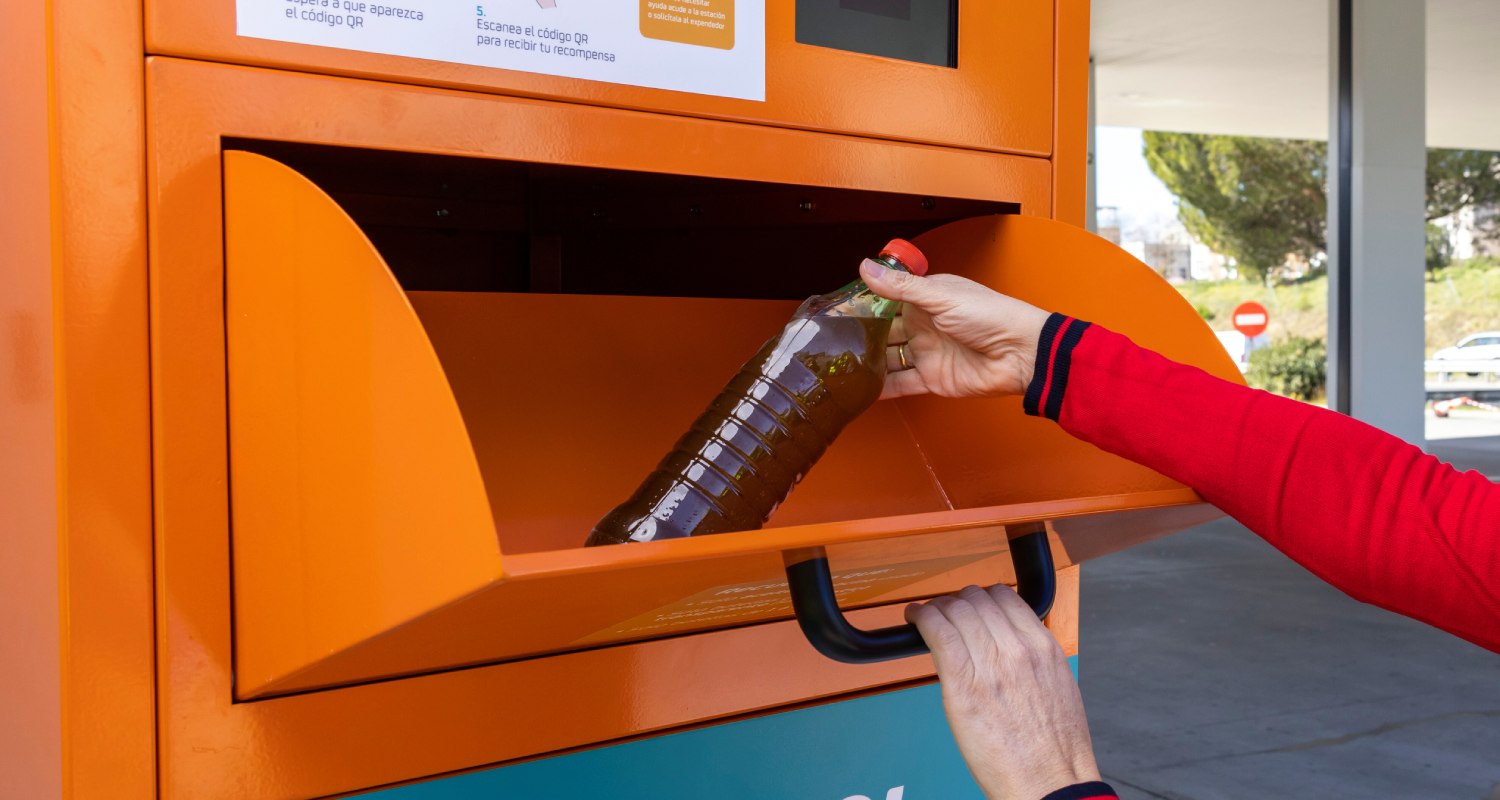
Repsol facilitates the collection of used cooking oil at our service stations, with economic incentives when a user gives us this valuable resource.
This process promotes the circular economy. Repsol facilitates the collection of used cooking oil at our service stations, with economic incentives when a user gives us this valuable resource. It's a way to connect an industrial decision with consumers' everyday routines and expand the availability of feedstocks for renewable fuels production in Spain, thereby promoting the circular economy.
In addition to this collection in our network of stations, it is also necessary to ensure access to raw materials through industrial alliances that facilitate volume, continuity, and proximity to our complexes.
Such is the case with our alliance with Acteco, Bunge, and Genia Bioenergy.
Raw materials not only allow us to reduce the carbon footprint of our products and promote the circular economy, but also help improve our strategic autonomy. Thanks to these raw materials, our energy sources are diversified, including a relevant part of the raw material and the management process in our country, reducing exposure and strengthening local industry.
Research and innovation before implementation at our industrial complexes
Research and innovation before implementation at our industrial complexes
The next stop in the renewable fuels value chain is innovation.
We're not talking about an abstract activity. These are the facilities, people, and real tests that make it possible to make projects a reality at our industrial facilities.
We must ensure performance and scalability in transforming these feedstocks. This is where Repsol Technology Lab enters the scene: our research center where we develop technology and validate solutions before taking them to an industrial scale. We're not talking about an abstract activity. These are the facilities, people, and real tests that make it possible to make projects a reality at our industrial facilities.
The Technology Lab itself has an environment designed to replicate industrial conditions before making the leap to the plant, through pilot plants that reproduce real industrial processes and allow adjusting variables, improving yields and reducing technical uncertainty.
This is an essential part of the value chain, because it reduces risk, accelerates learning, and improves the final industrial design. There are many technical and operational issues to take into account:
- How to integrate new raw materials without compromising process stability and product quality.
- How to guarantee final product specifications to maintain performance standards for vehicles, their engines, and their tanks.
- How to ensure certification and traceability, because the market and regulation demand it.
At this point, certification is not a detail. It's a scale condition. Renewable fuels require robust verification and traceability schemes, and this is part of the industrial and technical work that underpins the entire chain.
The biofuels of our first large-scale production plant for fuels of 100% renewable origin in Cartagena are certified under the ISCC-EU Voluntary Sustainability Scheme and the National Sustainability Verification System of Spain, ensuring traceability and production in accordance with the standards of the Renewable Energy Directive (RED).
Innovation happens because there are teams that test, iterate, and adapt. Then, everything they learn is translated into industrial design decisions.
All of this happens without forgetting the human dimension. Innovation happens because there are teams that test, iterate, and adapt. Then, everything they learn is translated into industrial design decisions. The value chain is not sustained by assets alone. It is sustained with knowledge and with people capable of turning it into real operations. Our team's knowledge and experience in traditional fuels puts us in a very favorable position to develop renewable fuels.
An example of this talent and knowledge is that since 2011 we have worked in the co-processing of raw materials of renewable origin in our industrial complexes, combining R&D capabilities, operational experience and the use of existing assets. Thanks to this sustained effort, in 2021 Repsol was a pioneer in the production of the first batches of renewable aviation fuel (SAF) on the Iberian Peninsula, marking a milestone for Spanish industry.
Industrial transformation, investment, and employment
Industrial transformation, investment, and employment
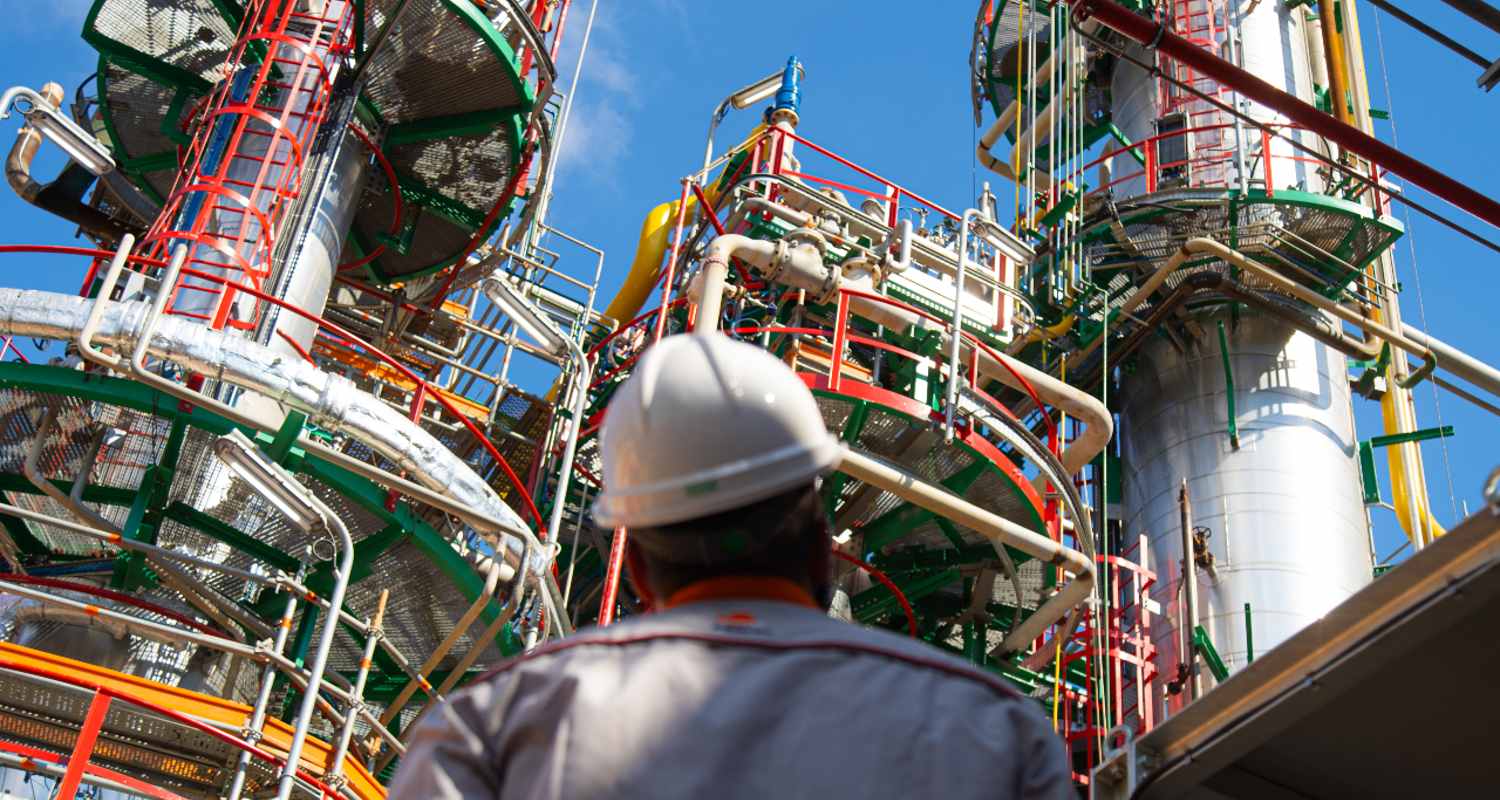
The next stop in the renewable fuels value chain takes place at our own industrial complexes.
This is where innovation materializes. It's where a technological development becomes an available product, with volume, continuity, and quality.
We have six industrial complexes spread across the Iberian Peninsula: five in Spain — A Coruña, Bilbao, Tarragona, Cartagena, and Puertollano — and one in Portugal, located in Sines, capable of supplying energy and raw materials essential for the economy and the materials industry. A solid industrial network that represents a strategic asset for both Spain and Portugal.
As far as renewable fuels are concerned, we started by looking at the Cartagena complex, where its production is already an industrial reality. There, we have a plant dedicated to producing renewable diesel and sustainable aviation fuel (SAF), with the capacity to produce 250,000 metric tons per year of 100% renewable-sources fuels, whose use allows us to reduce 900,000 metric tons of CO2 per year. An estimate based on an expected reduction with this type of fuel of between 80% and 90% of net CO2 emissions, if we compare it with the mineral fuel it replaces.
It doesn't stop there: we've only just begun. We currently have a second plant under construction at the Puertollano Industrial Complex, which is the second phase of this industrial strategy. Through an investment of more than €130 million, we are transforming an old diesel desulfurization unit into a plant capable of processing waste and other organic feedstocks, demonstrating the ability to reconvert existing assets into sustainable industrial infrastructure. The plant, which will become operational this year, will produce more than 200,000 metric tons of renewable fuels and avoid the emission of 700,000 metric tons of CO2 per year.
The impact of all this transformation
All this industrial transformation cannot take place without investment, long-term viability, and equipment capable of safely executing complex projects.
Transforming an industrial complex means redesigning processes, adapting units, ensuring raw material compatibility, guaranteeing internal logistics, strengthening control systems, training teams, and maintaining safety and quality standards.
It's an investment that, in turn, is a lever for employment and economic activity. Direct, indirect, and induced jobs are created, and local value chains are boosted.
That's why, when we talk about renewable fuels, we're not just talking about valid energy for mobility, which it certainly is. We are also talking about competitive reindustrialization. We are talking about investment that stays in the territory, suppliers, engineering, operations, maintenance, and knowledge.
We're talking about proof that the energy transition can be an industrial opportunity. It can create new value chains and transform existing ones.
Further progress in renewable fuels at our industrial complexes
At the same time, we continue making progress on other technological levers that strengthen the industrial ecosystem surrounding renewable fuels. For example, we are working on synthetic or e-fuels, based on renewable hydrogen and captured CO2, with the demo plant in Bilbao as a technological validation step.
There's also the development of renewable hydrogen with electrolysis projects in different industrial poles, which are key to scaling up future technologies and also to reduce carbon emissions in industrial processes typical of the manufacture of fuels or synthetic fuels.
These are advances that add strategic autonomy by having the assets, technology, and human talent.
It's about reducing external dependence on critical sectors. It's about protecting industrial competitiveness. And it's about guaranteeing economic progress and well-being, because industrial employment is quality employment with better working conditions and higher wages.
Logistics and deployment, when the product arrives at the pump and becomes a real solution
Logistics and deployment, when the product arrives at the pump and becomes a real solution
The value of the fuel of 100% renewable origin acquires its true magnitude when it reaches the final customer with security, continuity, and great deployment.
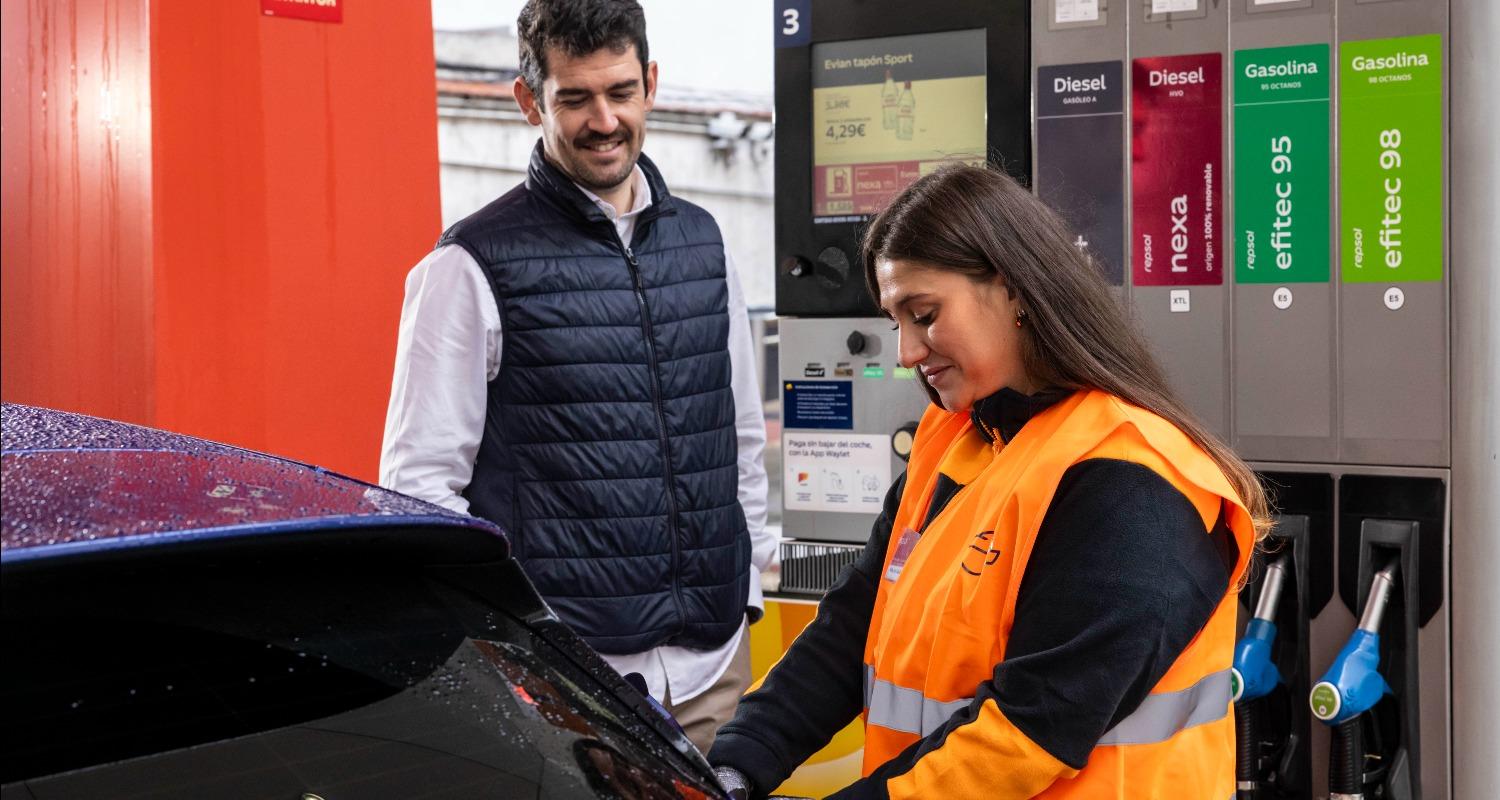
On the Iberian Peninsula, we already supply 100% renewable-sourced Nexa Diesel at 1,500 service stations, making it the most extensive network in the European Union. This deployment allows us to turn industrial capacity into a real solution. And it does so without requiring the customer to change their habits, much less their vehicle.
In October 2025, we expanded our renewable fuels offering, adding to the Nexa range our new Nexa 95 Gasoline of 100% renewable origin, which is already available at 30 service stations in cities such as Tarragona, Valencia, Zaragoza, and Bilbao. This demonstrates that decarbonization of transportation using renewable liquid fuels is viable in gasoline, diesel, and hybrid combustion engines.
This point is more important than it seems. Many solutions fail not because of technology, but because of deployment. They simply don't make it to consumers. Or they aren't available where they are needed. In professional transportation, for example, capillarity is not an "extra." It is a condition of use.
So, when we talk about renewable fuels, the chain does not end with industry. It ends at the service station and at the pump. It ends when a transport operator, company, or individual customer can refuel normally, safely, and confidently.
And here we see again the connection between industrial decisions and daily life. Someone delivers used cooking oil to a station and receives an incentive.
This gesture feeds a chain that goes through innovation, industry, and logistics, and offers a return to that same person in the form of a fuel available in our network. It's a tangible example of how an industrial strategy can be connected with real habits and territorial capillarity.
A value chain that reduces emissions and reinforces competitiveness, strategic autonomy, and territorial cohesion
A value chain that reduces emissions and reinforces competitiveness, strategic autonomy, and territorial cohesion
The chain described adds value in very specific lines. First, operational decarbonization. Not in a distant horizon. It is already a reality applicable to the existing vehicle fleet and to sectors that cannot be electrified immediately.
Second, industrial competitiveness. Because reducing emissions without requiring massive infrastructure or fleet changes protects productive capacity and avoids transition costs.
Third, strategic autonomy. Because producing in Spain, in our industrial assets, with innovation and employment "Made in Spain" reduces dependence and reinforces resilience.
And there is a fourth element that, although not always mentioned, is equally relevant. That's territorial cohesion. The energy transition can be a real lever of development if it connects industry, rural environment, employment, and new value chains. In renewable fuels, part of that raw material and that activity can activate opportunities in the territory, in logistics, in collection, in pretreatment and in associated industrial services.
In short, an industrial reality that begins with a company decision goes through raw materials, innovation, investment, and industrial transformation, and ends in the capillarity that allows an end customer to refuel normally.
When that value chain is built in Spain, with our own industry and technology, we all win. Time doesn't improvise. It is designed, tested, and built. And it is built, above all, with industry.