
Industrial employment
Industrial employment
Job opportunities to build Spain's future
Job opportunities to build Spain's future

Director of Refining and Chemicals
Industry has always been much more than a driver of the economy. Wherever there has been a solid industrial base, there have also been higher wages, job stability, and the capacity for innovation. This makes industry a certain generator of wealth that supports what we know as the welfare state.
However, industry's role has diminished in recent times. According to the report "The Spanish manufacturing industry's adaptation to the current energy scenario and the digital transition" by Fundación BBVA and the Valencian Institute of Economic Research (Ivie), industry's gross added value has gone from 17.9% in 2000 to 11.8% today.
This step backwards raises a decisive question: what kind of country will we be in 20 years if we do not make a decisive commitment to industrial employment? Understanding industry's real value means realistically analyzing its contribution to prosperity, territorial cohesion, and the future we want to build.
Industry doesn't just produce goods. It's also been a generator of opportunities, has bolstered overall production, and has largely determined the competitiveness and well-being of countries.
Current state of industrial employment's contribution and challenges in Europe
Current state of industrial employment's contribution and challenges in Europe
No less, the aforementioned report cites industry's higher propensity for innovation as compared to other sectors of the economy, generally reaching higher productivity levels per employee. These levels measure the average economic value generated by each person employed in a certain sector, company, or country during a specific period.
Evolving innovation and industrial wages
INE, Spain's national statistics bureau, published its Annual Wage Structure Survey (EAES) for Year 2023, on May 28th, 2025, which again confirmed that average wages in manufacturing industries and the energy sector systematically exceed those of the services sector.
Despite industrial employment's proven importance for the economy and society, we must nevertheless face this unfavorable trend in industry's share of overall employment, especially at the European level. This confronts us with a daunting challenge.
According to recent studies by the European Central Bank, the sectors most exposed to international competition, especially considering the growth of imports from China, have recorded significant falls in their workforce demand.
Between 2019 and 2024, job offers in the vehicle industry fell by around 55% while, in the chemical industry, the decline reached approximately 95%, according to this same source.
Conversely, sectors with lower exposure have maintained a more stable demand for employment in the same period.
The relationship between competitive pressure and job destruction is clear. According to the analysis, it is estimated that an increase of €1,000 per worker in imports from China between 2015 and 2022 is associated with a 0.1% reduction in the employment rate of the affected sector. Applied to the euro area as a whole, this means that around 240,000 jobs that have ceased to exist or have moved to less exposed activities.
Challenges to industrial employment in Europe
At this point, a second derivative should be added: when Europe loses industrial capacity in critical sectors, not only does employment suffer but European strategic autonomy also weakens. This affects both energy-intensive activities as well as entire value chains that sustain the day-to-day economy: from the manufacture of materials and components to the ability to supply energy and essential products in times of stress.
This is why it is especially relevant that the European Union has announced the Clean Industrial Deal with per-sector action plans. Using this logic, it makes sense to also incorporate the fuel manufacturing industry among the sectors receiving specific measures, as claimed by the top European refining executives of FuelsEurope. Fuel manufacturing is a sector that is immersed in its own transition towards low-carbon and renewable products, and that requires a framework that allows long-term industrial investments to be mobilized.
In the case of Spain, we also have a specific strength: our refining system is probably the most efficient in Europe and operates with clear logistical advantages, with access to both the Atlantic and the Mediterranean. In an economy where the transport of goods depends mostly on roads, letting this industrial transformation pass us by would be counterproductive for competitiveness.
It is important to work to reverse this situation so that Europe does not lose quality jobs nor autonomy in strategic sectors. We must also take care not to transfer emissions to third countries with very different environmental and labor standards: when a fuel production plant closes here, the demand for fuel doesn't just disappear. Rather, production to meet that demand simply relocates to another part of the world.
In this context, Spain must maintain its industrial activity as a formula to guarantee skilled employment, attract investment, boost innovation, and strengthen critical value chains for the economy. In addition, protecting productive capacity protects our strategic autonomy: refining, chemistry, basic industry, energy, automotive, and advanced materials are the pillars that support both the economy and security of supply.
Repsol's contribution to investment and industrial employment
Repsol's contribution to investment and industrial employment
This context puts even more value on our industrial activities, as drivers of qualified employment, technology and added value, generated from the projects and investments that we are activating and on which we are currently working.
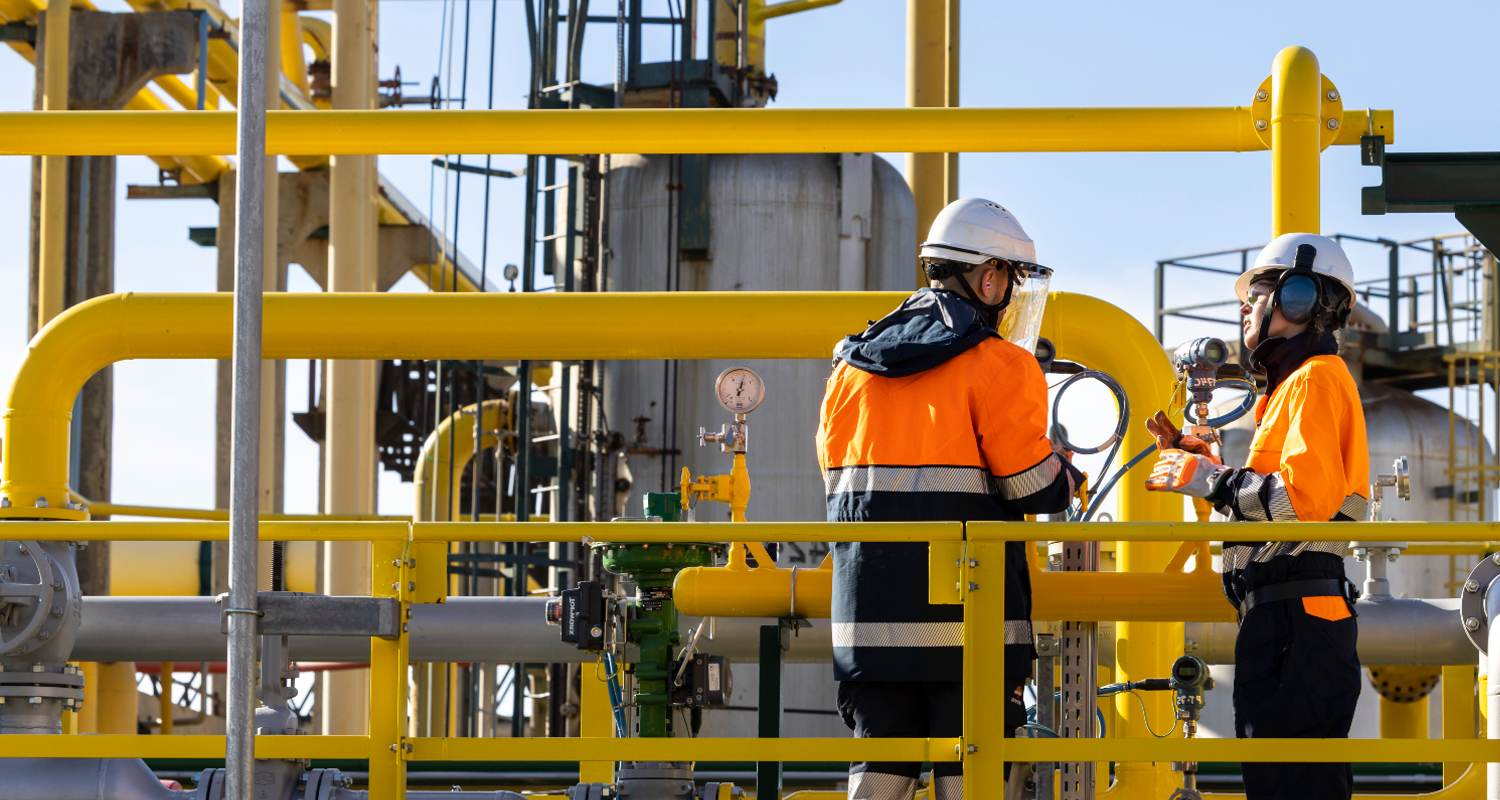
Repsol has five industrial complexes in Spain and one in Portugal. Together, they generate around 28,000 direct, indirect, and induced jobs. These are highly technical facilities that integrate complex processes and require highly qualified profiles in engineering, chemistry, digitization, and advanced maintenance.
Behind this industrial capacity there is one element that makes it all possible: people. At Repsol alone, we have 25,000 employees whose talent, commitment, and diversity drive projects that demand evolution at the pace of new technological and industrial challenges.
In recent years, we have accompanied the transition to renewable fuels, a circular economy, and renewable hydrogen with organizational changes and a sustained training effort, both of which prepare us for increasingly demanding challenges.
Our contribution to industrial employment and Spain's competitiveness is embodied in concrete actions:
- 100% renewable fuels plant in Cartagena: We have invested €250 million in the construction of this plant where used cooking oils and other organic waste are the feedstocks. Development and construction generated nearly 1,000 jobs throughout the different phases of the project.
- Expansion of the Sines complex (Portugal): With a budget of €650 million, it is the largest industrial investment to take place in Portugal in the past decade. During construction, 550 jobs have been created on average, with peaks of more than 1,000 people working simultaneously.
- Ecoplanta in Tarragona: This project received €800 million to transform waste materials into high value-added products. Its start-up will mean 340 stable jobs and around 2,800 jobs under construction.
- In Puertollano, we are rapidly advancing in the transformation of a diesel production unit with new technology. When completed, it will process used oils and other waste products to manufacture around 200,000 tons of 100% renewable fuel per year.
- We are also undertaking the construction of large electrolyzers at our industrial complexes in Cartagena, Tarragona, the Basque Country, and A Coruña.
To all of this we can add that, over the last decade, we have invested around €1 billion annually to modernize our industrial complexes.
This is in addition to the shutdowns scheduled at these same complexes, with hundreds of regular employees from Repsol and auxiliary companies working on maintenance, safety, efficiency and competitiveness, among other aspects. To cite a few examples, the maintenance shutdown at the Cartagena complex needed 800 people per day to execute the scheduled work. In 2024, 1,300 people worked each day on the scheduled chemical area shutdown in Tarragona, with peaks of up to 3,000. In A Coruña, around 700 employees worked each day on the 2024 shutdown for maintenance and innovation. In Puertollano, up to 500 people per day, with peaks of 750, worked on the distillation shutdown to increase safety, reliability, energy efficiency, and for a technological upgrade.
At the same time, industrial transformation is also supported by initiatives that seek active involvement and cross-company collaboration. One example is "Allies for Transformation," created in 2023 to encourage employees at different levels to act as internal agents of change. The over 450 people who are part of this initiative have energized spaces for listening, reflection, and collaboration, where more than 2,500 employees participate in 84 sessions each year.
This focus on people also extends to diversity, equity, and inclusion. For more than two decades we have included references to equality in our framework agreement, our Diversity Committee was founded in 2008 with the participation of senior management, and in 2024 we signed a new Equality Plan alongside major trade unions. We can add to this our commitment to ensuring a healthy work-life balance through flexible work models that include telecommuting, family leave, and digital disconnection protocols. In 2024, 7,137 employees benefited from telecommuting and more than 4,300 people took family leave.
All this has taken place in a period in which Europe has lost 24 refineries, thus reflecting the strategic importance of the Spanish industry.
In short, these are projects that generate not only employment but also strengthen technological capabilities, drive innovation, develop new projects, and improve long-term competitiveness.
Industry that keeps a country moving forward
Industry that keeps a country moving forward
Now that we've analyzed the economic, social, and strategic relevance of industry, we can conclude that a Spain with less industry would be a Spain with fewer opportunities and more external dependence.
An economy based solely on low-value-added services cannot sustain high levels of well-being, finance an ambitious social system, or offer young people the skilled jobs with which they can build a life.
Industrial employment is not just a professional category: it is the foundation on which stable, cohesive, and competitive societies are built.
At the same time, the energy transition, digitalization, and automation will open up new industrial opportunities and require more specialized technical profiles. Productive segments such as renewable fuels, advanced materials, industrial biotechnology, low-emission chemistry and renewable hydrogen will be sources of quality employment if there is a productive ecosystem capable of sustaining them.
Strengthening the industry also means ensuring the future of thousands of young people who are looking for stable employment with continuous training and opportunities for growth. A society that wants to move forward needs a robust productive base, capable of generating value and attracting investment.
For all these reasons, industry is and will continue to be one of the pillars on which the most prosperous societies are built. For Spain, prioritizing industry is not an option: it is a strategic necessity to guarantee quality employment, competitiveness, and autonomy in the coming decades.