
LEO satellites
LEO satellites
What they are, applications, and advantages of this technology
What they are, applications, and advantages of this technology

Technology and Digitalization Strategy Manager
Low Earth orbit (LEO) satellites are communication systems that enable minimal latency and high data transfer rates. Their importance lies in their ability to provide global coverage and high-speed connectivity in remote locations, making it a fundamental extension of traditional land networks.
This technology is already being adopted by key industrial sectors to ensure resilient operations and will be the pillar of connectivity of the future. In this article, we analyze how they work from a technical perspective, the operational advantages they offer over conventional satellites, and their current applications for Repsol's assets.
What are LEO satellites and what makes them special?
What are LEO satellites and what makes them special?
LEO (low Earth orbit) satellites are telecommunications and observation devices that operate at altitudes ranging from 160 to 2,000 kilometers above the Earth's surface. Unlike traditional satellite systems, their proximity to the Earth is the technical factor that defines their full operational potential, allowing electromagnetic signals to travel significantly shorter distances and optimizing connection quality in terms of time and capacity.
Being in such a close orbit, these satellites must travel at extremely high speeds to counteract the force of gravity. This dynamic means that a LEO satellite is only visible for a few minutes from a fixed point on the ground before disappearing over the horizon. For this reason, LEO satellites are not deployed individually but in massive constellations that guarantee the continuity of the service.
Key Features of LEO satellite technology
Key Features of LEO satellite technology
To understand the impact of this technology, we need to break down the technical parameters that differentiate it from any other previous satellite solution.
Reduced altitude
While conventional satellites are located tens of thousands of kilometers away, LEO systems operate in the layer closest to the atmosphere. This proximity is the factor that enables the use of smaller antennas and less complex user terminals, making their adoption easier in environments where logistics are limited.
Minimum latency
Latency is the time it takes for a data package to travel from the sender to the receiver. In LEO networks, this delay is between 20 and 30 milliseconds, a range comparable to that offered by 4G networks or terrestrial optical fiber. This feature is critical for applications that require real-time response, such as remote control of machinery or high-definition video calls.
High transfer rate
Proximity makes it possible to use frequencies and protocols that support a higher density of information. This allows high bandwidths capable of managing large volumes of data simultaneously, which is essential for the monitoring of industrial assets that generate thousands of signals per second.
Looking to the near future, we envision a deep integration between these satellite constellations and orbital edge computing. It's not just about moving data: it's also about processing it at the edge of the network. In this forward-looking vision, LEO satellites will act as nodes of a "distributed cloud" that will filter and analyze information in milliseconds before it even hits the ground, enabling unprecedented operational autonomy on the most remote assets.
Orbital velocity and dynamic coverage
Due to its speed, a single satellite cannot provide a permanent connection to a geographical area. However, by operating in a network, coverage becomes global and homogeneous. This makes it possible to bring high quality connectivity to the oceans, polar regions and deserts, where the deployment of wiring or phone towers is physically impossible or economically unfeasible.
How LEO satellites work
How LEO satellites work
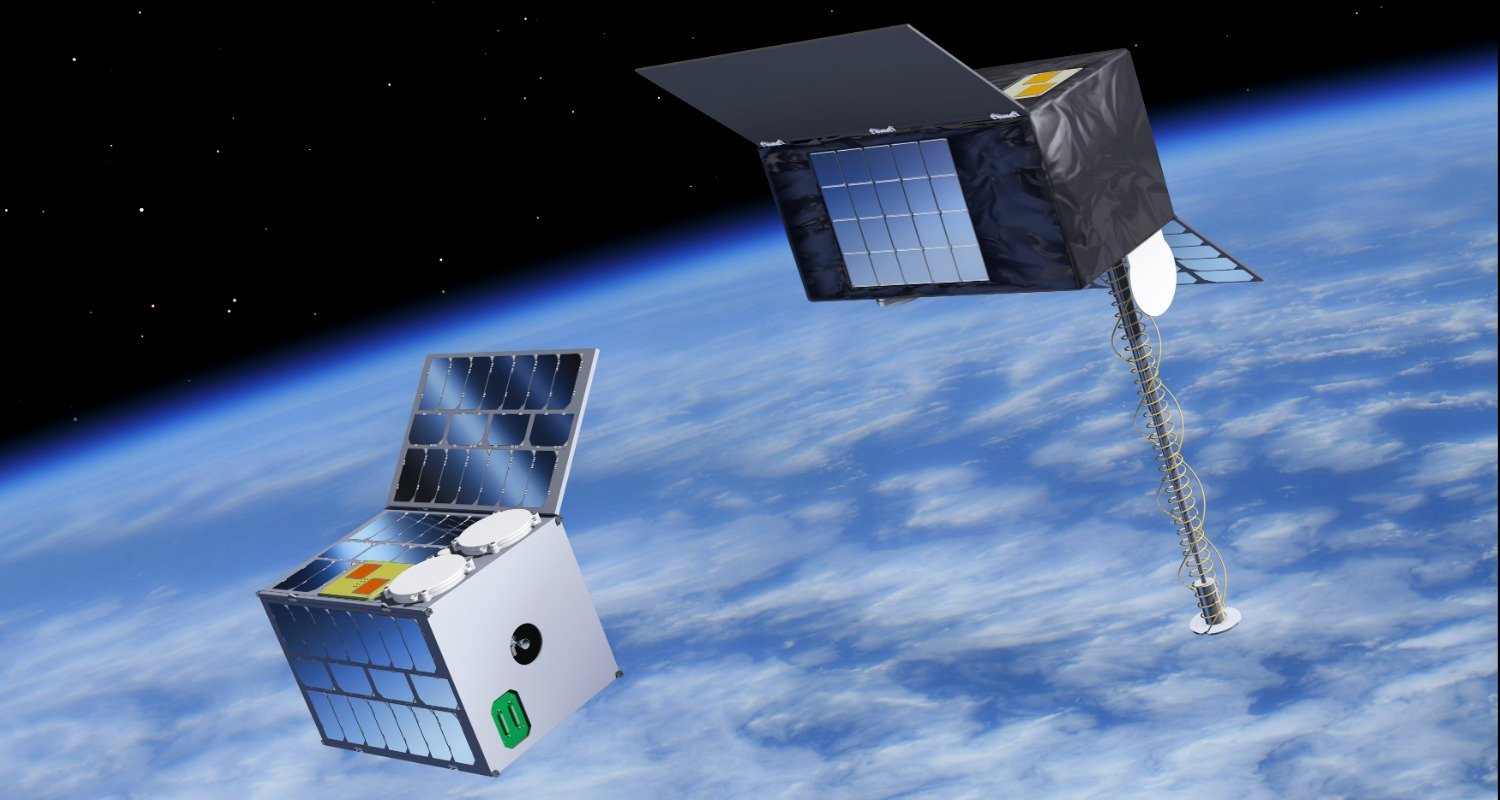
The operation of a LEO network is based on the coordination of constellations composed of hundreds or thousands of units. Since each satellite is constantly moving in relation to Earth, the system requires a highly sophisticated signal transfer network management process. When a satellite is about to leave the range of view of a terrestrial antenna, the next satellite in the constellation assumes the connection transparently for the user, ensuring that there are no micro cuts in the transmission.
For this model to be effective, a minimum satellite density is required. Currently, the most advanced network is SpaceX's Starlink, which has more than 6,700 active units. Other projects such as OneWeb (600 units) or the ongoing deployments of China SatNet and Amazon's Kuiper (now Amazon Leo) follow this same logic of massive redundancy.
Differences between LEO vs. GEO satellites
Differences between LEO vs. GEO satellites
The technical comparison between LEO satellites and geostationary (GEO) satellites is critical to understanding why the industry is evaluating the possibilities of low orbit devices.
GEO satellites are located at a fixed altitude of about 35,786 kilometers. At that distance, their speed coincides with the Earth's rotation, making them to appear "fixed" above a point on the equator.
Differences in latency and propagation
The main drawback of GEOs is that distance. The signal must travel more than 70,000 kilometers (round trip), which generates a minimum latency of 600 milliseconds. For automated industrial or digital workplace processes, this delay is unacceptable. LEOs, being up to 60 times closer, eliminate this bottleneck, allowing for seamless interactivity.
Geographic coverage and efficiency
GEO satellites are very efficient to cover specific and wide regions with a single device, but they have difficulties servicing at extreme latitudes (poles) due to the viewing angle.
LEO systems, by orbiting in different planes, offer truly global and homogeneous coverage. Additionally, while a GEO is a massive, expensive, and complex asset to manufacture, LEOs are smaller units, are produced more quickly, and are more cost-effective to deploy, allowing the network to scale progressively upon request.
Network resilience
If a GEO satellite fails, the entire region it serves loses connectivity. In a LEO constellation, the failure of a unit is irrelevant to the user, as the system automatically redirects traffic through the rest of the satellites in the mesh, providing far superior operational resilience for critical infrastructures.
Current applications of low orbit satellites (LEO) at Repsol
Current applications of low orbit satellites (LEO) at Repsol
Since 2023, we have used low orbit (LEO) technology as a strategic solution to solve connectivity challenges in locations where conventional networks are not viable. The evaluation of the Starlink network has allowed us to validate that this technology is not only a backup, but an enabler of intelligent operations in highly demanding environments.
Exploration and production (E&P) operations
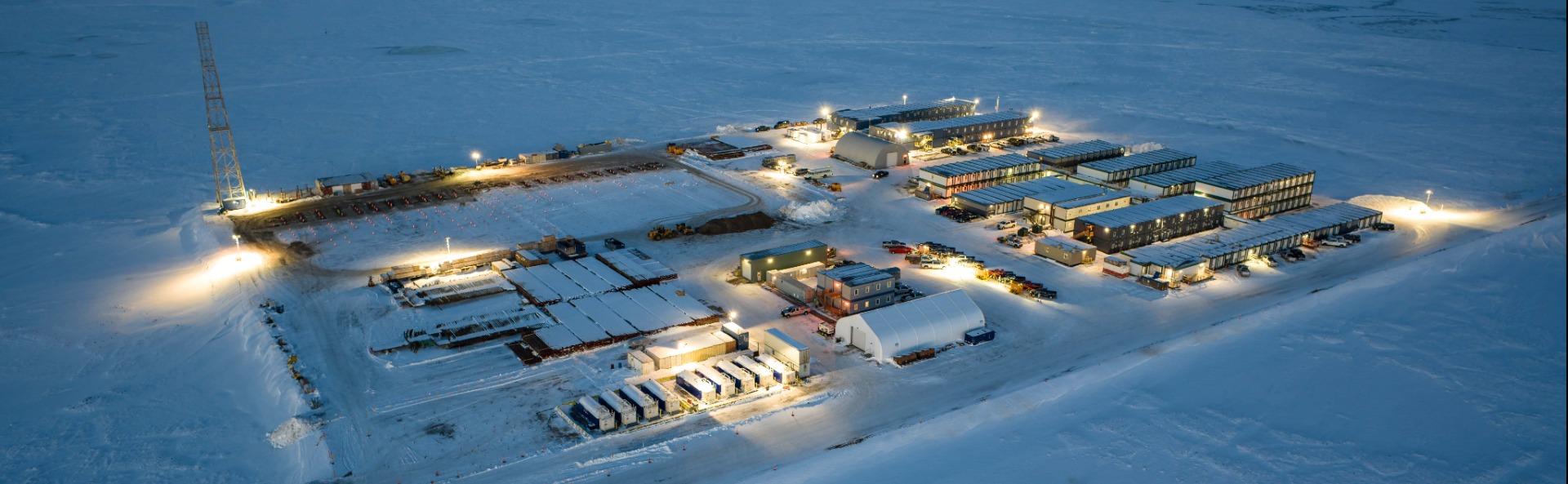
In assets located in remote areas of Spain, Peru, and the United States, LEO connectivity allows real-time monitoring of critical equipment. This enables data-driven decision-making without the latency that hindered previous satellite technologies. In addition, this connectivity will directly support our decarbonization goals. By enabling remote maintenance using augmented reality and high-precision IoT sensors, we reduce the need for site visits and complex logistics in hard-to-reach areas. Reducing the distance traveled by our technical teams results in more efficient operations and a tangible reduction in our carbon footprint.
Critical centers and Tier 1 resilience
For our data processing centers and critical nodes classified as Tier 1, LEO satellites provide a layer of vital redundancy. In the event of possible outages or interruptions of terrestrial infrastructure, this network guarantees communication continuity, ensuring that essential operations are not compromised by external factors.
Workplace and service station digitalization
Connectivity at service stations located in mobile coverage dead zones has been resolved through these constellations. In addition, with regard to the "smart office" user workspace, field employees can now have a connection equivalent to that of an urban office, allowing access to corporate tools in the cloud, videoconferencing, and transfer of large files from any geographical point.
Future uses and advantages for Repsol
Future uses and advantages for Repsol
We've only seen a glimpse of LEO satellites' potential. The expected convergence between 5G networks, the future arrival of 6G, and orbital constellations will create an ecosystem of total connectivity. For us, this will lead to a series of strategic opportunities for the evolution of our businesses.
Autonomous operations and industrial IoT
Low latency is the prerequisite for deploying autonomous vehicles in industrial complexes and managing private IoT (Internet of Things) networks on a large scale. The ability to connect thousands of low-cost sensors directly to the satellite network will facilitate the development of smart grids and energy recommender systems in real time, optimizing the consumption and efficiency of our assets.
New B2B and B2C channels
Satellite integration will make it possible to implement new payment methods and advanced digital services at remote service stations. It also opens the door to augmented reality applications for critical infrastructure maintenance, where a field technician can receive remote assistance from an expert located thousands of kilometers away with very high visual synchronization.
Impact and consequences of LEO satellites
Impact and consequences of LEO satellites
The democratization of space has allowed private companies to lead the deployment of infrastructures that were previously reserved for large government agencies. Such advances, however, raise the question of digital sovereignty. Europe is responding to the dominance of US companies such as SpaceX (Starlink) through its own secure communications programs such as IRIS2 and support for European LEO constellation projects.
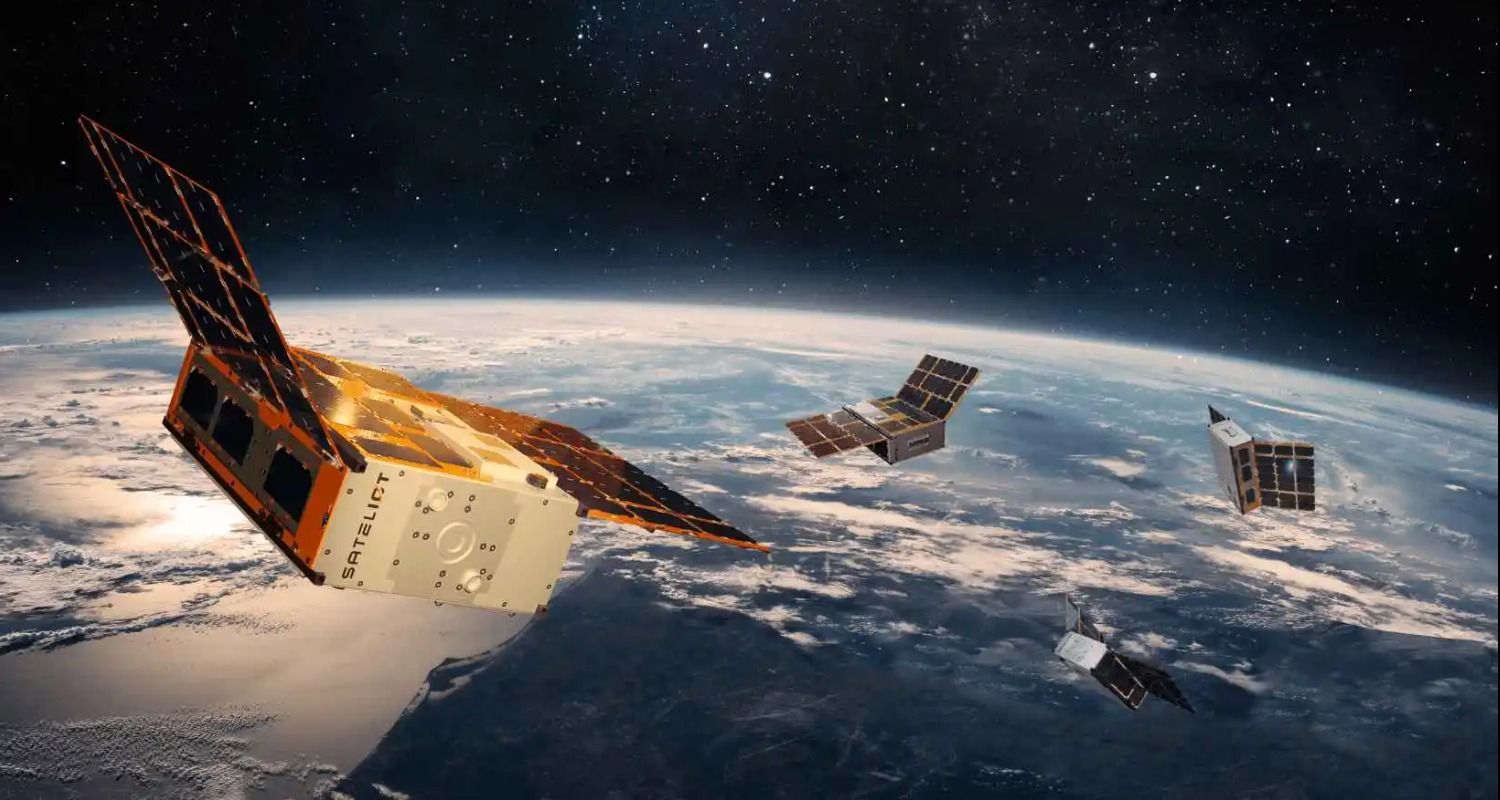
In Spain, the aerospace ecosystem is already demonstrating its competitive capacity. Companies like Sateliot are already working on second-generation satellites capable of managing multiple connecting beams simultaneously and with extended lifespans.
The ability to launch independently is the other pillar of this autonomy. The Spanish company PLD Space, with its MIURA 5 rocket, represents a significant breakthrough in vertical manufacturing and operational agility, allowing components to be designed and validated in extremely short timescales.
The real impact of these advances in mini-satellites will transform daily life by bridging the digital divide in rural areas and improving public and environmental safety. For the industry, LEO satellites are the missing piece to complete the puzzle of full digitization.
Therefore, ensuring technological independence in this area will be paramount. Not only as a competitive advantage, but because of a strategic need to protect essential sectors such as energy and ensuring that space is, effectively, a safe and reliable extension of our terrestrial network.