
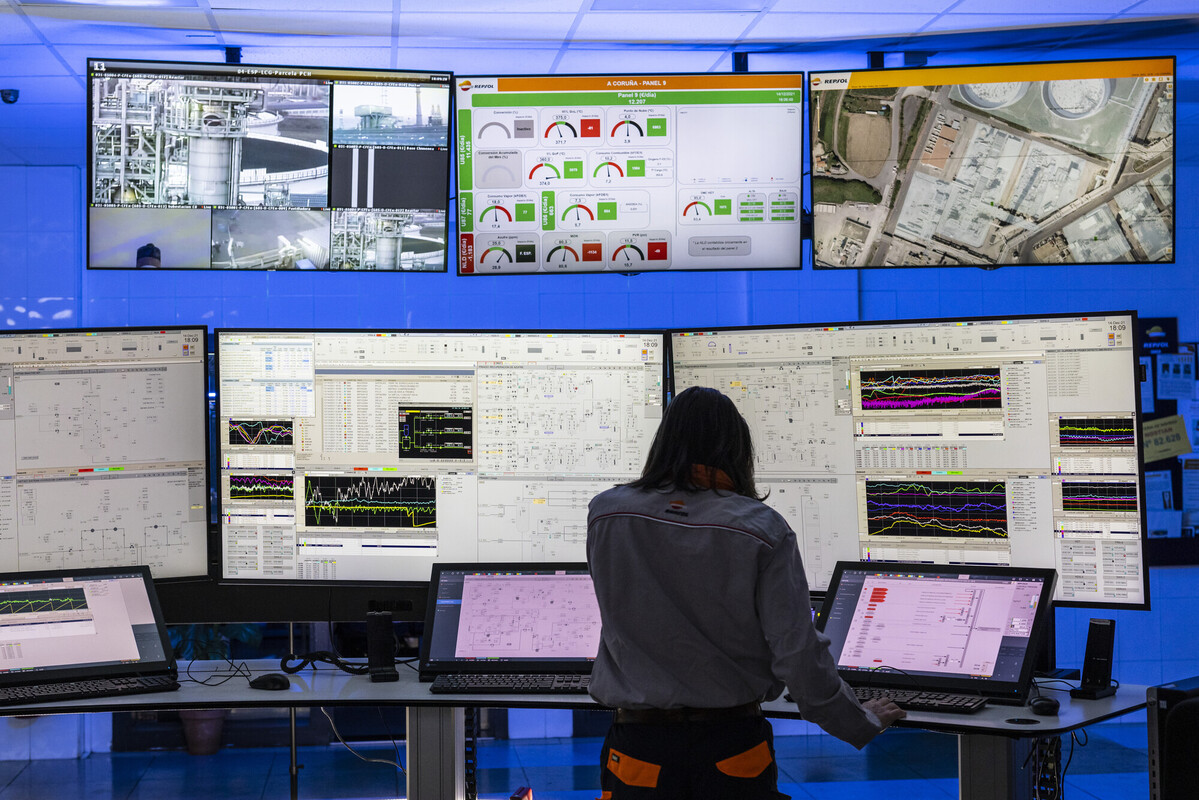
Digital twins
Digital twins
Industrial innovation and its application in industry
Industrial innovation and its application in industry

IT&D Strategy Manager
In the industrial environment, making decisions based solely on direct observation or historical data is no longer enough. Operations are more demanding, assets are more sophisticated, and margins of error are decreasing. In this context, the ability to anticipate behaviors, simulate scenarios, and optimize processes before acting on the real environment has become a decisive advantage.
That's where digital twins come in: a technology that allows the industry to see what's happening almost in real time or as often as needed for the operation, understand why it happens, and test what would happen if… without putting the actual operation at risk. It is not just about digitalizing assets, but providing them with a living, dynamic, and connected representation, which can incorporate advanced analytics and learning capabilities.
What is a digital twin?
What is a digital twin?
A digital twin is the virtual representation of a physical object, process, or system, built from models that describe its behavior and fed with real data, in many cases in near real-time.
Although they are often associated with 3D representations, a digital twin does not have to be visual; it can only be a data model that replicates the behavior of the asset.
This combination makes it possible to simulate the behavior of the physical asset, analyze its performance, and evaluate different operating scenarios in a digital environment, to understand what impact it would have on a real environment.
The key is not just in visualization, but in the ongoing connection between the physical and virtual worlds. The data captured by sensors, control systems, or operating platforms are integrated into the digital model, which evolves as the real asset does. In this way, the digital twin is not a fixed representation, but a dynamic system that reflects the state of the asset and allows learning from it.
Although the concept began to be formulated in the early 1990s and was initially applied in areas such as manufacturing or space exploration, its current development is inseparable from the Fourth Industrial Revolution and the convergence of technologies such as the Internet of Things (IoT), advanced analytics, artificial intelligence, and machine learning.
How a digital twin works in practice
How a digital twin works in practice
Expert knowledge of the asset or process to be replicated is often the starting point. From there, a mathematical and logical model is built that describes its behavior. That model is then connected to the actual data from the actual operation or object, allowing it to be calibrated, validated, and kept up to date.
In practice, the digital twin connects with existing technology ecosystems such as control systems, IoT platforms, and analytics tools.
In simple terms, a digital twin is based on three fundamental elements:
- the physical asset, which generates information through sensors and operating systems;
- the virtual model, which replicates its behavior;
- and the connection between the two, which ensures that the digital model evolves with reality.
Thanks to this architecture, the digital twin can simulate situations that have not yet occurred, evaluate the impact of operational changes, or anticipate failures before they occur. The value is not only in prediction, but in the ability to make strategic decisions with more and better information.
Characteristics of digital twins
Characteristics of digital twins
Digital twin technology is possible thanks to a combination of key capabilities. Connectivity is essential: without the capture and transmission of data from the physical asset, the twin would lose its reason for being. Added to this is the need to homogenize information, storing it and processing it digitally so that it can be analyzed consistently.
Data governance and security are essential to ensure the integrity and confidentiality of the information that feeds the twin.
Another differential element is its adaptable and smart character. The digital twin can incorporate predictive analytics and machine learning algorithms, although it is not mandatory. In addition, it leaves digital traces that facilitate the identification of deviations, incidents, or anomalous patterns.
Lastly, modularity allows complex assets to be broken down into layers or components, facilitating both analysis and progressive improvement of the entire system.
From observation to anticipation: why digital twins bring industrial value
From observation to anticipation: why digital twins bring industrial value
The main value of digital twins is that they transform the way of operating. They allow remote monitoring of assets, analysis of their behavior in real time, and, above all, anticipation for better decision making.
In the field of maintenance, this technology makes it easier to move from reactive approaches to predictive and even prescriptive maintenance, identifying possible failures in advance and prioritizing interventions.
In day-to-day operation, it helps optimize resources, reduce downtime, and improve overall process efficiency.
All this translates into better asset utilization, reduced operating costs, and greater decision-making security.
Types of digital twins and what they simulate
Types of digital twins and what they simulate
There are different types of digital twins depending on the moment in the life cycle of the product or system.
Some are created even before the physical asset exists, such as digital twin prototypes (DTPs), which allow designs and behaviors to be evaluated virtually.
Others are developed when the asset is already in operation, and are used to analyze its performance in different environments (DTI).
There are also digital twin aggregates (DTAs), which combine historical information to extract patterns and capabilities.
In addition, they can be classified according to what they simulate:
- Process twins replicate entire production chains.
- Product twins are focused on specific assets.
- Systems twins integrate multiple processes and data sources to gain an overall view.
- And people twins, which model individual or mass physical, functional, or behavioral characteristics for, for example, conceptualizations or design of new products and services prior to implementation.
These types are not exclusive; for example, a twin can evolve from prototype to operational.
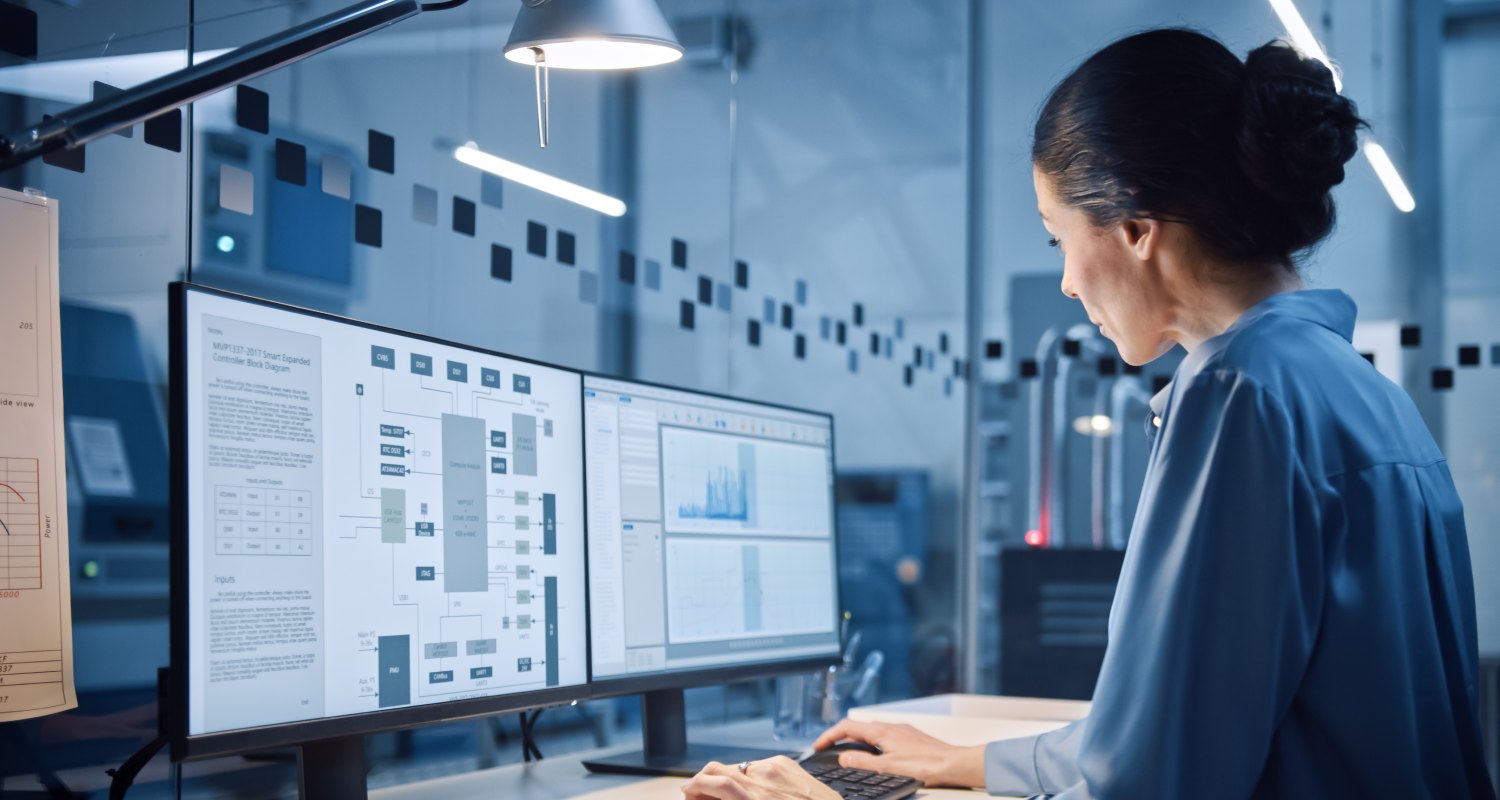
Digital twins at Repsol: from concept to operation
Digital twins at Repsol: from concept to operation
We have already implemented and other evolving solutions, always with a practical approach and aimed at improving efficiency and decision-making.
A relevant example is the digital twin of Automated Production Management (APM) and Integrated Flow Models (IFM) developed together with OVS Group in the field of E&P (Upstream).
This solution integrates large volumes of data from assets to offer operators and engineers a centralized tool from which to identify, prioritize, and track optimization opportunities.
In addition, there are other cases such as renewable energy control centers or the service stations control center, as well as digital twins applied to industrial operations, asset integrity, or process simulation.
Digital twins are also a key enabler of our IT&CE (Industrial Transformation and Circular Economy) initiative for the Autonomous Plant, providing the technological foundation that allows us to move towards more connected, smarter, and resilient operations.
In parallel, we continue to evolve these capabilities through the progressive incorporation of advanced analytics and artificial intelligence, moving towards increasingly prescriptive models.
This development is neither homogeneous nor closed. In some areas, such as Operation and Maintenance, work is being done on the conceptualization of approaches based on BIM (Building Information Modeling). In others, such as E&P, we are actively working on deploying capabilities associated with digital twins, with cases already underway in Norway, Brazil, and the United States.
The next steps, in continuity with the work already being done by the Repsol Technology Lab and the CIO (Chief Information Officer) and CDO (Chief Data Officer) areas, focus on strengthening these solutions, expanding their supervisory, governance, and decision-making capabilities, and consolidating a model that allows to manage complex assets with an increasingly complete, connected, and anticipatory vision.
A continuous process of digital evolution
The implementation of digital twins is not a final destination but an ongoing process. As new data sources, more advanced models, and machine learning capabilities are incorporated, digital twins gain accuracy and usefulness.
This approach allows organizations to learn from their own assets, reduce uncertainty, and operate with greater knowledge. In a demanding industrial environment, that capacity for continuous learning makes the difference.
Looking before acting
Digital twins represent a different way of relating to the industrial operation: understanding before intervening, simulating before deciding, and analyzing and simulating before changing. They don't replace experience or technical knowledge, they amplify them.
In short, they are a key tool to move towards a more efficient, more resilient, and better prepared industry to face both the present and the future.
If you want to learn more about the degree of adoption of this digital technology at Repsol, as well as other trends, visit our Digital Trends Radar. You will be able to check our understanding visually and interactively.