Industry, energy and local development
Industry, energy and local development
The invisible engine of territorial cohesion
The invisible engine of territorial cohesion

Director of Asset Operations Techincal Support
An ordinary town early in the morning. The bakery opens, a truck unloads fresh goods at the local store, the mechanic pulls up the shutter, and a group of children waits with their backpacks at the school entrance. This everyday scene, which at first glance seems to stand on its own, actually rests on a much less visible and, yet essential foundation: the existence of quality jobs and structural economic opportunities.
But what factors explain how a community manages to retain its population, attract talent, and boost its economy for the long term? What role do industrial development and energy infrastructure play in this equation?
What makes a region thrive
Understanding territorial cohesion requires analyzing the fundamental causes that make it possible to retain population and maintain socio-economic vitality. According to the Economic and Social Council report on rural areas, the primary determinant for the viability of any community lies in the availability and quality of basic services, specially education, healthcare, and social services. Without this public pillar, the capacity to retain population declines and the aging of rural areas accelerates noticeably.
However, the ongoing provision of public services requires direct economic support and a local tax base that makes them viable over time. It is at this point that productive diversification and connectivity play an absolutely decisive role. Thus, a local economy dependent on a single sector, such as agricultural monoculture or seasonal tourism, is highly vulnerable to economic cycles and external impacts.
Industry and energy projects fit into this framework as strategic drivers to consolidate a diversified economic base
The integration of complementary activities, the improvement of freight transport infrastructure and the full digitalisation of the region are essential to prevent depopulation. These factors broaden the range of professions available, retain young people and attract foreign investment. Industry and energy projects fit into this framework as drivers to consolidate a diversified economic base.
The impact of industry on local development
The impact of industry on local development
Under no circumstances should industrial activity be understood as an isolated enclave that operates in isolation from its surroundings. On the contrary, it acts as a key component of a broad, interconnected economic ecosystem, as the presence of an industrial plant boosts the regional economy through the continuous hiring of supplier companies, logistics services, specialized technical maintenance, engineering, security, catering and technical training services.
This multiplier capacity is well-documented in analyses of the Fundación de las Cajas de Ahorros (Funcas), which show how a substantial portion of manufacturing employment directly results in the creation of jobs in the service sector. In this way, for every direct job created in the processing industry or in advanced manufacturing, multiple indirect and induced jobs are activated in the regional value chain, driving a cycle of local consumption, local trade, and a dynamic real estate market.
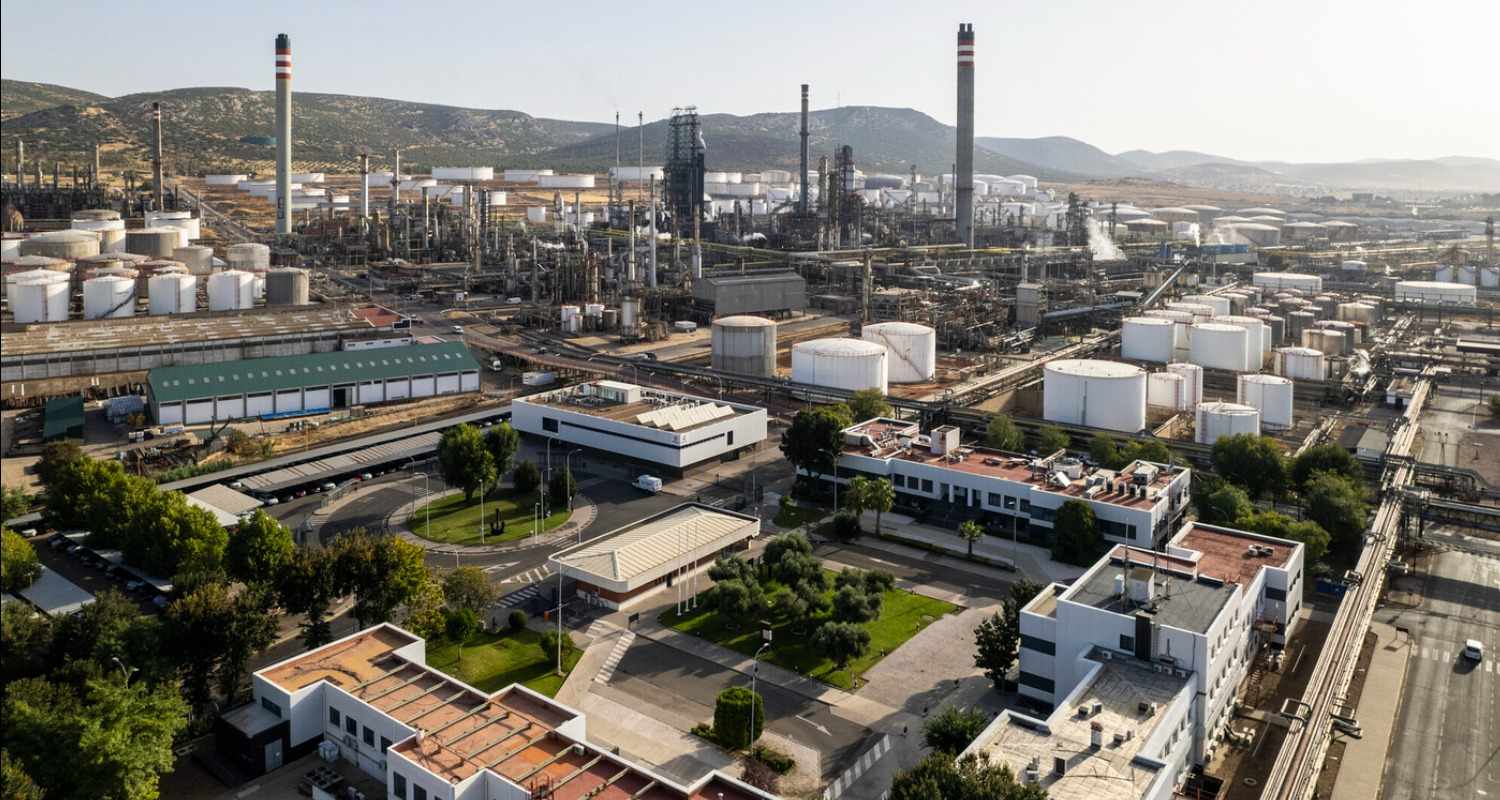
To illustrate this impact with real examples, it is enough to analyze the presence of the five large Repsol industrial complexes in Spain, located in Cartagena, A Coruña, Puertollano, Tarragona, and Vizcaya. The value of these facilities to their surrounding regions goes far beyond simple production or direct employment:
- Driving force for the supplier network. Around these complexes operates a stable network of local SMEs specializing in industrial maintenance, logistics, assembly, inspection and ancillary services. In poles such as Tarragona or Vizcaya, the volume of ongoing recruitment supports thousands of indirect jobs in family businesses in the area.
- Training and technical employment opportunities. Partnerships with Vocational Training centers and regional academic institutions guarantee the teaching of technical degrees adapted to real demand, allowing new generations to access stable, highly qualified jobs without leaving their municipalities.
- Continuous investment in technological transformation. Current projects for the production of renewable fuels and hydrogen with a lower carbon footprint are attracting new investments to these complexes, strengthening their future competitiveness and contributing to the long-term maintenance of industrial employment.
Likewise, according to studies by the Institute for Energy Diversification and Saving (IDAE), sectors such as refining and energy transformation supply essential and irreplaceable inputs for strategic sectors such as the chemical industry, precision agriculture, heavy goods transport, and the manufacture of advanced materials. The industry thus generates a double impact at a national level: it provides high-skilled direct and indirect employment and ensures basic supply so that the rest of the productive sectors can maintain their global competitiveness. But what happens in the opposite case?
What happens when industry retreats: The case of the Ruhr and the North East of England
What happens when industry retreats: The case of the Ruhr and the North East of England
The analysis of local development is significantly reinforced by observing the negative impact generated by deindustrialization or the prolonged cessation of productive activity in a region. The loss of the industrial network is usually accompanied by a progressive deterioration of all the essential socio-economic variables of the territory, affecting employment rates, collapsing the average per capita income, and seriously compromising the fiscal viability of the affected municipalities.
The loss of the industrial network is usually accompanied by a progressive deterioration of all the essential socio-economic variables of the territory
The Organization for Economic Cooperation and Development (OECD) analyses of regions in industrial transition, such as the Ruhr region in Germany or the North East of England, show a clear coexistence between the contraction of the traditional manufacturing base and the accelerated increase in territorial vulnerability.
Although the economic decline is due to multiple global factors, the disappearance of industrial facilities erodes the demand for local services, pushes young talent away to major cities, and drastically reduces local tax revenues. This situation makes it difficult to conserve community infrastructures and basic facilties, which demonstrates the strategic importance of defending, technologically updating, and diversifying the existing productive base in the territory. But how can this be done?
Renewable energy and rural development: construction and operation phases
Renewable energy and rural development: construction and operation phases
In the inland provinces and in those regions marked by a low population density, large energy infrastructures represent one of the main drivers for attracting capital and productive investment. The installation of wind farms, solar photovoltaic plants, and distribution networks not only contributes to the energy transition and the reduction of CO2 emissions, but also acts as a socio-economic catalyst for the direct geographical environment in which they are located.
To rigorously evaluate this impact, it is necessary to differentiate between two well-defined operational phases with complementary effects on the territory:
- Construction, installation and assembly phase. It generates a high concentration of specialized temporary employment, massive demand for transportation services, machinery rental, intensive consumption in local hospitality, and extraordinary income for municipal coffers.
- Operation, management and maintenance phase. It provides long-term technical jobs, stable and predictable income for landowners through lease agreements and a recurring route of local taxation.
To see how energy investment results into direct benefits for rural environments, Repsol's renewable installation deployment model integrates specific local contribution mechanisms:
- Tax support for rural municipalities. The taxation associated with energy assets contributes to strengthening the revenues of small municipalities. By integrating these resources into municipal budgets, they can contribute to sustaining the provision of services and the development of local actions, such as the improvement of drinking water networks, school refurbishments, or the maintenance of rural roads.
- Generation of local activity and collaboration. Collaboration opportunities are generated for companies in the area for continuous maintenance, earthworks, security, fencing, and environmental management, ensuring that the capital invested energizes the business network of the region.
- Socioeconomic integration. The development of projects in depopulated areas seeks to make the new facilities compatible with existing agricultural and livestock uses, maintaining traditional activity, and generating economic opportunities for landowners. In addition, these projects can contribute to promoting local initiatives related to energy efficiency or energy communities, depending on the characteristics and needs of each municipality.
In this way, the deployment of low-carbon generation facilities favors, when possible, the generation of activity and employment in the local area.
However, there are numerous factors that influence when it comes to transforming investment into a decisive boost for the territory.
Four conditions for investment to translate into local development
Four conditions for investment to translate into local development
The arrival of industrial capital or the implementation of energy projects does not in itself guarantee the prosperity of a region. For a major economic investment to translate into a lasting and structuring local development, the existence of a receptive and adequately structured environment is required.
The local return on private investment depends directly on the presence of the following key factors:
- Deep integration of the local supply chain. Active and priority promotion of supply and service contracts with SMEs, local workshops, and carriers in the regionarca.
- Human capital training and development. Signing of strategic agreements with vocational training centers and regional universities to train local workers in high-demand technical skills.
- Efficient tax reinvestment. Planned use of taxes and public revenues generated by the facilities to modernize water networks, improve transport routes, and strengthen municipal social services.
- Institutional strategy and long-term consensus. Establishment of a stable and transparent regulatory framework together with close cooperation between public administrations and private developers, providing legal certainty.
When these elements converge, the initial investment leaves a lasting socioeconomic footprint in the region, strengthening the community fabric and preventing regions from being left out of economic growth.
Investing to develop
If we return to the initial scene of the town early in the morning, it is clear that the hustle and bustle at the bakery, the activity at the repair shop, or the presence of families at the school do not occur by chance. All these daily events are part of an interconnected chain of socio-economic value where the existence of quality jobs and continuous investment is the indispensable prerequisite to project the future.
The demographic balance and the development of the Spanish regions lie in the consolidation of a model where diversified industrial activity, the commitment to energy solutions, and strong public services move in the same direction.
Demonstrating with clear facts that the presence of industrial and renewable facilities becomes lasting employment, a boost to local suppliers, and opportunities for young people is the only way to ensure that our towns and cities continue to have life, autonomy and a future.
FAQs about industry, energy, and regional development
According to the Economic and Social Council report on rural areas, the primary determinant is the availability and quality of basic services (education, healthcare, and social services). On this basis, productive diversification, the improvement of transport infrastructures and the full regional digitization are the key factors to broaden job opportunities, retain the young people, and attract external investment.
Industrial activity acts as a driving force of a broad economic ecosystem: it contracts local suppliers, logistics services, technical maintenance, engineering, security, food services and training. According to Funcas' analysis, a substantial part of manufacturing employment translates directly into jobs in the services sector of the region, generating a cycle of internal consumption, local commerce, and economic dynamism.
Renewable projects generate impact in two phases. In the construction phase, they create specialized temporary employment, demand for local transportation and hospitality, and extraordinary municipal revenue. In the operational phase, they offer long-term technical jobs, stable income from land leases and a recurring source of local taxation that reinforces the budgets of small municipalities.
OECD analyses of regions in industrial transition (German Ruhr, northeastern England) show that the disappearance of industrial facilities erodes the demand for local services, pushes young talent away to major cities and drastically reduces local tax revenues, making it difficult to maintain infrastructure and basic services.
Four key factors: deep integration of the local supply chain (contracts with SMEs in the region), human capital training (agreements with VET centres and universities), efficient fiscal reinvestment of the taxes generated, and a stable institutional strategy with long-term consensus between public administrations and private developers.
¿Quieres estar al día sobre las tendencias que definirán el futuro?
¡No te quedes atrás! Únete a miles de personas que descubren cada mes nuevos contenidos sobre energía, tecnología y hogar.
¿Quieres estar al día sobre las tendencias que definirán el futuro?
¡No te quedes atrás! Únete a miles de personas que descubren cada mes nuevos contenidos sobre energía, tecnología y hogar.