Butane, propane and bioGLP
Butane, propane and bioGLP
Energy that doesn't fail when it's needed most
Energy that doesn't fail when it's needed most

Director of LPG
Liquefied petroleum gas, known as LPG, includes butane and propane, two gases obtained from the distillation of crude oil and, to a large extent, directly from natural gas wells. At moderate pressure, they liquefy, which facilitates their storage and transportation, packaged in cylinders or distributed in bulk by tanker. That combination of easy transportation and high heating value explains why, decades after its arrival in Spanish homes, it remains one of the most widely used solutions for cooking, heating water and space heating.
What is liquefied petroleum gas (LPG): butane, propane and their origin
What is liquefied petroleum gas (LPG): butane, propane and their origin
Liquefied petroleum gas is a light hydrocarbon that, at room temperature, can be transformed from a gaseous state to a liquid state under moderate pressure. This feature is the key to its usefulness: in a liquid state, it occupies approximately 250 times less volume than in a gaseous state, allowing it to be stored and transported efficiently without the need for a fixed pipe network.
Propane maintains its performance even at 44 degrees below zero (-44ºC), making it the preferred option outdoors and in areas with the harshest winters.
Butane and propane are the two commercial forms of LPG. Both originate from petroleum refining and natural gas processing, but they differ in their thermal performance. Butane performs best at temperatures above 0ºC, making it the preferred choice for indoor use. Propane maintains its performance even at 44 degrees below zero, making it the preferred option for outdoor use, barbecues or in areas with harsh winters.
Butane and propane in the Spanish energy mix: uses and context
Butane and propane in the Spanish energy mix: uses and context
Butane and propane continue to be part of daily life for many Spanish households, especially in rural areas or homes without access to the natural gas grid. Cooking appliances, water heaters, spot heating with space heaters or braziers, gas-powered washing machine and dryers, and even refrigetators that do not require electricity operate thanks to this energy in areas where the power grid is less accessible or more expensive.
At Repsol, we have been distributing butane cylinders in Spain since 1957, one of the longest-running networks in the country. That continuity explains why, in the provinces that have suffered the greatest population loss in recent decades, where 42% of municipalities are now at risk of depopulation according to the Bank of Spain, this energy remains the most practical solution to meet basic needs, alongside bulk gas for single-family homes or businesses, which provides cooking, hot water and heating through a single supply.
Analyses on the future of the sector point in the same direction: the consultancy Frontier Economics calculates that, by 2040, the production of renewable liquefied gas could cover 70% to 80% of European LPG demand, with heating systems that are already cost-comparable to heat pumps in countries such as Germany, Poland or Italy.
The role of LPG as a transitional energy: a supply designed not to fail when it is most needed
The role of LPG as a transitional energy: a supply designed not to fail when it is most needed
Beyond their daily use, butane and propane play a strategic role, guaranteeing supply when conventional energy infrastructures are under stress. As it does not depend on a pipeline network, LPG is stored and transported flexibly by ship, tanker truck or bottle truck, which allows it to reach isolated environments or specific demand peaks without the need for large infrastructure works.
This logistics chain starts from the primary plants, which receives the LPG from the refineries or by ship, and is completed in the receiving factories and substations distributed throughout the territory, from where the product is sent to the final customer. Multiple intermediate storage links reduce dependency on a single supply point.
Those who have a propane gas tank can check from their mobile phone, in real time, how much gas they have left thanks to the telemetry system
This flexibility also translates into concrete services. Those who have an above-ground or underground propane tank, have a telemetry system that allows them to check the available gas level from your mobile phone at any time, along with a 24/7 emergency and support service.
The energy crises of recent years, marked by price volatility and supply restrictions in different parts of Europe, have highlighted the value of energy sources that do not depend on a single infrastructure. LPG, when stored at the point of consumption itself, provides that added flexibility: it is about adding options within the domestic energy mix, not replacing one technology with another.
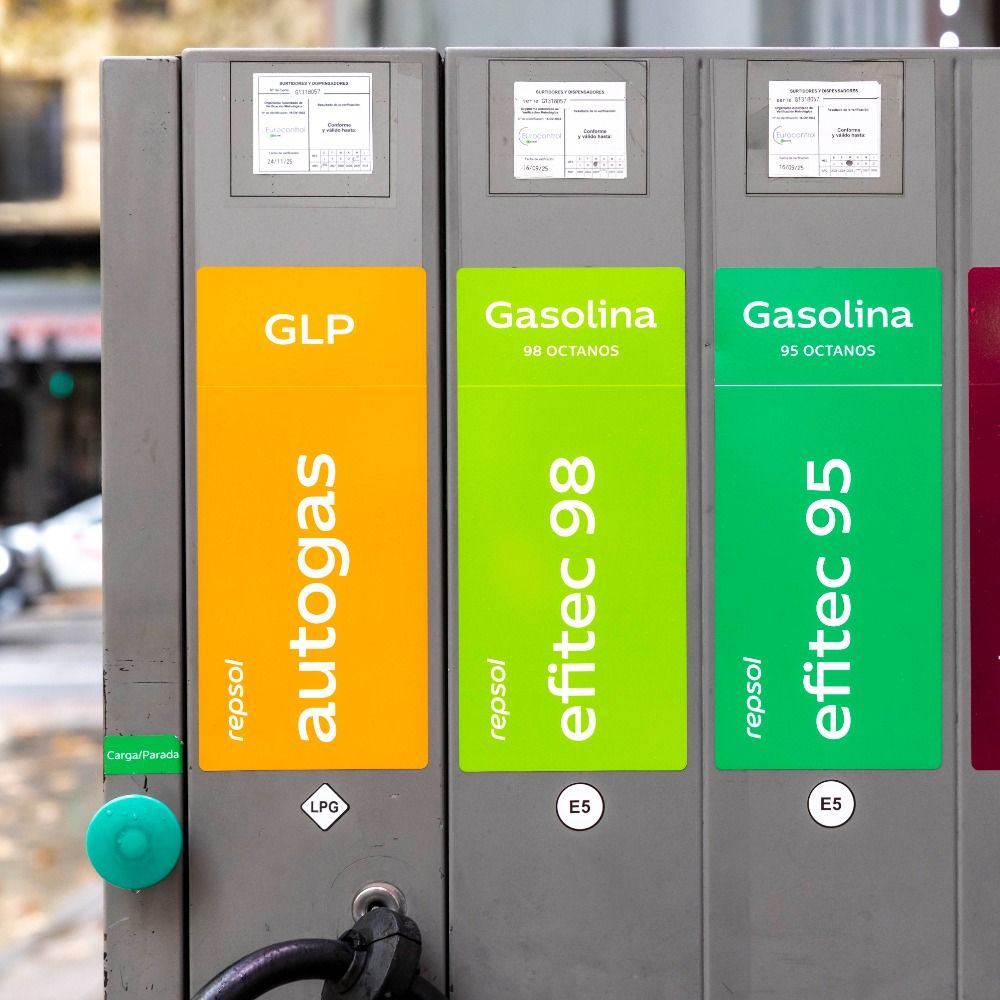
That stability is also seen in prices. According to the Ministry for the Ecological Transition and the Demographic Challenge, the cost of autogas has remained more contained than that of other fuels thanks to a diversified supply chain - with imports from the United States, the North Sea, or Algeria - and a simpler production process. That same strength now supports a network of more than 900 service stations across Spain.
Efficiency is another underlying argument: harnessing all available energy, each in the use where it is most efficient, is the basis of a realistic energy mix. Renewable fuels such as bioGLP and rDME can also be integrated into existing infrastructure without major investments, and their production can generate employment in rural areas.
Supply chain digitization: GLP Tower Control and enerTIC Awards
Supply chain digitization: GLP Tower Control and enerTIC Awards
The distribution of butane and propane has incorporated digitalization at every stage of the supply chain. The Control Tower LPG program, composed of ten digital use cases that control the process from supply to the commercial phase, was recognized in the Smart Product category of the enerTIC Awards 2024, awards that distinguish the use of new technologies in energy and industrial infrastructures.
The Control Tower LPG digital platform controls the entire process from sourcing to the commercial phase
This digitalization also reaches the end user. Ordering a cylinder no longer requires going in person: through an application or the website, users can select the type of cylinder, quantity, delivery date and pay without using cash. In addition, those who have a propane gas tank can check in real time, from their mobile phone, how much gas they have left.
The containers themselves have evolved. The lightweight 12-kilogram cylinder reduces weight to make transport easier, while the 6-kilogram cylinder is practical for both indoors and outdoors.
LPG Safety: Common myths and facts
LPG Safety: Common myths and facts
Some misconceptions surround butane and propane cylinders that should be clarified with data. The first is that they explode easily. In reality, they are manufactured with safety valves that release internal pressure if it increases excessively, so they do not burst on their own. Incidents that occur are exceptional and are usually related to improper use or maintenance, rather than a failure of the cylinder itself.
The second widespread idea is that the gas is dangerous because of its smell. In reality, butane and propane are colorless and odorless gases. The characteristic odor that allows detecting a leak is intentionally added through a compound called mercaptan, precisely as a security measure.
There is also a belief that a leak, without a nearby fire, does not imply a risk of explosion. This is not the case: a simple spark, plugging in an appliance, or static electricity from clothing can be enough to ignite the gas if its concentration in the air is within the flammability limits. Therefore, if you smell gas, it is advisable not to switch any lights or appliances on or off, and to ventilate the room immediately.
Some simple recommendations further reduce the risk margin:
- Always place the cylinder in an upright position and avoid impacts or drops.
- Connect or disconnect it in a well-ventilated room, away from open flames.
- Periodically check the hose and valve.
- Keep the cylinder away from heat sources and outlets.
The gas installation must be inspected every five years by an authorized installer, as an added guarantee to further reduce the risk of an incident.
The role of LPG in the future of home energy
The future of the domestic energy mix is not about replacing one source with another, but about combining them based on their application. Each source meets the needs for which it is most efficient. Multi-energy poses precisely that: butane or propane covering all the energy needs of households in environments without access to the grid, natural gas where it is accessible, or diesel for heating, solar energy for electricity generation and electric vehicle charging for mobility.
The sector has submitted its position to the European Commission regarding the consultation on the post-2030 energy efficiency framework. The central argument is that, in several countries, support schemes and energy certification channel support toward a single technology, electrification, leaving out renewable liquefied gas even where it is most practical, such as in rural homes or those with difficult grid access. In Spain, in particular, subsidies for fossil fuel boilers have been banned since 2025, and the Energy Saving Certificate system excludes the replacement of one gas boiler with another, while recognizing the switch to heat pumps. The sector is calling for a framework that also recognizes transitional solutions in segments where immediate electrification is not feasible.
The current LPG distribution, storage and supply infrastructure is ready to incorporate these new fuels without requiring additional construction work, facilitating the transition as production expands. That is why butane and propane will continue to play a role in Spanish homes in the coming years: not out of inertia, but because they continue to meet specific needs that other energy sources currently cannnot meet as easily at present.