


Electric mobility
Electric mobility
Understanding the present to accelerate its deployment
Understanding the present to accelerate its deployment

Director of Electric Mobility
Electric mobility is advancing, but it's not enough to simply install more chargers or launch new aids. For its development, we need a system capable of accompanying this growth: grids with available power, agile processes, coordinated operators, and a model that takes into account the needs of both urban and rural electric mobility. And there, the administration and energy companies have a decisive role in the search for accessible and realistic electric mobility. Understanding the situation in Spain and its particular challenges is the first step in accelerating its deployment.
The challenges of electric mobility in Spain
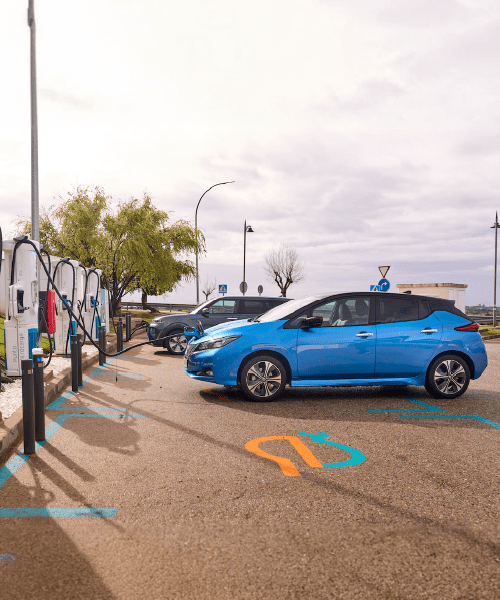
Let's start with the charging points. It is still important to expand the number and install them in locations of interest to users, but also to put all existing charging points into operation to boost electric mobility.
Reports such as the ANFAC (Spanish Association of Automobile and Truck Manufacturers) Electromobility Barometer for the third quarter of 2025 confirm that 28% of the charging points installed in Spain are out of service, because they are in poor condition, damaged, or because they have not yet been connected to the electricity distribution grid.
To this is added a long and fragmented processing process. A charging point takes an average of one and a half years to enter into service. This delay especially penalizes rural, logistical, or industrial areas that precisely need to be prioritized.
However, there are also positive signs, such as that Spain has quadrupled its public network in three years, installed power is growing steadily, and the autonomous communities with greater deployment are starting to generate solid ecosystems that will accelerate the pace in the coming years.
The price of the electric vehicle adds an additional challenge. Although its cost will be progressively reduced, it is still a difficult economic option for many families and businesses.
In professional fleets, exchanging trucks, vans, or buses for electric versions requires high investments, rigorous planning, and an ultra-fast charging network that is not yet available with the necessary capillarity.
This explains why Spain is progressing more slowly than other European countries. According to ANFAC, Spain had a 5.6% share of electric passenger cars in registrations in 2024. According to ACEA (European Automobile Manufacturers' Association) in Europe it was 13.6%. In addition, the challenge is even greater if we see what would remain to be achieved so that in 2030, according to the PNIEC (Integrated National Energy and Climate Plan) of the Ministry for Ecological Transition and Demographic Challenge, there is a fleet of electric vehicles (cars, vans, motorcycles, buses, etc.) of 5.5 million units.
Acting from technological neutrality can accelerate the energy transition by prioritizing the reduction of emissions and not one technology over the others
Our reality is different: we have one of the oldest fleets in Europe, with an average age of 14 years. Decarbonizing such a large fleet only by replacing vehicles will take time.
More electric mobility and a combination of technologies
In this context, we need to promote electric mobility, because it is one of the main vectors to decarbonize mobility. In turn, by relying on other solutions that serve the same objective. In short, acting from technological neutrality, to accelerate an energy transition that has to prioritize the reduction of emissions and not one technology over the others.
Acting from technological neutrality can accelerate the energy transition by prioritizing the reduction of emissions and not one technology over the others
We could say that technological neutrality is not a dogma, but a proposal consistent with the real challenges of transport. As I said, the goal should be to reduce emissions, not prioritize a single technological solution to achieve it.
The multi-energy approach is essential to advance the decarbonization of mobility
Renewable fuels, for example, make it possible to reduce the carbon footprint of the millions of vehicles already on the road from day one, without forcing drivers to buy a new car. That's why we're talking about a complementary approach: electrons for those who can electrify, renewable molecules for those who can't yet do so.
The multi-energy approach is essential to advance the decarbonization of mobility.
Electric mobility at Repsol
Our strategy is based on building mobility solutions that respond to the real needs of both the country and users.
We have already deployed 2,800 charging points available to the public, of which more than 1,100 are located at service stations, being the network of stations with the most points. And as the key is not only to install them but to make them work for customers, all of them are monitored 24/7 from a control center to remotely resolve around 90% of incidents.
Always relying on digitalization. For the electric vehicle to be a feasible option, the experience must be as intuitive as refueling. To achieve this we have Waylet, an app that integrates charging in our network and third-party networks, with vehicle recognition and automatic payment with Autocharge, and with smart route planning that shows availability, power, and estimated time of arrival. We seek to reduce friction and build more trust.
Electric mobility must also be integrated into homes, facilitating the deployment of domestic infrastructure by reducing economic and technical barriers and accompanying the user in a process that must be simple, digital, and accessible.
And, lastly, we continue to promote partnerships that accelerate the electrification of public transport. One example is our agreement with Alsa, working on infrastructure projects and services associated with the charging of electric buses, contributing to electrifying metropolitan routes, and optimizing the operation of fleets that need high power and maximum availability solutions.
Decarbonizing mobility through the combination of technologies
Consequently, electric mobility needs to continue to grow, focusing on developing a robust, reliable, and accessible ecosystem, capable of responding to the real challenges of the country.
At Repsol, we move forward step by step from a pragmatic approach, deploying infrastructure where it is needed, digitalizing the experience, collaborating with companies and administrations, and offering solutions to end customers and professionals that facilitate adoption.
At the same time, we promote and offer all the alternatives to contribute to the real goal that we must keep in mind: decarbonizing mobility.
.png)
