
What types of fuels are there?
What types of fuels are there?
Energy for our everyday life
Energy for our everyday life
Nowadays, life without fuels would be unimaginable: They provide us with electricity and heat, allow us to move from one place to another comfortably, power the transport of goods, and feed the manufacturing processes of a huge variety of essential products in our society. Given their enormous importance, we will now see what types of fuels exist and how they are classified.
Fuels based on their physical state
Fuels based on their physical state
Depending on their physical state, fuels can be classified as solid, liquid, and gaseous.
- Solid: Solid fuels have a compact appearance. Some examples include coal, wood, or biomass (which includes residues from the processing industries for wood, pulp, and paper, as well as agricultural residues). Of these energy sources, coal has great historical importance, having become the catalyst of the Industral Revolution, powering the steam boilers that drove locomotives, ships, and factory machinery.
- Liquid: Liquid fuels are characterized by being in this state at room temperature and standard atmospheric pressure. Petroleum is the best known, but it is not usually used in its crude oil state, but is refined to produce gasoline, diesel, or kerosene, among others. Its use has been essential for the rapid development of all means of transport over the last century, enabling humans beings to shorten distances between cities and countries, boost global freight transport, and even travel into space. Furthermore, pretroleum is used as a raw material in the chemical industry to manufacture a wide variety of everyday products.
- Gaseous: These fuels exist in the gas state; the most prominent examples are natural gas —which is mainly made up of methane— and butan gas, which is versatile and easy to handle, making it suitable for a wide range of areas such as domestic use, industry, and transport. In particular, vehicles powered by liquefied petroleum gas (LPG) benefit from butane as a fuel.
Fuels based on their origin: conventional and 100% renewable fuels
Fuels based on their origin: conventional and 100% renewable fuels

- Conventional fuels
Formed from the decomposition of organic matter over millions of years, the main fuels of this type are petroleum, coal, and natural gas. These are finite and non-renewable fuels, so the amount available is limited and, furthermore, it is not distributed evenly across the planet.
- Renewable fuels
These fuels are produced from raw materials of renewable origin. For example, used cooking oils, agroforestry biomass, or subproducts from the agri-food industry. They can also be made by combining CO₂ captured from the atmosphere and renewable hydrogen. One of their advantages is that they have net zero emissions during use, because the CO₂ emitted during their utilization is offset by the CO₂ previously absorbed or removed at the source of the raw material. For this reason, renewable fuels are one of the main available alternatives to immediately reduce the carbon footprint of transport. In addition, Order TED/728/2024 sets a mandatory biofuel blending target in Spain of 14% by 2026, reaching 29% by 2030.
HVO: diesel from 100% renewable origin. Base of 100% renewable Nexa Diesel
HVO (Hydrotreated Vegetable Oil) is a biofuel produced from used oils and other raw materials of certified organic origin, through a hydrogenation process. It can reduce life-cycle CO₂ footprint/emissions by up to 90% compared to equivalent mieral fuel, without the need to modify the engine. At Repsol, we are pioneers in the production of HVO in the Iberian Peninsula. At the Cartagena industrial complex we have the first plant on the Iberian Peninsula dedicated exclusively to the large-scale production of fuels of 100% renewable fuels; capacity: 250,000 tonnes/year; estimated reduction: 900,000 tonnes CO₂/year.
SAF: sustainable aviation fuel
SAF (Sustainable Aviation Fuel) is an aviation kerosene produced from renewable raw materials. It can be blended with conventional fuel and used in current aircraft without any modifications. Over its full life cycle, it can reduce CO₂ emissions by up to 80% compared to conventional kerosene. Repsol produces SAF at its Cartagena plant and has agreements with Ryanair (155,000 tonnes between 2025 and 2030), Iberia and Inditex.
Biodiesel (FAME): a biofuel usually used blended with conventional diesel in accordance with technical specifications.
Biodiesel or FAME is obtained through the transesterification of vegetable oils and animal fats. It is present in service stations diesel through B7, B10 or B20 blends.
Bioethanol: 100% renewable origin gasoline
Biodiesel or FAME is obtained through the transesterification of vegetable oils and animal fats. It is present in service stations diesel through B7, B10 or B20 blends.
Synthetic fuels (e-fuels): renewable hydrogen and CO₂
E-fuels are produced from renewable hydrogen and captured CO₂. They are fuels with net-zero emissions during use. Repsol is building a demonstration e-fuel plant in Bilbao featuring a 10 MW electrolyzer and an investment of more than €103 million.
|
Fuel |
Raw material |
Main use |
CO₂ reduction |
Standard |
|
HVO |
Used oils, animal fats |
Road transport, aviation |
Up to 90% |
UNE EN 15940 |
|
SAF |
Used oils, biomass, organic raw materials, H₂ + CO₂ |
Commercial and private aviation |
Up to 80% |
ASTM D7566 |
|
Biodiesel (FAME) |
Vegetable oils, animal fats |
Road transport (B7-B20) |
57-86% (EPA) |
UNE EN 14214 |
|
Bioethanol |
Sugarcane, corn, urban wastes |
Blend with gasoline (E5, E10) |
Approx. 60% |
UNE EN 15376 |
|
E-fuels |
Renewable H₂ + captured CO₂ |
Transport, aviation, industry |
Net-zero emissions in use |
Under development |
Fuels depending on their use
Fuels depending on their use

The most used are gasoline and diesel and are obtained by distilling crude oil. The former is used in vehicles such as cars, motorcycles, and lightweight trucks, while diesel is used in cars and mainly in heavyweight trucks and buses. Historically, kerosene has been the fuel used in aviation due to its energy and operational characteristics, Another fuel that is increasingly used is Autogas or LPG (Liquefied Petroleum Gas), a fuel used by millions of vehicles due to certain advantages in local emissions compared to other conventional fuels, depending on vehicle application and technology.
100% renewable fuels are also expanding. Today, conventional fuels supplied already incorporate, as a whole, more than 10% renewable fuel as required by law. The most common are biodiesel (mixture with conventional diesel) and bioethanol (mixture with gasoline) and they can be used in current combustion engines. Supply is provided using the current infrastructure network.
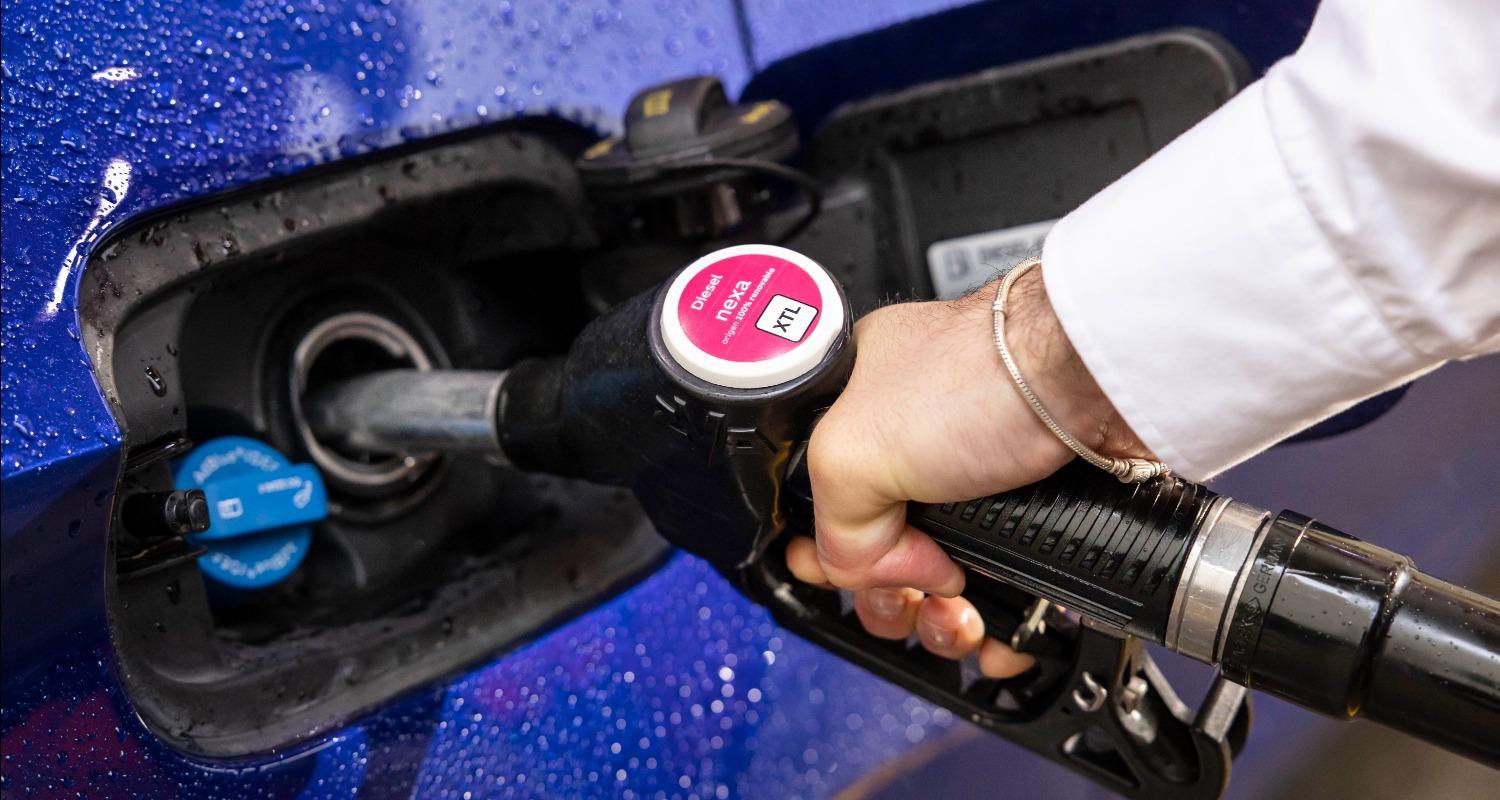
100% renewable fuels also have a growing application in road, aviation and maritime transport. These include HVO, the base of 100% renewable Nexa Diesel, available at more than 1,600 service stations in Spain and Portugal, SAF for aviation, 100% renewable Nexa 95 Gasoline, produced for the first time on an industrial scale by Repsol in Tarragona, bioethanol and synthetic fuels or e-fuels. One of their main advantages is that they can be used by leveraging existing vehicles, engines and infrastructures, helping to reduce the carbon footprint of transport.

Gas —whether it be butane, propane, or natural gas— and gasoil have traditionally been used in residential heating and hot water supply due to their accessibility, safety and comfort.
On the other hand, biomass has recently become popular (wood chips, pellets, or agricultural waste) for heating. It is either burned directly in boilers or used in central heating systems to generate both heat and domestic hot water.

Conventional fuels such as natural gas, coal, and fueloil have been used for years to generate electricity in conventional thermal power plants. Their combustion produces steam and drives the turbines that generate electricity.
Natural gas is also used in combined cycle thermal power plants, where its thermal energy is transformed into electricity with the help of a gas and steam turbine. These power plants are more efficient, since they consume less fuel, waste less water, and have lower emissions.
We are committed to the energy transition, offering innovative solutions in the field of fuels:
- Cartagena Industrial Complex: the first large-scale renewable fuels plant in the Iberian Peninsula. Capacity: 250,000 tonnes/year of HVO and SAF avoiding 900,000 tonnes of CO₂/year.
- Puertollano Industrial Complex: the second 100% renewable fuels plant, now operational. Capacity: 240,000 tonnes/year of HVO avoiding 750,000 tonnes of CO2/year.
- E-fuel demonstration plant in Bilbao: under construction, featuring a 10 MW electrolyzer and an investment of over €103 million.
- Ecoplanta de Tarragona: over €800 million invested to transform 400,000 tonnes of urban waste into renewable methanol.
- 100% renewable Nexa 95 gasoline: produced for the first time on an industrial scale by Repsol at the Tarragona industrial complex, expanding the offering of 100% renewable fuels for gasoline vehicles.
In a world that increasingly demands sustainable mobility solutions, we research and develop a variety of renewable fuels that contribute to lower-carbon mobility. From biofuels to hydrogen solutions, we are committed to working toward a lower-carbon future in the transport sector.
100% renewable origin fuels
A solution based on organic waste and a strong alternative for driving mobility forward.
Synthetic fuels
Synthetic fuels
What are they? How are they produced? What advantages do they have? Discover all the answers to these questions from Repsol.
Renewable fuels
Renewable fuels and their impact on mobility
Updated as of September 2026