
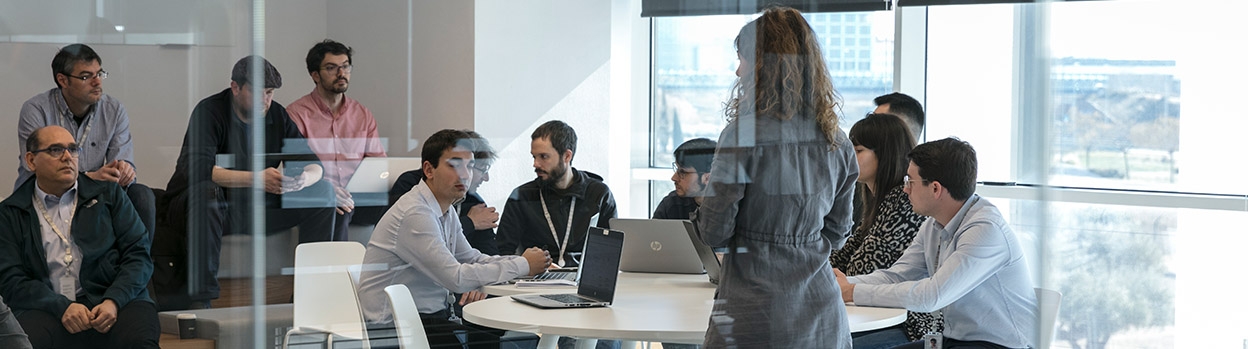

Employees having meeting in a conference room

What is a start-up?

Innovation, technology, and talent

A start-up is a newly created company that relies on information and communication technologies (ICT) to market its products or services. It features a scalable business model in which its priority is to grow quickly and smoothly.

There's little mystery behind the term "start-up": it was coined in Silicon Valley, California, in the 1950s, although it was not until the '80s and '90s when it became popular around the world.

Today, the term is used interchangeably in Spanish and other languages to describe a fledgling business enterprise.

How does a start-up work?

The operation of a start-up follows an iterative cycle that radically differentiates it from a traditional company. Instead of launching a finished product, work takes place in quick learning loops:

  • Identification of the problem: the start-up detects a real market need that is not well resolved.
  • Development of the MVP (Minimum Viable Product): the simplest possible version of the product is built to be tested with real users at the lowest cost.
  • Validation and iteration: with the feedback of the first users, the product is improved until the product-market fit is found.
  • Scaling: once the model is validated, the start-up aggressively invests in growth.

This process is often governed by the Lean start-up methodology, which advocates building fast, measuring impact, and learning from data. When the data indicates that the direction is not correct, the start-up makes a pivot: a change of business model.

Some well-known examples include Instagram (which started as a check-in app) and Slack (which began as an internal tool for a video game studio).

Differences between start-ups and SMEs

Entrepreneurs at a start-up doing their work and looking very excited about it.
  • Orientation: Generally, SMEs are focused on a local or national market (although there are exceptions), while start-ups usually show more global ambitions from the start.
  • Innovation: This is the hallmark of start-ups, not only regarding the way of marketing its products or services, but also the creative solutions that make up the basis of its activity.
  • Investment: For start-ups, external investments are fundamental for its development, while external capital is not usually a determining factor for SMEs.
  • Talent: SMEs usually rely on the local market to find employees, while start-ups look for talent globally.
  • Employment: Technology-oriented profiles are highly valued in start-ups, something that isn't as common in SMEs.
  • Growth and risks: The mentality of start-ups is usually "all or nothing." If the idea isn't successful, it's much more difficult to redirect them. However, if they manage to pull it off, the growth can be exponential. SMEs tend to have slower, more lineal growth, but it's normal for them to see short-term results and profits as the start of their activity is usually aimed at earning money as soon as possible.

The evolution and phases of a start-up

  1. Pre-seed stage or idea: This is the moment where the minimum viable product (MVP) is developed and the foundations are laid for turning the concept into something real.
  2. Seed stage: In this stage, the product takes shape and the development of a minimum viable product that can be tested by real customers is sought. If the data backs up the feasibility of the idea, it's time to present it to investors through techniques such as the pitch desk, which summarizes the company's vision and mission, who makes up the team, what the product or service to be sold is, or what the business model is, among other aspects.
  3. Early stage: In the early stage, the aim is to improve the product based on the comments of those who test it, as well as to detect what its most important characteristics are and build business relationships with a forward-looking approach.
  4. Growth stage: In the growth stage, the product is now considered validated, and it's a time of fast progression in which more staff is hired and significant investments are made. Moreover, a positive cash flow is essential to build trust among investors and back up the success of the start-up.
  5. Expansion stage: The product is now consolidated in the market and the aim is to expand borders, whether geographical or with regard to market niches. Here, it's fundamental to get more investments and reach agreements with large companies that offer financial backing and in terms of infrastructures.
  6. Exit stage: This stage refers to the sale of the start-up, either by transferring the founders' shares to other companies, going public, or being taken over by a larger company. Nonetheless, not all start-ups aspire to reach this stage, but rather to consolidate themselves as companies.

Types of funding for start-ups

For a startup to forge ahead with its proposals, they must receive external funding, and there are different types.

People gathering round in an office
  • FFF (family, friends, and fools): This involves friends, relatives, and close people to the founders who contribute capital at the beginning of the business venture.
  • Business angels: These are people that decide to back a project and invest an amount under €50,000. Their involvement in the company tends to go beyond financial backing.
  • Seed capital: This is capital that's invested in a company even when it's not bringing in profit. This investment relies on the potential of the idea and the team developing it.
  • Venture capital: The startup is usually more established but not fully consolidated, so the investment still involves a high risk. Specialized investment funds provide fairly high amounts in different financing rounds.
  • Private equity: The investment capital only tends to reach startups when they're already practically consolidated, but they require significant investment to continue their expansion.

Types of start-ups

As it pertains to startups themselves, we can talk about different types depending on their growth. The following are some of the most common ones:

Young people in a meeting room working together
  • Scale-ups: These are startups with a consolidated track record and growth trend. They have raised at least $1 million in funding, have experienced a 20% growth over the last 3 years, and the goal is to scale the business, expand markets, and reach more customers.
  • Centaur start-ups: These are valued at more than $100 million and are not publicly traded.
  • Unicorn start-ups: They have a $1 billion plus valuation and are not listed on the stock exchange.
  • Decacorn start-ups: These are privately-held startups with a valuation exceeding $10 billion.
tipos de startup por sector o modelo de negocio

Beyond their size, start-ups are also classified by the sector in which they operate:

  • Fintech: Start-ups in the financial sector. E.g.: Revolut, N26, and Bizum.
  • Healthtech: Digital health, telemedicine, AI-assisted diagnosis.
  • Edtech: Online training. E.g.: Duolingo and Coursera.
  • Cleantech o greentech: Clean energy, circular economy, decarbonization. This is the sector in which Repsol Corporate Venturing focuses its activity.
  • SaaS: Cloud software on a subscription basis. E.g.: Salesforce, HubSpot.
  • Marketplace: Platforms that connect buyers and sellers. E.g.: Airbnb, Wallapop.

Spain's "Start-Up Act"

In December 2022, Ley 28/2022 on the promotion of start-up ecosystems, otherwise known as the Start-Up Act, was passed in Spain. This regulation, the first of its kind in Europe, establishes a specific framework to facilitate the creation, development, and internationalization of start-ups in Spain.

Its main advantages:

  • Tax incentives: reduction in corporate tax to 15% during the first four years.
  • More attractive stock options: greater tax exemption for employee stock options.
  • Entrepreneur visas: facilitates the arrival of international founders and investors.
  • More streamlined incorporation process: the possibility of setting up a company for free in six hours using the CIRCE system.

Start-up success stories

Today, it would be hard to imagine the world without Google, Facebook (now Meta), and Twitter, but these three companies have one thing in common: they were all once start-ups. There are countless success stories of this sort that can be found in a wide variety of fields.

ejemplos de empresas startups de exito

The Spanish start-up ecosystem has produced some of the most outstanding success stories in Europe:

  • Cabify: urban mobility platform founded in Madrid in 2011, present in more than 40 cities in Spain and Latin America.
  • Glovo: multi-category fast delivery platform born in Barcelona in 2015, with operations in over 25 countries.
  • Wallapop: second-hand trading platform, a trailblazer in the circular economy in Spain and in conscious and human consumption.
  • Fever: live entertainment and leisure technology platform present in over 40 countries.
  • Ecoalf: Madrid-based sustainable fashion start-up founded in 2009 that manufactures garments with recycled materials.
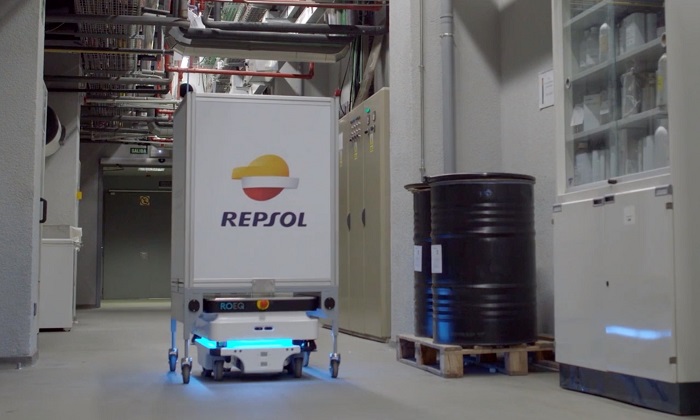
Robot in a Repsol lab

In the energy sector, many start-ups are committed to initiatives aimed at improving efficiency. Therefore, Repsol, through its strategic investment fund endowed with €50 million known as Repsol Corporate Venturing, is committed to start-ups that develop innovative technologies in three areas: decarbonization and circular economy, advanced mobility and renewables, and digital technology and asset optimization. 

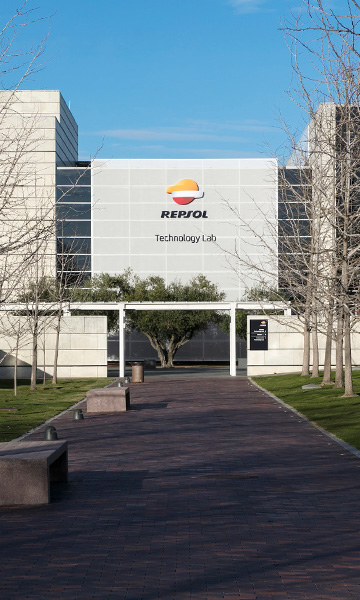
Façade of the Repsol Technology Lab

To date, Repsol's business accelerator, the Entrepreneur's Fund, has boosted the development of 70 start-ups dedicated to low-carbon emissions technologies, the circular economy, efficient mobility, and digitalization for optimizing and controlling energy industry processes. In the last call, five start-ups were selected to receive financial support.

In most cases, mutual funds offer start-ups financial financing. In our case, however, both Repsol Corporate Venturing and the Entrepreneur's Fund also provide expert advice, both from its industrial areas and from Repsol Technology Lab scientists and technologists, and the possibility of carrying out pilot or concept tests at Repsol's facilities and plants, or at our innovation center, the Repsol Technology Lab.

The start-up ecosystem in Spain

Start-ups are part of a broader ecosystem of actors that drive, fund, and connect them. In Spain, this ecosystem has matured remarkably over the last decade:

  • Accelerators and incubators: Shuttle (Valencia), Wayra (Telefonica), Demium, and Start-upbootcamp.
  • Venture capital funds: Kfund, Nauta Capital, Seaya Ventures, and Telefónica Ventures.
  • International events: South Summit in Madrid and 4YFN in Barcelona (Mobile World Congress).
  • Corporations with open innovation programs: large companies such as Repsol that actively collaborate with start-ups through Corporate Venturing funds.
Una mujer trabajando frente a un ordenador con dos pantallas

Participate in this online game and show off all your knowledge on the subject. You can also challenge your friends!