
NO-GO decision

NO-GO decision following the human rights impact assessment in La Guajira

The project explained below shows our commitment to human rights, in particular the due diligence required of companies by the United Nations in its guiding principles.

Before beginning an exploratory project in Colombian Caribbean territorial waters, in the region of La Guajira in Colombia, we conducted a human rights impact assessment that concluded with the company's decision not to carry out the exploratory project. 

The reason was that the project incurred a high cultural impact on sacred spaces of the Wayuu ethnic group, with no possible mitigation measures.

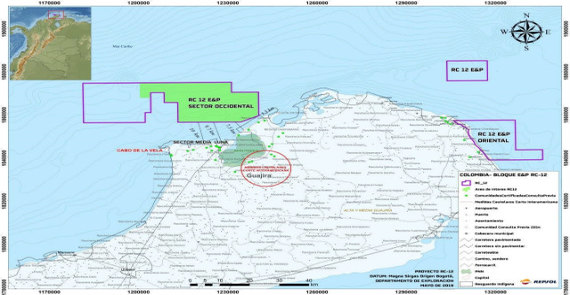
The exploratory project was intended to be developed in the RC 12 West Block in the La Guajira region of northern Colombia.

What is a Human Rights impact assessment?

It is one of the most important elements of the due diligence that companies must comply with in accordance with the "Guiding Principles on Business and Human Rights" adopted in 2011 by the United Nations. 

Our Human Rights and Community Relations Policy is aligned with these principles, and consequently requires us to:

  • Identify and assess the potential human rights impacts of our activities before undertaking a new activity.

  • Integrate the conclusions of impact assessments into our internal processess.

  • Take the appropriate measures to prevent and mitigate potential impacts.

  • Monitor the effectiveness of the measures adopted.

  • Publicly announce these measures.

Social impact assessment

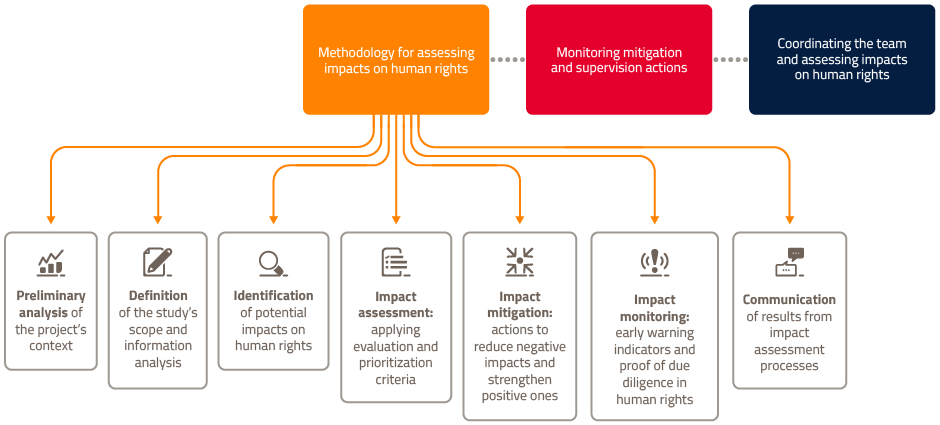
The human rights impact assessment prior to the start of the seismic activity was carried out following our Human Rights Impact Assessment Guide, which is aligned with the United Nations guidelines.

1
Context analysis: social baseline
2
Identification and assessment of social impacts
3
Identifying measures: action plan
4
Plan communication and monitoring

Participatory dialogue with stakeholders throughout the four phases:

  1. Stakeholder identification and assessment.
  2. Identification of actions to engage with these stakeholders.
  3. Deliverable: Stakeholder Engagement Plan.

Activities undertaken

During the preliminary analysis phase and definition of the study’s scope, several activities were carried out:

  1. 1
    Identification of the indigenous communities that could be impacted by the project

    According to the Colombian government, 30 communities are identified that would be impacted, in this case, the indigenous communities of the Wayuu people. According to Repsol's policy, the unique nature of these indigenous peoples is recognized and respected, as well as their rights in accordance with the country's legislation and the Convention 169 of the International Labor Organization (ILO).

  2. 2
    Baseline study

    The objective was to determine the level of human rights prior to implementing the project to know the baseline situation and subsequently identify the potential impacts after the project’s implementation.

  3. 3
    Definition of the human rights to be evaluated

    This includes those set forth in the International Bill of Human Rights and the principles related to the rights established in the International Labor Organization's Declaration on Fundamental Principles and Rights at Work, as well as the eight Fundamental Conventions implementing them. Additionally, in this case, the rights of indigenous peoples, women, national, ethnic, religious and linguistic minorities, children, persons with disabilities, migrant workers and their families and, in situations of armed conflict, international humanitarian law were taken into account.

  • Impact identification and assessment

    It was carried out using a participatory approach and respect for indigenous cultures with a multidisciplinary team of internal experts and local and international human rights consultants. Our methodology was previously presented to the traditional authorities of the Wayuu people. The interviews were conducted between March and April 2018 in Alta Guajira by a team familiar with the area and its customs by ensuring diversity, with the aim of guaranteeing the active participation of the communities.
  • Results of the study

    The conclusions of the study were shared with the indigenous communities through meetings with broad participation in the local language (Wayunikki) where aspects related to territoriality, loss of young people’s identity, as well as labor, economic, environmental, and women's rights were identified.


    However, the most relevant impact identified was the protection of sacred spaces. If the project were to be implemented, it would be carried out in a geographic area that the Wayuu people identify as Jepira, which includes mythical and sacred spaces for this ethnic group, in such a way that the culture and the very existence of the Wayuu people could be put at risk.


    After assessing the cultural impact and determining that there were no possible mitigation measures, the company's decision was not to continue operations in this block, in line with our policy of recognizing and respecting communities’ cultural diversity.


    This case was presented at the European Parliament in Brussels during the "Companies and Due Diligence in Latin America" private event in 2019.

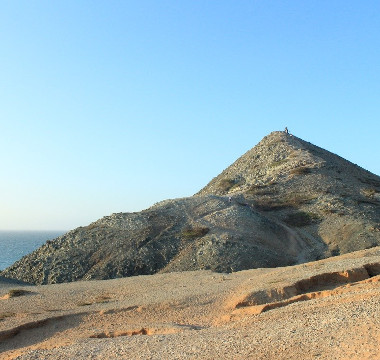
Jepira, sacred place for the Wayuu people

Jepira represents the place where the spirits of the Wayuu dead go to begin their journey into the unknown. 

In Wayuu mythology, Jepira is an island located in the sea, and is the place where the soul of a Wayuu meets again with their ancestors and their animals, with the livestock that belonged to them while alive. 

The Wayuu say Jepira is in the maritime zone north of the Media Luna area and Cabo de la Vela in the Alta Guajira, that world is located offshore and, in their understanding, it is within the Area of Direct Influence of the Western RC 12 Project.

Updated as of August 2026